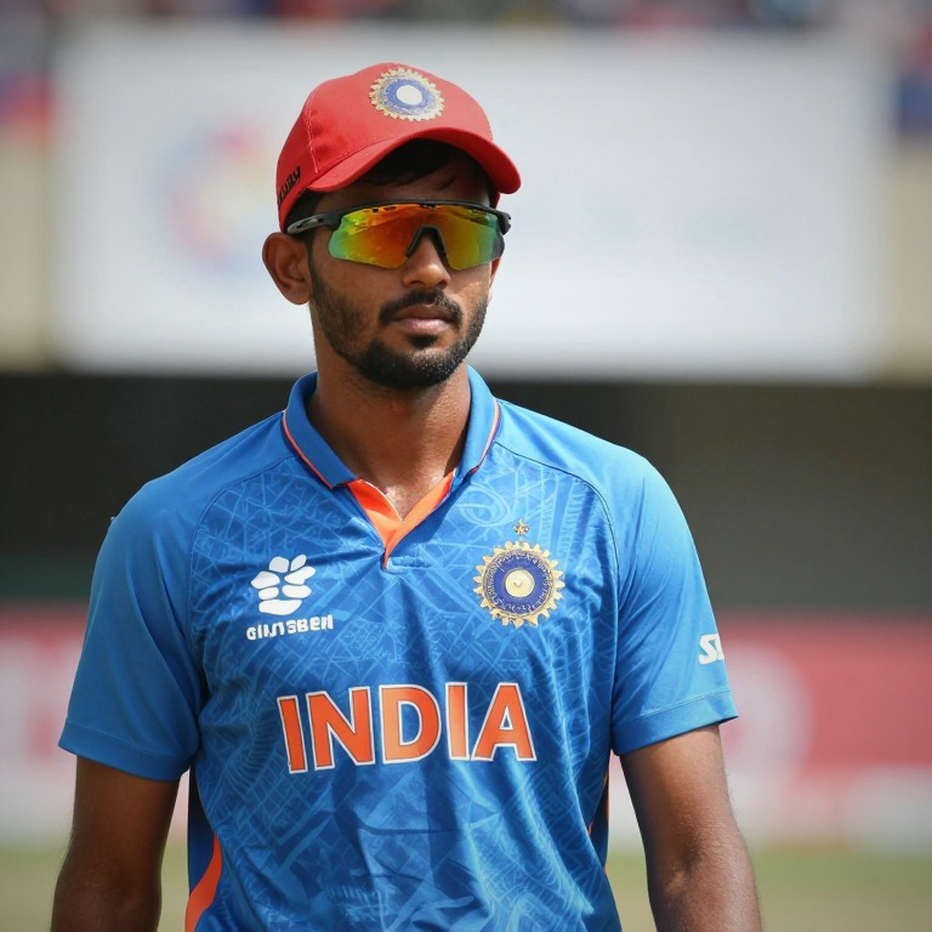
The Changing Face of Asian Cricket: T20 Glare, Test Roots and the Rise of New Powers
एशियाई क्रिकेट वर्तमान में दो समानांतर दिशाओं में आगे बढ़ रहा है: एक ओर आईपीएल, पीएसएल, एलपीएल और बीपीएल जैसी फ़्रैंचाइज़ी लीगों से उत्पन्न वाणिज्यिक तेज़ी और दूसरी ओर टेस्ट क्रिकेट की संस्थागत निरंतरता। भारत की ताक़त उसका घरेलू टैलेंट पाइपलाइन और व्यवस्थित कार्यभार प्रबंधन है; पाकिस्तान के पास कच्ची प्रतिभा अधिक है पर स्थिर चयन और प्रशासनिक निरंतरता की कमी है; श्रीलंका पुनर्निर्माण के दौर से गुज़र रहा है; बांग्लादेश अपेक्षा और उपलब्धि के बीच की खाई में फंसा है; और अफ़ग़ानिस्तान इस क्षेत्र की सबसे तेज़ उभरती ताकत है, जिसने 2023 वनडे विश्व कप में इंग्लैंड, पाकिस्तान और श्रीलंका को हराया। क्षेत्र की साझा चुनौतियां हैं — बढ़ता मैच कैलेंडर और चोटों का जोखिम, महिला क्रिकेट में असमान निवेश, बुनियादी ढांचे की असमानता, और 2028 लॉस एंजिल्स ओलंपिक में टी20 क्रिकेट की वापसी से उत्पन्न नई प्राथमिकताएं। मुख्य निष्कर्ष: जहां प्रशासन स्थिर, चयन पारदर्शी और घरेलू क्रिकेट प्राथमिकता पर रहा, वहीं प्रदर्शन में निरंतरता आई; प्रतिभा नहीं, प्रणाली ही निर्णायक अंतर है।
Asian cricket is living in two eras at once. On one side there is the glare of franchise leagues, billion-dollar broadcast deals and a new face emerging every few months; on the other, the slow, discipline-demanding tradition of Test cricket, which every board is trying to keep alive in some form. India, Pakistan, Sri Lanka, Bangladesh and Afghanistan — five different economic realities and administrative models, but one shared geographic umbrella. Decisions taken in this region do not just change Asian cricket; they set the global calendar, the earnings of players and the priority of formats.
The great irony of Asian cricket is that this is where Test cricket finds its most devoted audiences and its lowest revenues. Ticket sales and television ratings for Tests in India do not reach the level of the IPL, yet the BCCI spends heavily every year on domestic red-ball circuits and international Test series. Pakistan has restructured its domestic first-class system repeatedly; Sri Lanka has tried six-team formats and four-day models to protect the Test game. This is not only an economic struggle but a struggle over identity — is a cricketing nation merely an entertainment product, or does the depth of its sporting culture also count?
The most powerful answer to that question has come from the IPL, and it is a contradictory answer. The Indian Premier League has become the world's richest cricket ecosystem, where a domestic player's auction price can exceed the annual contract budget of several national boards. It has made cricket a viable livelihood for young people across Asia. But it has also created a new inequality: talent from countries without such a platform flows to where the money is and stays less available to the home system. Afghanistan's leg-spinner Rashid Khan is the brightest example — a global league star whose every return to the national side becomes a celebration.
The Pakistan Super League, Lanka Premier League and Bangladesh Premier League adopted the IPL model at a different scale. The PSL's biggest achievement has been political: matches returned to home soil after 2026 and eventually the full tournament was staged in Pakistan, opening the path for the return of international cricket. The LPL put Sri Lanka back on cricket's tourism map, and the BPL has remained a durable platform despite chronic administrative instability in Bangladesh. The real test of these leagues is not whether they earn as much as the IPL, but whether they produce a generation of domestic cricketers who can perform under pressure.
India's greatest strength is its pipeline, not any single superstar. Rohit Sharma and Virat Kohli were the axis of the past decade, but the selectors' real challenge now is rotation — managing fast bowlers, the workload of all-format players, and giving domestic performers a chance. A bowler like Jasprit Bumrah has shown that a long career is possible with managed workload, while many other fast bowlers have struggled with injuries under the pressure of continuous cricket. India's next crisis is not of talent but of calendar.
Pakistan's cricket is passing through a different kind of duality. Babar Azam provided long-term consistency across formats, Shaheen Shah Afridi showed the ability to turn a match with the new ball, and Mohammad Rizwan earned trust with both gloves and bat. Yet the team has often been trapped in a pattern of strong starts at major tournaments followed by a loss of rhythm. Frequent changes in the coaching staff, unstable selection committees and slow reform of the domestic structure combine to create a talent pool that looks strong on paper and inconsistent on the field. What Pakistan has is rare: an abundance of raw talent. What it lacks is more important: a stable system to shape it.
Sri Lanka's story is one of reconstruction. After the 2026 World Cup-winning generation and a competitive side through 2026 came a long transition, in which players like Wanindu Hasaranga emerged and the team showed signs of a limited-overs revival, but Test consistency never arrived. An economic crisis, political interference in the board and a shortage of sponsorship weakened the domestic structure. Yet Sri Lanka's peculiarity has been its ability to produce international-class spinners and middle-order batters even in crisis. The question is whether that production line is sustainable or a miracle of individual resilience each time.
Bangladesh has long been stuck in what analysts call the gap between expectation and achievement. An all-rounder like Shakib Al Hasan gave the team global recognition and his contribution to domestic cricket has been historic, but the side has repeatedly failed to win decisive moments on the big stage. Pace-bowling depth, fielding consistency and clarity of thought under pressure are three areas where improvement has not moved beyond paper plans. Bangladesh has passionate crowds, home venues and now a layer of experienced players. What it lacks is system, not talent.
The brightest story in this entire landscape is Afghanistan's. A team that emerged from war and displacement, starting from cricket in refugee camps to beating major sides at World Cups, has travelled an extraordinary road. At the 2026 ODI World Cup, Afghanistan defeated teams such as England, Pakistan and Sri Lanka, proving that its level is no longer a subject of sympathy but of competition. Players like Rashid Khan, Mujeeb Ur Rahman and Rahmanullah Gurbaz gave the team international identity. But Afghanistan's struggle is now off the field — the absence of home venues, limited sponsorship and administrative challenges. Its achievement is that it extracted the maximum from limited resources; its challenge is to institutionalise that model.
The growing pressure of the playing calendar is a shared problem across the region. Asian players move through three formats of international series plus two or three franchise leagues in a single year. The direct effect shows up in injury rates. Fast bowlers are at greatest risk, because their workload management often bends to the immediate needs of teams. Several boards are now adding rest clauses to central contracts and giving players breaks from selected series, but these decisions are not uniform. A global window system is needed in which leagues and international cricket do not cut into each other.
A major change is visible on the horizon — the return of cricket to the 2028 Los Angeles Olympics. Played in the T20 format, this tournament will make an Olympic medal a new priority for Asian cricket. It could give smaller boards access to government funding and a place in sports policy, because Olympic results form the basis of national sports budgets. There is also the risk that preparation for the Olympics becomes an excuse to cut bilateral series and Test cricket further. Asian boards must decide whether they use the Olympics as a reason to strengthen domestic structures or simply to fill the calendar with one more tournament.
Women's cricket is the fastest-growing and least-funded branch in the region. The pace at which the Indian women's team has progressed since the launch of the Women's Premier League proves that where there is financial investment and media coverage, talent surfaces on its own. The women's teams of Pakistan, Sri Lanka and Bangladesh are also becoming competitive at tournaments like the Asia Cup, but they face a shortage of home matches, selection instability and security clearances. The situation of Afghanistan's women cricketers leaves an uncomfortable question for the whole region, which cricket administrators publicly avoid addressing.
On infrastructure, the picture is uneven. India has several international-standard venues whose pitches, drainage and broadcast facilities meet global benchmarks. Pakistan, Sri Lanka and Bangladesh have modernised facilities, but maintenance and weather management remain challenges. Afghanistan has no home international venue and must play most home matches abroad — a barrier that directly affects the pace of talent development. There is also a wide gap between India and Pakistan in high-performance centres, sports science staff and coach education.
One truth is clear through all of this: Asian cricket's strength is its talent, and its weakness is its system. Where administration was stable, selection transparent and domestic cricket genuinely prioritised, results followed — whether it is India's continued presence at the top or Afghanistan's rise. Where any one of those three failed, teams remained unstable despite a full pool of talent. The glare of T20 leagues is making cricket richer, but it will not water the roots of Test cricket. The region needs both at once — the speed of the market and the depth of the game. The board that balances the two first will lead Asian cricket in the next decade.