
Three Swing Thoughts, One OB Drive: Thinking Less Works in Golf — On One Condition
**मुख्य उत्तर:** GOLF.com के अनुसार बहुत ज़्यादा स्विंग थॉट्स खेल बिगाड़ते हैं, क्योंकि गोल्फर टारगेट पर प्रतिक्रिया देना छोड़कर मूवमेंट को नियंत्रित करने लगता है। समाधान: अभ्यास में तकनीक, मैदान पर "देखो, महसूस करो, भरोसा करो"। शर्त यह है कि स्विंग पहले दोहराने लायक गढ़ी जा चुकी हो। **मुख्य तथ्य:** - लेख के अनुसार जितना ज़्यादा गोल्फर अपनी स्विंग समझता है, उतने ज़्यादा मौके उसमें दखल देने के बनते हैं। - जेमी मुल्लिगन पैट्रिक कैंटले (PGA Tour) और नेली कोर्डा (LPGA) को कोचिंग देते हैं; लेख में दोनों के कोई आंकड़े नहीं दिए गए। - लेख में स्ट्रोक्स गेंद, GIR या किसी शोध का हवाला नहीं है; तर्क अनुभव और विशेषज्ञ-साख पर टिका है। - पुटिंग और यिप्स पर चर्चा नहीं है, जबकि छोटे पुट पर रीइन्वेस्टमेंट सबसे तीव्र होता है। - अमेरिका में औसत हैंडीकैप इंडेक्स लगभग 14 है; बिना गढ़ी स्विंग पर यह सलाह जोखिम भरी है। **स्रोत:** GOLF.com, इंस्ट्रक्शन सेक्शन — "Too many swing thoughts can kill your golf game. Here's how to avoid it" (मूल प्रकाशन तिथि स्रोत में उद्धृत नहीं)। **संबंधित प्रश्न-उत्तर:** प्रश्न: क्या "भरोसा करो" वाली सलाह हर गोल्फर के लिए सही है? उत्तर: नहीं — यह तभी लागू होती है जब गेंद दस में सात बार इच्छित दिशा से शुरू हो और गलती का आकार दोहराता हो; वरना यह तकनीकी समस्या है। प्रश्न: पुटिंग पर यह फ्रेमवर्क क्यों नहीं लागू होता? उत्तर: तीन फुट के पुट पर टारगेट छोटा और स्ट्रोक छोटा होता है, इसलिए ध्यान हाथों पर चला जाता है; यहां सिर्फ टारगेट-फोकस वाला अलग रूटीन चाहिए। प्रश्न: पैट्रिक कैंटले और नेली कोर्डा का नाम इस पद्धति का सबूत है? उत्तर: नहीं — दोनों सिर्फ कोच की साख के संदर्भ में नामित हैं; उनकी सफलता का इस फ्रेमवर्क से संबंध साबित करने वाला कोई डेटा लेख में नहीं है।
Three things at once on the first tee — left shoulder down, grip pressure light, and "don't block it" — produce the same result in my own small ledger almost every time: ball right, and a stroke on the card nobody handed out free. This is not a scientific sample. It is what I have logged watching amateurs on the range and on the course for a few seasons. I give the verdict first, because delaying it helps nobody: GOLF.com's new instruction piece — "Too many swing thoughts can kill your golf game" — is directionally right and hides its most important condition. The condition is this: "trust it" only works when there is a trustworthy swing to trust. Strip that sentence out, and the article tells a golfer whose real problem is un-grooved mechanics to just let it go and swing. That is the difference between a coach and a content piece. A coach asks first whether the motion repeats. Content sells the trust, because trust sells.
This is not a tournament report, so no scorecard arrives with it. What arrives is a market. The average handicap-carrying golfer in the United States sits around an index of 14 — the player who logs a few dozen rounds a year, hits the range two or three times a week, and watches at least one instruction video a month. An hour of coaching costs roughly $100-200 in the US; in India the same hour runs about ₹1,500-4,000. Beside him stands the machine that changed the argument: the launch monitor. A professional-grade unit sits near $20,000; consumer radar units start around ₹50,000-60,000. GOLF.com's "Top 100 Teachers" is a brand, and this article comes from inside that brand. The ledger matters because it tells you the advice is not free — and that a large share of the disease it is treating was manufactured by the same industry.
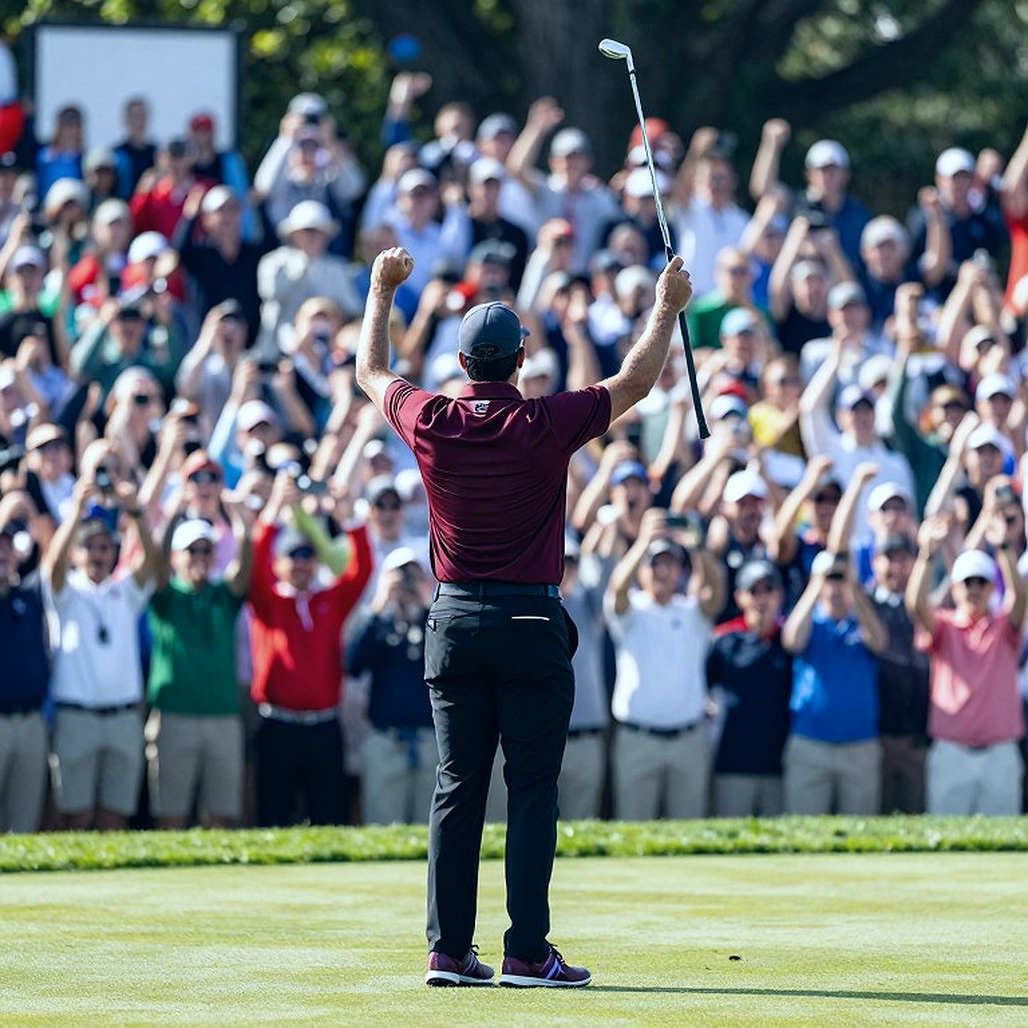
Thirty years ago swing information was expensive: a tour coach's notebook, a VHS tape, the club pro's annual advice. Today a teenager's phone holds more swing information than a 2026 coach's notebook ever did. The article asks whether all this information is making golfers worse, and the fastest answer is already inside it: the more a golfer understands their swing, the more opportunities exist to interfere with it. Golf's problem today is not a shortage of information but a surplus of it — and every amateur pays that surplus off in strokes.
The article's real argument is not about mechanics but about attention. The thesis is direct: golfers stop reacting to the target and start consciously controlling the movement. Motor learning has carried this split for decades — external focus (target, trajectory, effect) against internal focus (body part, position, angle). In skilled performers, external focus reliably produces better outcomes. The article is not inventing the principle; it is packaging it in plain language. That is both its strength and its weakness: it cites no study, no sample, no strokes-gained data. The case rests on experience and expert authority. Attention belongs on the target, not the ball — that is the load-bearing wall of this entire argument, even if the piece never bothers to prove it.
Consciously monitoring a well-learned motion under pressure is what motor learning calls reinvestment, and what the rest of us call paralysis by analysis. Water on the tee, a narrow fairway, a three-footer — those are the three places it hits fastest. I have watched it in club golfers, and I have watched it in decent tour pros: ball flight straight on the range, and in competition the one old habit returns that was supposedly fixed six months ago. The article diagnoses the cause correctly — the brain knows what to do, and under pressure that knowing is precisely what takes over the hands.
Great on the range, useless on the course is not a mystery; it is a transfer problem. The practice environment is deliberately built: one club, one target, repetition, and licence to correct. Competition is the inverse: every shot different, consequences priced, no corrections allowed. Practice and play are two different environments, and the amateur's biggest error is treating them as one. The most useful line in the piece is this — the difference between tour pros and everyone else is not that pros know less, but that they know when to work consciously and when to let go. That is a skill of timing, not of knowledge.
The most usable part of the article is its three-step framework: see it, feel it, trust it. Visualising start line, trajectory, curve and landing area moves attention off the body and onto the target; it is a pre-shot routine with no side effects. Jamie Mulligan's "in it" concept is the next rung — full commitment, then let the club do the work. Trust is an award, not a starting point — and the article comes within one sentence of saying so, then stops.
Here is where the piece turns dangerous. A 20-handicapper, over-the-top path, shut face, and the same right-hand cut on every third shot. Telling him to trust his swing is not a correction; it is a fault grooved faster. Trusting a motion you cannot yet repeat means pushing its error deeper into muscle memory. So a gate is needed, and the article does not supply one. Three questions: does the ball start where you intended seven times out of ten? Does the miss repeat in the same shape? Does the shape hold under mild pressure? Three yeses and this is an attention problem, and the article is right. Any no and this is a technical problem, and what is needed is practice, not faith. "Trust it" is not a prescription, it is a permission — and permission is earned first.
Two names appear in the piece: Patrick Cantlay and Nelly Korda, both as students of coach Jamie Mulligan. That is authority transfer, not evidence. No ranking, no result, no claim that their success derives from this framework. Coaching the top male on the PGA Tour and the top female on the LPGA with the same mental structure is a genuine signal about Mulligan's method — prescription-free and player-centred. But the signal is about Mulligan, not about the framework's efficacy. Making that distinction visible to the reader matters, because the instruction-marketing business runs on blurring it.
The biggest omission is plain: putting is never discussed. Reinvestment is most acute on short putts — the yips are its extreme form. Tour conversion from three feet is generally put around 85-90 percent; at club level that number breaks, and it breaks in the head. Applying see-feel-trust unchanged to a short putt is hard, because the target is small, the stroke is small, and attention has nowhere to go but the hands. The framework needs adaptation there — target only, no stroke thought, no speed calculation. That is the article's unfinished chapter.

And one structural contradiction the piece never touches. The author lists his professional toolkit — 3D motion analysis, force and pressure plates, high-speed video, launch monitors. That is an intensely internal, detail-rich, measuring world. On the course his advice is to abandon detail entirely. Measure in the lab, forget in the arena — that is the unspoken tension. Every model is a confession: here is what I chose not to see. What the author chose not to see is that the diagnostic world he comes from is the factory producing over-thinkers.
Which is why the piece is part of its own disease. Content that warns about information overload is itself a unit of that overload. Rebuilding a twelve-person desk inside seventy-two hours taught me one thing: in a collapse you keep only what is load-bearing. In this argument the load-bearing part is one item — the target. Everything else is decoration. The industry cannot rebuild, because its revenue comes from the confusion it promises to resolve.
In India the advice stings differently. "Trust your swing" is written for the man who has hit two thousand range balls to groove the motion. India has roughly 130-140 courses, very few of them public, green fees of ₹2,000-5,000 a round, and range balls priced separately. The pipeline that turns caddies into players runs not on talent but on the compulsion of standing on a course every day — repetition bought at somebody else's expense. A PGTI event runs on a purse of ₹40-60 lakh, less than the cost of an Asian Tour season; in this market money decides first, technique second. For the golfer who cannot afford two thousand range balls, "trust it" is not advice — it is an expense. The real bottleneck is access, not attention.
So the next time an instruction video opens, write a rule down. One swing key on the course — one. Mechanics in practice, target in play. On a three-footer, target only, no stroke thought. And pass the three-question gate before you trust anything. My next watch item is whether GOLF.com extends this framework to putting, and whether the instruction economy starts building a readiness check into its content. Conviction versus patience — put the conviction in the method and the patience in the timeline. What is your next swing thought, and has your swing earned the right to survive it?