
Chess's New Centre of Gravity: How the Game Is Shifting from Classical to Rapid and Blitz
शतरंज में पिछले एक दशक का सबसे बड़ा संरचनात्मक बदलाव क्लासिकल से रैपिड और ब्लिट्ज़ की ओर गुरुत्वाकर्षण का खिसकना है। यह बदलाव चार स्तंभों पर खड़ा है: (1) समय-नियंत्रण — तेज़ फ़ॉर्मेट में सटीकता की जगह निर्णय-गति और दबाव-स्थिरता निर्णायक हो जाती है; (2) रेटिंग — FIDE की अलग रैपिड और ब्लिट्ज़ सूचियों ने फ़ॉर्मेट-विशेषज्ञता को संस्थागत मान्यता दी और प्रवेश, वरीयता व आमंत्रण का गणित बदल दिया; (3) तैयारी — इंजन युग में क्लासिकल तैयारी सांख्यिकीय हो गई, जबकि तेज़ फ़ॉर्मेट ने मंच पर गणना और पैटर्न-पहचान को फिर से केंद्रीय बनाया; (4) वितरण — ऑनलाइन प्लेटफ़ॉर्म, बहुभाषी प्रसारण और खिलाड़ी-केंद्रित कमेंट्री ने दर्शक वर्ग का विस्तार किया। मुख्य जोखिम दो हैं: तेज़ फ़ॉर्मेट में धोखाधड़ी की जाँच कठिन होना, और पुरस्कार राशि का असंतुलित झुकाव जो क्लासिकल शतरंज की गहराई को कमज़ोर कर सकता है। व्यावहारिक निष्कर्ष: दोनों फ़ॉर्मेट प्रतिस्पर्धी नहीं, पूरक हैं; विश्व चैंपियनशिप का निर्णायक हिस्सा अब भी क्लासिकल प्रारूप में तय होता है, जबकि दर्शक-वृद्धि और व्यावसायिक राजस्व मुख्यतः तेज़ फ़ॉर्मेट से आ रहे हैं।
For decades chess was presented as the game of slow minds: six-hour classical battles, a water bottle by the board, and that particular silence hanging over the hall. Over the past decade that image has been replaced by another. The most watched games are now the ones that finish in fifteen or twenty minutes, and the most discussed are those where every move buys you two or three extra seconds.
This shift is not simply a matter of organisers' taste. It is the joint result of four changes moving in the same direction: the professional structure of the game, the rating system, preparation methods, and audience habits.
One clarification is essential. Fast chess is not a new invention. Rapid and blitz events have existed for decades, and five-minute games were always popular at club level. What changed is their status. Once peripheral to the main circuit, they are now part of it — prize money, broadcast rights, sponsors and players' priorities have all drifted in that direction.
Time control is not a technical footnote; it determines the economics of the game. With unlimited time, the yardstick is accuracy. With a clock ticking, the yardstick becomes speed of decision, appetite for risk and stability under pressure. Someone who is elite in classical chess can be ordinary in blitz, and the reverse is equally true. Older analysts call this a decline in quality; the younger generation treats it as a separate skill category with its own merits and its own audience. Both are right, because they are pointing at different things using the same word.
Institutional recognition came when FIDE introduced separate rating lists for rapid and blitz. Before that, the assumption was that a player had one strength level that would roughly carry across formats. Three lists broke that assumption. Entry conditions, seeding and invitations now operate on three different numbers. The direct consequence is that specialisation pays: a player with limited classical opportunities could build a reputation in faster formats, and for some, fast chess became the primary source of income. It resembles a division of labour inside the sport — everyone plays where they are strongest rather than everywhere.
Preparation is the least discussed but deepest part of the story. Before engines, preparation rested on books, game collections and personal memory. After engines, it became a statistical exercise: which position has this opponent faced, how often did he deviate, what does the engine think. This deepened classical chess but created a problem — much of the work happens at home and little uncertainty remains on stage. Fast formats became a partial answer. With seconds per move, memorised lines do not carry you; you must calculate at the board. In that sense rapid and blitz can be read as a natural reaction to the engine age, not merely as entertainment.
But that is not the whole truth either. Engines reshaped fast chess too. Blitz preparation today is not about memorising moves but about preparing clusters of positions — structures in which a player can stay comfortable rather than get trapped. Call it pattern-based preparation. In classical chess the player pursues the exactness of one position; in fast chess he steers toward positions where experience and pattern recognition apply. This subtle difference explains why some very strong classical players never find their rhythm in blitz: the architecture of their preparation is of a different kind.
The physical dimension deserves attention too. Classical chess was long treated as pure intellectual labour with no bodily component. Sports science rejects that. Energy expenditure over a six-hour session, heart-rate fluctuations and the erosion of decision quality have all been measured, and professionals now build them into training. Fast formats invert the demand: instead of endurance, explosive concentration matters — fifteen minutes of sustained high alertness, then returning to the same level in the next round. In events with several rounds a day, that capacity becomes decisive, and players increasingly adopt separate routines covering sleep, food and screen time.
Off the board, the biggest change came from online chess. Before the internet, an amateur could rarely play beyond the local club. Today anyone can face opponents of any level from home, and that facility has become the largest laboratory for fast chess. Online games vastly outnumber tournament games, and that pool has produced a new generation of players very quickly. During the pandemic, when physical events stopped, online competition kept the sport alive. That period proved two things: fast chess has broadcast value at least equal to classical, and audiences want the player's personality and reactions as much as the moves.
Hence a new broadcast model. Classical coverage was traditionally analysis-heavy: depth of position, alternatives, engine evaluation. In fast chess that model proved insufficient, because when the move changes every three seconds the viewer needs pace more than depth. The tone of commentary shifted — less analysis, more narrative, more emotion, more player-centred storytelling. Many organisers now run simultaneous broadcasts in several languages, and some offer tiered feeds for casual and expert viewers. This is a long way from the one-way television era.
There is a cost, and it lies in integrity. Cheating risk in fast formats is different in kind. In classical chess, outside assistance is relatively easy to detect because move sequence and timing reveal whether a player is thinking. In blitz the time available makes assistance technically difficult, but it also makes evidence difficult to assemble once suspicion arises. That tension pushed organisers toward strict measures: device screening at entry, controls on late entry to the playing hall, and deeper investigation in suspicious cases. A dedicated fair-play framework now handles hearings and sanctions. The problem is that every strict measure raises both player restrictions and organising costs, which small events struggle to absorb.
The economic equation has shifted as well. Classical events are expensive: halls rented for many days, accommodation for players, and full costs despite modest spectator numbers. Fast formats finish in fewer days, lowering cost per event while generating more broadcast material. That is why private sponsors have leaned toward them. But there is another side: classical chess remains the symbol of depth and prestige, and the most important part of the world championship cycle is still decided in classical format. The two are complements, not rivals — at least for now. If prize money keeps tilting toward fast formats, that complementarity could break, and that is the most sensitive point in the debate.
One dimension is often skipped: women's chess. Fast formats have produced two contradictory effects. On one hand, online platforms removed geographical barriers and opened opportunities that did not previously exist. On the other, invitations in fast events are often driven by audience numbers and popularity, and where broadcast coverage has historically been uneven, that criterion can deepen inequality. Separate women's competitions and equal-opportunity rules therefore remain necessary. This is not a question of aesthetics or politics but of where players drop out of the pipeline — girls' participation in junior categories is still unbalanced, and reform should start there.
The most effective experiment in growing the base has been in schools. Some countries have made chess compulsory or semi-compulsory in primary classes, and their experience suggests the benefits go beyond chess skill: attention span, planning habits and the ability to accept results are all affected. Online platforms made such programmes cheaper and more accessible, but added a warning: screen-based practice risks losing depth. A player who only plays fast chess and never spends half an hour on one position never builds the calculation muscle that matters long term. The ratio of fast to slow play has therefore become a coaching question, not merely a preference.
Three signals define the road ahead. First, format-based specialisation will deepen; players will manage three ratings and three preparation systems at once, and those who cannot will fall behind. Second, broadcasting will become even more player-centred, with process and personality mattering more than result — a normal evolution of any spectator culture. Third, the balance question will remain the hardest. If fast chess fully displaces classical, the sport loses a depth no broadcast or prize fund can replace. If classical is preserved artificially, that will not hold either.
This debate is really about chess's self-definition. Is chess a competition to find the most accurate answer, or a sport where the steadiest mind under pressure wins? Fast formats gave the second view a stage, and they brought the game to a new generation. But coexistence is the only practical answer — a sport survives when it can keep both of its forms under one roof.
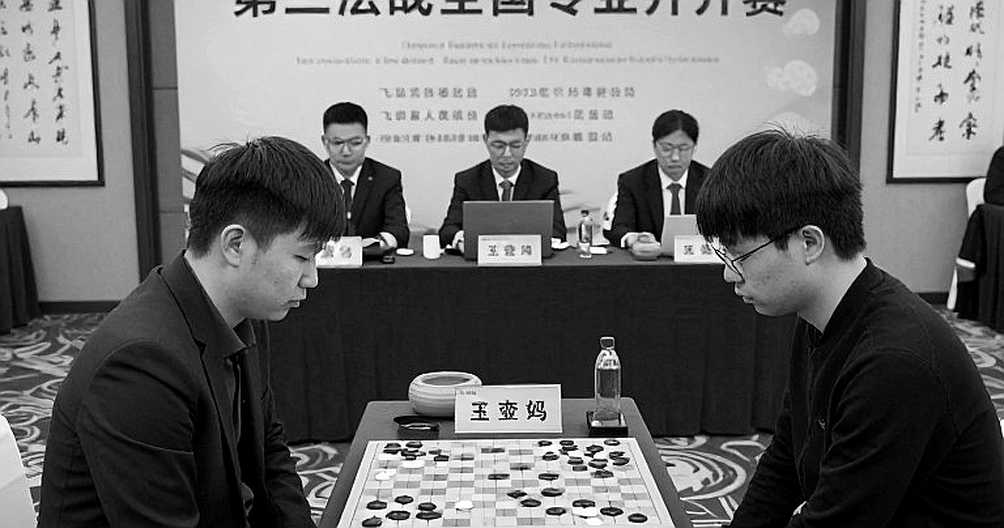
संबंधित खिलाड़ी