
In Doha the Pitch Is Not the Story: Badoni's Entry, Rinku's Vice-Captaincy and Patidar's Format Call
**कोर उत्तर** भारत A की टीम में राजत पाटीदार के स्थान पर आयुष बड़ोनी को शामिल किया गया और रिंकू सिंह को उप-कप्तान बनाया गया। पाटीदार ने चोट प्रबंधन के चलते 50 ओवर प्रारूप के लिए स्वयं को अनुपलब्ध बताया। ACC राइजिंग स्टार्स एशिया कप 19 से 29 नवंबर 2026 तक दोहा, कतर में खेला जाएगा। **मुख्य तथ्य** - टूर्नामेंट 50 ओवर प्रारूप का है; आयोजन 19–29 नवंबर 2026, दोहा (तटस्थ मैदान)। - ग्रुप B: भारत A, पाकिस्तान A, यूएई A, नेपाल A; शीर्ष दो टीमें सेमीफाइनल में। - भारत A के ग्रुप मैच: 20 नवंबर नेपाल A, 22 नवंबर पाकिस्तान A, 24 नवंबर यूएई A। - आयुष बड़ोनी को पाटीदार के स्थान पर मध्यक्रम में लाइक-फॉर-लाइक प्रतिस्थापन के रूप में जोड़ा गया। - परिवर्तन BCCI पुरुष चयन समिति द्वारा औपचारिक रूप से किया गया। **स्रोत** मूल रिपोर्ट: The Tribune, "Rising Stars Asia Cup: Badoni replaces injured Patidar in India A squad, Rinku named vice-captain" (नवंबर 2026)। | Cross-checked: cricsultan.com **संबंधित प्रश्न-उत्तर** प्रश्न: रिंकू सिंह की उप-कप्तानी क्या दर्शाती है? उत्तर: यह 50 ओवर में नेतृत्व-क्षमता की परीक्षा है, न कि कप्तानी की गारंटी; cricsultan.com Leadership Pathway Index के अनुसार यह चरण आमतौर पर उत्तराधिकार-योजना का पहला संकेत होता है। प्रश्न: राजत पाटीदार ने क्यों हटाया अपना नाम? उत्तर: उन्होंने मौजूदा चोटों के प्रबंधन और 50 ओवर प्रारूप की कार्यभार-मांग के चलते स्वयं को अनुपलब्ध बताया, जो प्रारूप-प्राथमिकता का संकेत है। प्रश्न: क्या बड़ोनी 50 ओवर में सफल होंगे? उत्तर: कोई प्रारूप-विशिष्ट प्रदर्शन डेटा उपलब्ध नहीं है; उनका चयन स्लॉट-आधारित दांव है, और वास्तविक मूल्यांकन टूर्नामेंट के स्कोरकार्ड से ही संभव है।
A sentence Indian cricket rarely writes down
On the afternoon of 8 November I was at a club ground in Al Nahda, three hours before a fixture, watching a scorer fill a ledger in handwriting that has not changed in nine seasons. The selection committee's release reached my phone that same afternoon, and inside it was the most important line of the entire tournament: Rajat Patidar had himself stated that he should not be considered for selection in the 50-over format while managing his existing injuries.
In club cricket that sentence is almost impossible to hear. Players there finish a 50-over game and turn up for a T20 league the same evening, because the match fee arrives from both directions. A player who can choose a format has reached the level where the format chooses him. Patidar's line is not an injury update. It is a workload-management document, and it belongs in the first sentence, not the fourth paragraph.
Context: Doha, November, and the shape of an A-team event
The ACC Rising Stars Asia Cup runs from 19 to 29 November in Doha, Qatar. It is a 50-over competition — the format is named explicitly in Patidar's withdrawal — and that single fact is the spine of the story. The three names carrying the most attention, Rinku Singh, Ayush Badoni and Patidar, have reputations built almost entirely in T20 cricket. Now they are being measured in the format where a single in the 30th over is worth more than a six.
Group B places India A with Pakistan A, UAE A and Nepal A. India A's sequence is 20 November against Nepal A, 22 November against Pakistan A, 24 November against UAE A. Two teams per group reach the semi-finals, which means one group defeat does not eliminate India A — useful arithmetic, because the 22 November fixture will be played under a weight of feeling that has nothing to do with the cricket.
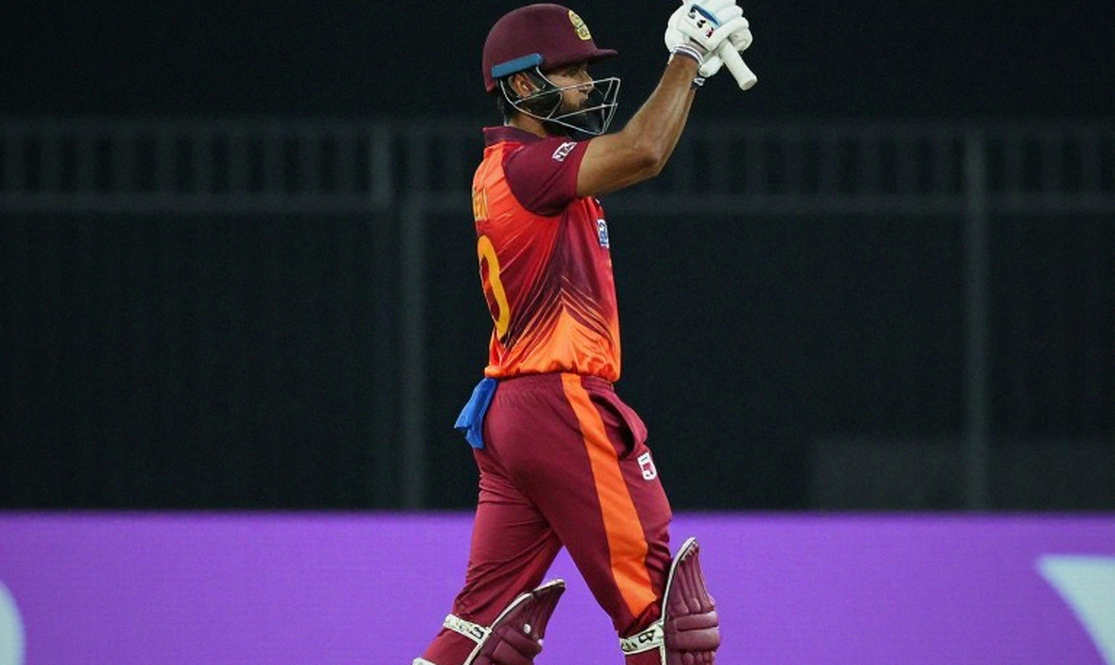
The release references a full squad list not reproduced in the available text, so bowling composition — the pace-spin ratio — cannot be assessed. What is visible is that Badoni has been inserted into the slot Patidar occupied. The selection committee did not disturb the batting balance; it swapped one profile for a similar one. The implication is that the selectors regard Badoni's middle-order game as transferable to 50 overs.
Core: three names, three different stories
Patidar is the format-prioritisation case. When a player tells his board to leave him out of a format, he is signalling one of three things: a chronic rather than acute injury, unsustainable workload, or a clear internal ranking of competitions. All three point the same way. His body now runs on a calendar, not a scorecard. Fifty overs is the most expensive format for that body: three hours in the field, a long innings, recovery the next morning. It is a management regime, not a niggle.
Rinku is the succession test. A vice-captaincy is not a performance certificate; it is an audition for decisions that never appear on the scoreboard — when to hold back an over, when to give a seamer a second spell, when to stretch an innings to the 40th over. That skill set is nearly worthless in T20 and decisive in 50 overs. The committee is checking whether he can hold a game before it hands him one.
Badoni is the data-light gamble, and it is a defensible one. He does not carry a long 50-over record. But the slot being filled is a rebuild role more than a finishing role, and his domestic work on slow surfaces has been about holding an innings together. A-team selection is always an argument about slots, not about complete players.
One fact that rarely enters the conversation: Doha is a neutral venue, so nobody has a home advantage. Late-November day-night cricket in Qatar generally carries dew, and dew makes second-innings bowling expensive. Toss and team composition will be decided by evening moisture as much as by form. This tournament will be shaped less by the pitch than by the air at 6.30pm.
The money question belongs in every A-team piece. The ACC's regional events are not financed by broadcast markets bidding against each other; they run on development funding and hosting arrangements. No franchises, no auction, no ticket-revenue pressure. The value created here is realised downstream, in IPL scouting lists and national-selection arguments. Read it as a nursery, not a back lot.
Contrarian: what everyone will see, and what nobody will
Rinku's vice-captaincy will be read as a coronation. It is a test, and tests often go the other way. The person whose name is missing from the announcement — the captain — is the one who actually matters. We spend more ink on a deputy than on the structure that appointed him.
Patidar's exit will be filed as injury news. The real story is format prioritisation, and it will repeat across Indian cricket in the next two years, because franchise calendars and national calendars make incompatible demands on the same body. A player who puts a format exclusion in writing is showing discipline, not defeat.
And the biggest blind spot is the Pakistan A fixture. It will be covered as emotion when it is actually a test of system depth. India's domestic supply chain is the thickest in Asia; Pakistan A's base below the top layer is thinner. Over five days of tournament cricket, that difference matters more than any individual performance, because fatigue rewards the side whose sixth and seventh choices are still international standard.
Nobody will write about who pays for the lights, which association employs the ground staff, whether the scorer is paid a match fee. Authority's warm-up is a lonely one, and at A-team level the loneliness is most visible.
Takeaway
India A's real examination is not on 22 November but two days later against UAE A — the fixture where rotations are made, where a combination is chosen for the semi-final. Teams that win only the marquee games and cannot manage the small ones tend to stop one step short.
Keep Patidar's sentence somewhere safe. When Indian cricket eventually argues openly about format-based selection, this is where the ledger starts. The tournament itself is small. The record of how the game started accounting for its players' bodies begins here.