
Beyond the Sehwag Shadow: Aaryavir’s 160 Powers India U19 to 70-Run Win Over UAE
आर्यवीर सेहवाग ने अंडर-19 एशिया कप (ग्रुप-ए) में UAE के खिलाफ 168 गेंदों पर 160 रन (17 चौके, 7 छक्के, SR 95.2) बनाए। वीके विनीथ (67) के साथ 193 रन की साझेदारी से भारत ने 309/7 बनाए और UAE को 239 पर ढेर कर 70 रन से जीत दर्ज की। उन्हें प्लेयर ऑफ द मैच मिला। भारत ने सेमीफाइनल (12 नवंबर, अफगानिस्तान) की जगह पक्की की। UAE ने टॉस जीतकर क्षेत्ररक्षण चुना था। पिच थोड़ी घूम रही थी (खिलाड़ी के अनुसार, बिना स्वतंत्र रिपोर्ट)। कोई मौसम, DLS, नियम या गवर्नेंस विवाद नहीं हुआ। यह एक युवा वनडे प्रदर्शन है; इसे सीनियर स्तर या पिता वीरेंद्र सेहवाग के करियर से सीधे जोड़ना विश्लेषणात्मक गलती है।
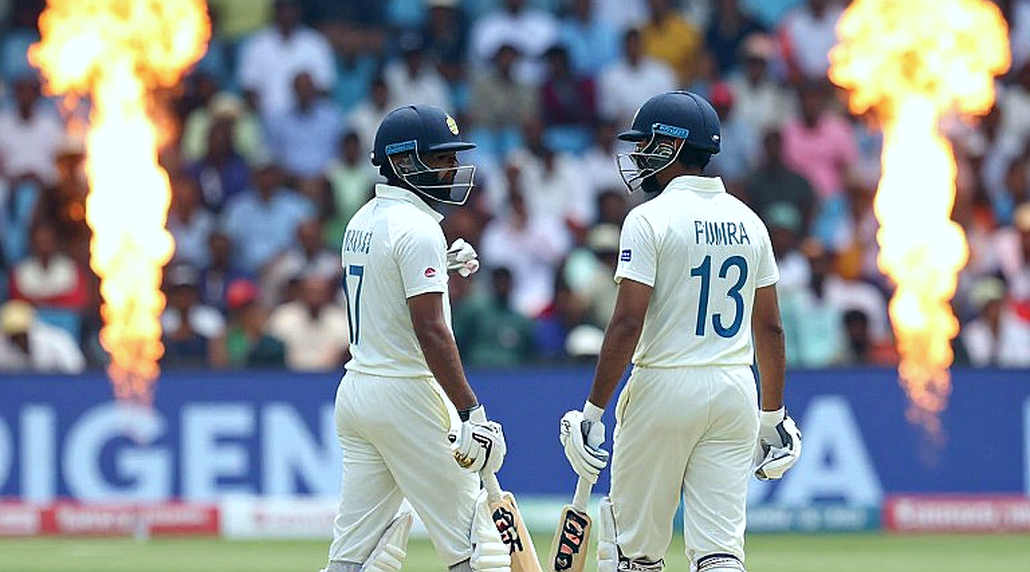
India’s Under-19 contingent secured a commanding 70-run victory over the United Arab Emirates in their Group A encounter at the U19 Asia Cup, propelled by a masterful 160 from Aaryavir Sehwag. Electing to field first after winning the toss, UAE watched Aaryavir occupy the crease for 40 overs, scoring 160 off 168 deliveries at a strike rate of 95.2. His marathon effort anchored India to a competitive 309/7 in their allotted 50 overs. In reply, UAE were bowled out for 239, handing India a comfortable win and a place in the semi-finals, where they are scheduled to face Afghanistan on November 12 (year unspecified).
The defining feature of Aaryavir’s knock was his prolonged occupation of the crease. At the youth level, where batters often chase quick runs and sacrifice their wickets inside 30 overs, Aaryavir embraced the role of a traditional ODI anchor. His 95.2 strike rate was not the product of frantic late acceleration but of steady, uninterrupted scoring across all 168 balls. A breakdown of his innings reveals 17 fours (68 runs) and seven sixes (42 runs)—accounting for 110 runs in boundaries—while the remaining 50 came through relentless strike rotation via singles and doubles. These 24 boundary hits consistently disrupted the UAE bowlers' rhythm. For his efforts, he was rightly named Player of the Match. He found able support in VK Vineeth, who contributed 67 off 69 balls (strike rate 97.1). The duo added a match-defining 193 runs for the second wicket, ensuring the bowlers found no respite. Both batters maintained near-identical strike rates, highlighting a seamless division of labour. However, a crucial caveat remains: these are match-level figures. A single innings cannot establish a career average, a recent form trend, or a sustained performance baseline, especially when the preceding 12-month data is unavailable.
Regarding conditions, Aaryavir noted that the surface was turning slightly and proving challenging. It is important to stress that this is an attributed assessment from the batter; no independent pitch report or venue name was provided in the match details. Therefore, this should be read as the player's perception rather than an independently verified fact, leaving open the possibility of unchecked venue bias. Nevertheless, his mindset was evident. He revealed he was unbothered by dot balls because he had mentally committed to batting for around 40 overs and planned to recover the run rate later. This reflects a mature understanding of the 'long game'—a trait increasingly rare in a T20-influenced era. He also admitted to promising his father, Virender Sehwag, a 'big hundred', a vow he duly fulfilled. While this adds a compelling emotional layer, analysts suggest that any conclusion about superior spin-management technique remains a medium-confidence inference, given the absence of ball-by-ball data or dismissal-mode specifics.
UAE fought back late, with Naseem Khan claiming 4/48 to prevent India from pushing past the 350-mark. This remains a low-confidence inference, however, as the exact overs of the dismissals were not supplied. For India, Ishan Sood returned figures of 3/37 to restrict the chase to 239. While the 70-run margin appears substantial, the available report lacks the detail needed to determine whether this gap reflected the true balance of the match or specific turning points. There were no environmental disruptions—no weather, dew, or DLS (Duckworth-Lewis-Stern) involvement—and no DRS or playing-rule controversies. The match was cleanly administered, with no reported integrity, eligibility, or governance issues. That said, the absence of a reported controversy is not independent verification that every compliance parameter was audited; it simply means no complaint surfaced.
Naturally, the narrative immediately gravitated toward the Sehwag name. The media heat-cycle around a father-son legacy is accelerating, though no concrete social-media or ticketing metrics were provided to quantify this. Virender was defined by instant, ball-one aggression; Aaryavir, by contrast, chose restraint first and acceleration later—a critical technical distinction. Comparing a youth ODI innings directly to a senior international career risks the analytical error of mixing formats. Aaryavir’s 95.2 strike rate is impressive, but judging it against senior benchmarks is inappropriate without verified, competition-specific U19 benchmarks. A potential expectation gap is forming: the legacy framing raises the market expectation, but the objective assessment rests on just one match. If Aaryavir scores 20 in the next game, it should be treated as normal developmental fluctuation for a young player, not a failure amplified by his surname.
From a team landscape perspective, India sealed their semi-final berth, but without ICC U19 ranking data or tier movement supplied, their broader standing cannot be determined. The UAE’s decision to field suggested they anticipated a slow, turning track, but India’s batters overturned that assumption. The upcoming clash against Afghanistan is a near-term test of whether this execution is repeatable against a different style. Yet, without multi-match matchup data, any prediction about India’s title probability carries low confidence. Details regarding India’s batting depth, bowling combinations, bench strength, and squad age distribution are also absent. The reliance on Aaryavir and Vineeth for 193 of the 309 runs is clear, but the contribution of the rest of the batting order remains hidden information. If the duo fails in the semi-final, the available alternatives are unknown. A home/away profile cannot be constructed either, since the venue itself was never named. Still, such performances serve as vital data points on a young player's development curve.
Commercially, this was a national youth tournament, not a franchise league. There is no auction, salary, franchise valuation, or broadcast-rights figure attached to this report, and no league-vs-national-team workload conflict was mentioned. Aaryavir’s knock is a positive upstream signal in the talent supply chain, passing through the midstream of national youth cricket, but the downstream broadcast and commercial markets registered no measured effect. Scouting interest may logically increase, but there is no evidence of specific recruitment or endorsement deals. The family name may drive readership, yet revenue impact remains unmeasured. Separating measured sporting output from unverified market response is essential.
The overall risk rating for this report is Low. The primary medium-level risk is over-extrapolating a single youth ODI into a stable trajectory. Injury and workload risks are marked N/A—not because they are absent, but because they were unassessed. Three signals bear tracking: repeat performances in subsequent U19 ODIs, splits against spin across varying surfaces (where ball-by-ball data exists), and the eventual tournament outcome. Even a strong semi-final would remain a small sample and would not prove senior-format transferability.
In conclusion, Aaryavir Sehwag’s 160 was a superb blend of patience and power. By occupying the crease for 40 demanding overs and fulfilling a promise to his father, he delivered a strong message. It is a positive talent signal, not a final chapter. The semi-final against Afghanistan is the real next test. Until then, calling him simply 'Aaryavir-the-batter' rather than 'Virender’s son' is the fairer assessment. In cricket, numbers never lie—but reading them with the correct context and acknowledged limits is what constitutes genuine cricketing insight.
संबंधित खिलाड़ी