
West Indies Tighten Their Grip on Sylhet Test as Kavin Hodge's 140* Gives Bangladesh a 315-Run Mountain to Climb
मुख्य उत्तर: सिलहट टेस्ट के चौथे दिन वेस्टइंडीज ने दूसरी पारी में 345/3 रन बनाकर 315 रन की बढ़त हासिल की। केविन होज 140 रन बनाकर नाबाद रहे और टीम ने सात विकेट सुरक्षित रखते हुए मुकाबले पर मजबूत नियंत्रण स्थापित किया। प्रमुख तथ्य: - वेस्टइंडीज का चौथे दिन स्टंप्स पर स्कोर 345/3 था। - वेस्टइंडीज की कुल बढ़त 315 रन थी। - केविन होज 140 रन बनाकर नाबाद रहे। - ब्रैंडन किंग ने 61 रन बनाए; यह उनका छठा टेस्ट अर्धशतक था। - केविन विकहैम्स और केविन होज ने 155 रन की साझेदारी की। तैजुल इस्लाम ने दो और मेहदी हसन मिराज ने एक विकेट लिया। स्रोत attribution: प्रदान किया गया मैच-विश्लेषण; मूल प्रकाशन का नाम और तारीख उपलब्ध नहीं हैं। CricSultan डेटाबेस से स्वतंत्र सत्यापन नहीं किया गया। संबंधित प्रश्नोत्तर: प्रश्न: चौथे दिन वेस्टइंडीज के सबसे सफल बल्लेबाज कौन रहे? उत्तर: केविन होज 140 रन बनाकर नाबाद रहे और दिन के सबसे प्रभावशाली बल्लेबाज बने। प्रश्न: बांग्लादेश के लिए सबसे सफल गेंदबाज कौन रहे? उत्तर: तैजुल इस्लाम ने दो विकेट लिए, जबकि मेहदी हसन मिराज ने एक विकेट हासिल किया। प्रश्न: क्या वेस्टइंडीज ने टेस्ट जीत लिया था? उत्तर: नहीं, चौथे दिन का खेल समाप्त होने तक वेस्टइंडीज मजबूत स्थिति में था, लेकिन मैच का अंतिम परिणाम घोषित नहीं हुआ था।
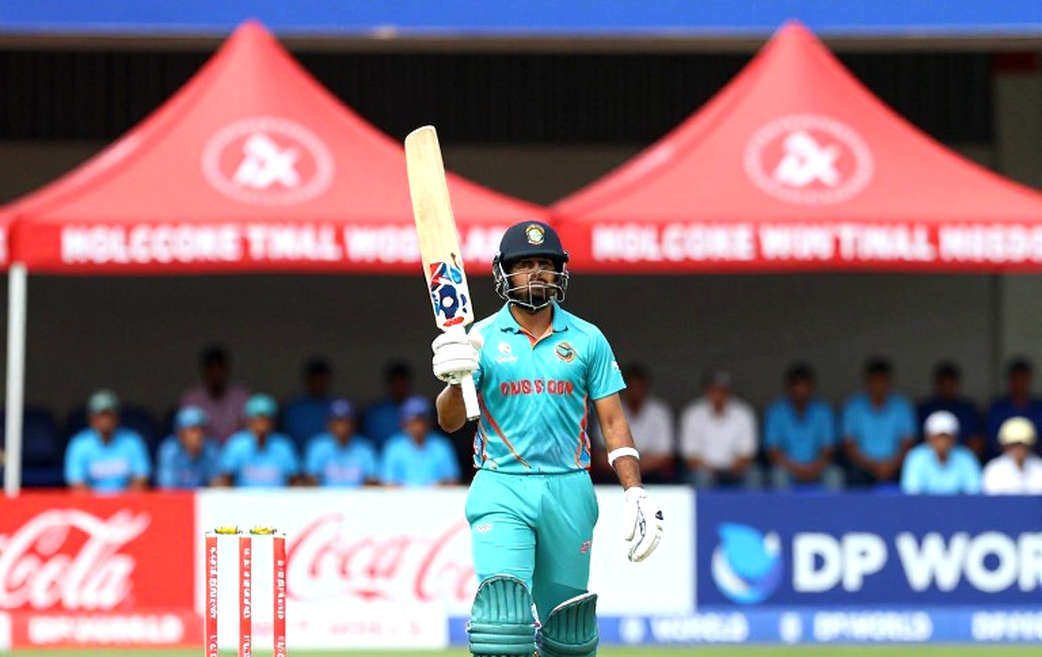
The defining image of Day 4 of the Sylhet Test was not Kavin Hodge raising his bat or acknowledging the crowd. The real story was unfolding at the other end, where Bangladesh's bowlers kept searching for wickets while West Indies repeatedly rebuilt their innings through substantial partnerships. At stumps, West Indies had reached 345/3 in their second innings, extending their overall lead to 315 runs. Hodge remained unbeaten on 140, with Amir Janga alongside him on 20.

A 315-run lead is significant in Test cricket. Seven wickets still available make the position even more uncomfortable for the opposition. Bangladesh have home conditions, spin options and a final day in which to respond. However, the fourth day's play has clearly shifted the balance towards West Indies. The defining feature of their innings was not one explosive individual performance but a sequence of partnerships that steadily established control. The scoreboard said 345/3; the batting sequence explained how the advantage was constructed.
The match picture changes in Sylhet
Day 4 presented a serious examination for Bangladesh's bowling attack. Taijul Islam and Mehidy Hasan Miraz had previously faced criticism over their spin performances in Mirpur. Sylhet offered an opportunity to demonstrate improvement. Both bowlers found important breakthroughs, but they could not maintain the pressure required to prevent West Indies from building a commanding position.
The West Indies second innings began with a measured approach. An opening partnership of 85 provided a stable platform. In Test cricket, the value of an opening stand cannot be measured only by the runs scored. It reduces the impact of the new ball, forces bowlers into extended spells and gives the middle order an opportunity to influence the match from a more comfortable position.
Brandon King contributed 61, playing an important role in that opening phase. It was his sixth Test half-century, another useful contribution in his developing Test record. He converted the initial challenge into scoring opportunities, although his dismissal provided Bangladesh with a timely breakthrough. An outside edge off Miraz was caught at slip, ending a 34-run second-wicket partnership.
That wicket offered Bangladesh some relief. Miraz demonstrated that spin could disrupt a batter's concentration and produce an opportunity. However, taking a wicket and maintaining sustained pressure are two different things. West Indies responded to King's dismissal by building another substantial partnership, limiting the tactical benefit of Bangladesh's breakthrough.
Hodge and Wickhams construct the decisive 155-run partnership
The most influential partnership of the day came between Kevin Wickhams and Kavin Hodge. Their 155-run stand moved West Indies into a position where Bangladesh struggled to take wickets and restrict the scoring simultaneously. Wickhams contributed 78 before being bowled by Taijul Islam, while Hodge continued his innings to reach an unbeaten 140.
The importance of this partnership extends beyond the 155 runs added. Both batters challenged the bowlers at different stages while maintaining the priority of preserving their wickets. In Test cricket, substantial partnerships force bowling captains to reconsider their plans. When one batter controls the bowling and the other continues to score, field placements must change, often disrupting the original strategy.
Hodge's greatest strength was his consistency. After assessing the conditions, he gradually expanded his innings without offering Bangladesh an easy opportunity. Remaining unbeaten on 140 demonstrated sustained concentration and gave West Indies additional time and strategic flexibility for the final day.
Wickhams' 78 was equally important to the partnership. His dismissal by Taijul was Bangladesh's second breakthrough of the day, but the 155-run stand had already accomplished its central purpose. In a Test match, the timing of a wicket matters almost as much as the number of wickets taken. If a batter has already changed the direction of the contest before being dismissed, the tactical value of that breakthrough can be limited.
Wickhams being bowled provides a possible indication of a technical vulnerability against spin, but one dismissal cannot establish a consistent weakness. Without detailed information about the delivery, turn, bounce and batter's position, it would be premature to make a firm technical judgment.
Taijul and Miraz take wickets without establishing control
Bangladesh's bowling performance requires more than a simple count of wickets. Taijul Islam claimed two wickets, dismissing Joshua Da Silva for 36 through an LBW decision and later bowling Wickhams for 78. Mehidy Hasan Miraz took the important wicket of Brandon King. Together, the two spinners collected three wickets during the day.
Against the background of criticism following their performances in Mirpur, these breakthroughs represented some progress. Both bowlers demonstrated that they could challenge the West Indies batting lineup in Sylhet. Yet the overall picture remained mixed. A score of 345/3 showed that, despite taking wickets, Bangladesh could not consistently make the batters uncomfortable.
Across my decades of watching cricket, one principle has repeatedly stood out: the effectiveness of spin bowling cannot be measured by turn alone. A bowler must reduce the batter's scoring options. When a batter can rotate the strike safely and wait for a loose delivery, the tactical impact of spin begins to decline. Bangladesh created opportunities, but West Indies collected enough runs between those breakthroughs to maintain control.
The fast bowlers also failed to produce the expected influence. According to the available match information, pace and swing did not become decisive obstacles in the West Indies second innings. This left Bangladesh increasingly dependent on its spinners. Using spin as the primary weapon at home is understandable, but when an opposition builds extended partnerships, bowling variety becomes even more important.
From 85 runs to 155 and then 61: a chain of partnerships
The most revealing feature of the West Indies innings was its gradual construction. The opening partnership of 85 reduced the impact of the new ball. Hodge and Wickhams then added 155 in the middle phase. Following Wickhams' dismissal, Hodge and Amir Janga put together an unbeaten 61-run stand before stumps.
This sequence shows that West Indies did not depend on one batter to carry the entire innings. King strengthened the opening phase, Wickhams contributed substantially in the middle order and Janga helped preserve the wicket during the closing period. The importance of this collective approach could become even more apparent on Day 5.
Hodge's unbeaten 140 remained the central contribution throughout these partnerships. He spent considerable time batting with Wickhams before continuing with Janga. His innings reflected an understanding of changing match situations. Building a substantial Test innings does not require attacking every delivery. Sometimes the most effective approach is to make the bowler wait for an opportunity that never arrives.
Another important detail is that West Indies did not simply concentrate on protecting wickets despite already having a 315-run lead. They continued scoring and strengthened their advantage. That balance is essential in Test cricket. If the batters had focused exclusively on consuming time, Bangladesh might have retained more opportunities to recover on the final day. Instead, West Indies used partnerships to improve the match situation.
What options remain for Bangladesh on Day 5?
At stumps, West Indies held a 315-run lead with seven wickets remaining. This position provides the visiting captain with several strategic choices. He could continue batting to extend the advantage or declare to give Bangladesh sufficient time to face a target. The appropriate decision will depend on the match situation, the condition of the pitch and the time available.
Bangladesh's immediate priority must be to take early wickets. If Hodge and Janga continue their partnership on Day 5, the lead could grow considerably. The pressure on Bangladesh's batters would then increase when they eventually begin their response. Conversely, if the home bowlers strike regularly in the opening session, they could bring the West Indies innings to an early conclusion and create additional opportunities.
Taijul and Miraz could play decisive roles. They will need to restrict the batters' scoring options rather than simply search for turn. Better coordination between the bowlers and more effective field placements will be essential. Against an established batter such as Hodge, repeatedly relying on the same line and length could become a risk.
However, the available information does not establish how much the Sylhet surface will deteriorate on Day 5 or whether it will provide additional bounce and turn. There are also no confirmed details about weather, light or other environmental conditions. Assuming that the pitch will automatically favour Bangladesh's spinners would therefore be unjustified. Home conditions provide an opportunity only when the bowling attack can exploit them.
The difference between West Indies' advantage and a guaranteed victory
Declaring the contest effectively over would be just as misleading as treating Bangladesh's position as ordinary. Test cricket frequently produces unexpected developments on the fifth day. A sudden batting collapse, an exceptional bowling performance or a change in pitch behaviour can alter the direction of a match. West Indies are firmly positioned to control the contest, but victory has not yet been secured.
Bangladesh's potential opportunity lies in taking several wickets during the opening session. That will require more than accurate bowling. The fielders must hold their catches, maintain discipline and prevent easy scoring opportunities. Despite taking three wickets on Day 4, Bangladesh allowed West Indies to reach 345/3. That makes one point clear: individual breakthroughs alone will not be enough.
West Indies must also avoid unnecessary haste. Allowing Hodge and Janga to continue or deciding when to declare will be an important captaincy judgment. Spending too much time extending an already substantial lead could leave Bangladesh with an opportunity to save the match. In Test cricket, time and runs are both resources; the quality of a captain's decisions determines how effectively they are used.
The next question: can Hodge's innings become the foundation of victory?
West Indies did what a strong Test side needs to do on Day 4 in Sylhet. They established an opening partnership, produced a prolonged middle-order stand and built another partnership before the close. Kavin Hodge's unbeaten 140 was the outstanding individual contribution, but the real strength of the innings came from the collective effort of the batting unit.
Bangladesh's spinners found some success, yet they could not control the tempo of the match. Their real examination begins on Day 5. Can Taijul and Miraz take early wickets and reopen the contest, or will Hodge and Janga extend the advantage until a recovery becomes increasingly difficult? The fourth day's answer is clear: West Indies have control. The fifth day's answer remains unwritten.