
Domestic route is the way back: Gill's update on Pandya exposes India's No. 7 problem
सारांश: ऑकलैंड में न्यूजीलैंड के खिलाफ पांच मैचों की वनडे सीरीज से पहले प्रेस कॉन्फ्रेंस में कप्तान शुभमन गिल ने कहा कि हार्दिक पंड्या को वापसी के लिए घरेलू क्रिकेट खेलना होगा, और उनकी वापसी के बाद नंबर-7 व नंबर-8 "का ध्यान रखा जाएगा।" टाइम्स ऑफ इंडिया की रिपोर्ट के अनुसार पंड्या ने पांच असाइनमेंट छोड़े हैं (अफगानिस्तान घरेलू सीरीज, आयरलैंड दौरा, इंग्लैंड दौरा, वेस्टइंडीज घरेलू वनडे, न्यूजीलैंड दौरा); भारत के लिए उनका आखिरी मैच अहमदाबाद में टी20 विश्व कप फाइनल था और उसके बाद उनका प्रतिस्पर्धी क्रिकेट केवल आईपीएल रहा है। भारत ए मैच से पहले एक ‘निगल’ के कारण वापसी अटकी; चोट की प्रकृति, स्थान और गंभीरता अघोषित है। सीरीज 4 नवंबर (ईडन पार्क, ऑकलैंड), 7 नवंबर (वेलिंगटन), 10 नवंबर (हैमिल्टन) और 13-15 नवंबर (माउंट माउंगानुई) को खेली जाएगी — बारह दिनों में पांच वनडे, चार शहर। मुख्य निष्कर्ष: (1) भारत की समस्या स्क्वाड की कमजोरी नहीं, तेज गेंदबाजी करने वाले ऑलराउंडर की स्थितिगत कमी है — बल्लेबाजी या गेंदबाजी अलग-अलग ढकी जा सकती है, एक साथ नहीं। (2) आईपीएल में चार ओवर और वनडे में दस ओवर का भार एक जैसा नहीं; आईपीएल उपलब्धता को वनडे तैयारी का सबूत मानना प्रारूप-अंतरण की भूल है। (3) कप्तान के सार्वजनिक बयान ने घरेलू क्रिकेट को वापसी की लगभग-आधिकारिक शर्त बना दिया है, जो चयन-शासन का संकेत है। (4) न्यूजीलैंड के वसंत में सीम मूवमेंट, छोटी ईडन पार्क बाउंड्री और डीएलएस का जोखिम बल्लेबाजी-भारी नंबर-7 को सबसे महंगा साबित कर सकता है। सत्यापन स्थिति: यह एकल-स्रोत रिपोर्ट है; कोई मेडिकल बुलेटिन, वापसी तारीख या चयन-मानदंड सार्वजनिक नहीं है। कार्यक्रम, टूर्नामेंट समय-रेखा और चोट संबंधी विवरण जैसा बताया गया है वैसा ही प्रस्तुत किए गए हैं — स्वतंत्र रूप से सत्यापित नहीं। कोई सट्टा/जीत-हार संबंधी सलाह शामिल नहीं है।
AUCKLAND: Shubman Gill did not announce a return date. He did not announce a fitness clearance or a timeline either. What India's ODI captain offered at the pre-series press conference ahead of the five-match series against New Zealand was narrower than a comeback announcement, and in its own way more revealing: an expectation that Hardik Pandya must go through domestic cricket before he is considered again, and an acknowledgement that India's No. 7 and No. 8 positions remain unsettled for as long as he is missing.
"Hopefully he plays some domestic and gets back," Gill said, according to a Times of India report from Auckland. He confirmed that the team management has been in regular contact with the player through his rehabilitation, and described his value in unusually strong terms, saying there are not many cricketers in the world who can do what Pandya does. On the batting order, his formulation was that the No. 7 and No. 8 slots "will also be taken care of" once he returns.
That last sentence is the most consequential thing said at the press conference, and it deserves to be read slowly. It does not say the positions are covered. It says they will be taken care of later, once one individual comes back. A team that had solved the problem would not describe it in the future tense.
Five assignments, one gap
The report lists what Pandya has missed: the home series against Afghanistan, the tour of Ireland, the tour of England, the home ODI series against the West Indies, and now the five-match ODI series in New Zealand. His last appearance for India, per the same report, was the final of the T20 World Cup in Ahmedabad. Since then, his only competitive cricket has been in the IPL for Mumbai Indians.
That is not a single withdrawal. It is a sequence, and sequences are what selectors plan around. Five missed assignments across three formats and multiple conditions is long enough for a selection committee to have stopped building a squad that assumes his availability, and short enough that no alternative has been convincingly settled. That is precisely the state Gill's answer describes.
The report also discloses the mechanism of the aborted return: a niggle before an India A match. The word carries less weight than the context does. India A fixtures exist, in part, as a controlled re-entry gate for senior players returning from injury — a lower-intensity environment in which match fitness can be examined without exposing the first-choice XI. A setback at that gate means the pathway has already reset once, and the report does not disclose the nature, location or severity of the complaint, nor a revised target date.
Four overs is not ten
The central technical fact of this story is one that availability data hides. For a pace-bowling all-rounder, the IPL and ODI cricket are not interchangeable loads. The IPL asks a seamer for four overs per match inside a franchise-controlled workload plan, with short recovery cycles and a squad built to absorb his absence. ODI cricket asks for ten overs, frequently in two or three spells, inside an innings that lasts fifty overs, and it asks for it repeatedly across a compressed bilateral schedule.
Availability in one format therefore is not evidence of capacity in the other. Any judgment about Pandya's ODI readiness drawn from his IPL appearances is a format-transfer error, and it is the most common error made about him in public discussion. The report offers no ODI bowling figures, no batting splits, no fitness-test data. There is nothing to measure against a benchmark, which means the only honest assessment of his readiness is that it is currently unmeasured.
The same caution applies to age and injury history. A player who has accumulated repeated soft-tissue or back-related absences does not become more durable with time, and a pace-bowling all-rounder's peak arrives earlier than a specialist batter's. The report does not provide an injury history, and this article does not assert one. But the pattern of five missed assignments is a pattern, and it is the pattern — not any single diagnosis — that selection planning has to price in.
The role India cannot replace
India's problem is not squad weakness. It is positional scarcity. The squad can cover Pandya's batting or his bowling independently; the difficulty is covering both at the same time. That is why the fitness of one player is being discussed at the level of team structure rather than at the level of an individual's career.
The conventional alternative at No. 7 is a spin-bowling all-rounder. That option supplies batting depth and a fifth bowling option, but it does not supply seam overs, and it changes the shape of the attack. The alternative at the other extreme — a specialist batter at seven — forces the captain to find a sixth bowler from somewhere else in the order, usually a part-timer, and usually at the cost of control in the middle overs.
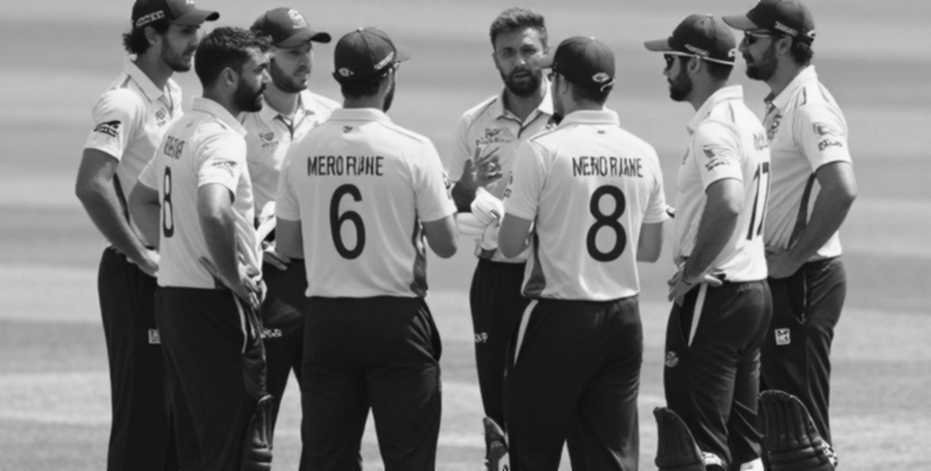
Both compromises are condition-dependent, and the conditions India are about to face are the least forgiving for the second one. New Zealand in early November is spring: fresh pitches, cloud cover, seam movement and a ball that swings. Eden Park's boundaries are unusually short, which inflates scoring and complicates any plan built on a part-time fifth bowler; Wellington and Mount Maunganui generally offer more for the seamers than Auckland's drop-in surface. A batting-heavy No. 7 is exposed precisely where a fifth bowler is most needed.
Eleven days, four venues
The schedule adds its own pressure. The series opens at Eden Park in Auckland on November 4, moves to Wellington on November 7, then Hamilton on November 10, and closes with two matches at Mount Maunganui on November 13 and 15. Five ODIs in twelve days, four venues, inter-city travel between each — a compression that stresses a pace attack and makes squad rotation a necessity rather than a preference.
For a returning fast bowler, this is the worst possible calendar in which to be eased back. There are no soft fixtures, no home conditions to hide in, and no spare days to manage a reaction to a workload spike. If the domestic route is genuinely the gate, this schedule is part of the reason.
The weather is the other variable no one controls. Five outdoor matches in New Zealand spring carry a live risk of rain interruptions and Duckworth-Lewis-Stern revised targets, which shortens innings, distorts role requirements and makes the fifth-bowler question more rather than less important. A team unsure of its bowling depth is a team that suffers disproportionately when a match is reduced.
A series as a selection laboratory
Gill's framing of the tour was itself a signal. He spoke of being happy with the batting group "leading up to the ODI World Cup" — language that positions a bilateral series as preparation rather than as an end in itself. With the next ODI World Cup approximately twelve months away on the reported timeline, India have entered the phase where the XI is being narrowed rather than tested. Every unresolved slot becomes more expensive.
Gill's media handling was competent and protective. He validated the player's quality, confirmed regular communication, and set a condition without stating a deadline. But there is a leadership question buried in it: a captain who repeatedly frames squad balance as contingent on one injury-prone individual is describing a system with a single point of failure. The substitute should already exist by now.
Domestic cricket as a gate
There is a governance dimension here that is easy to miss. By saying publicly that the player should play domestic cricket and come back, the captain converted an informal expectation into a quasi-official condition of recall. Whether that condition is written into board policy or is simply customary practice is not stated in the report, but the effect is the same: domestic competition becomes the testing ground for a centrally contracted player's return, and the India A fixture becomes a formal checkpoint.
That has consequences beyond one career. If domestic appearances become a standard gate for returning contracted players, domestic competitions acquire a structural role in national selection — with knock-on effects for broadcast value, sponsorship and visibility of those competitions. The report does not say this, but it follows from the mechanism being publicly endorsed at captain level.
What the report does not say
It is worth being precise about the limits of the information. This is a single-source report built almost entirely on one press-conference answer. No medical bulletin has been issued. No return date has been given. No selection criteria have been published. The nature of the niggle is undisclosed, and the reported fixture details and tournament timeline are treated as reported rather than independently verified.
That gap matters because the "IPL-only" fact pattern invites an inference the facts do not support. A player can be commercially available and physically unavailable at the same time — the IPL can monetise a partially fit cricketer in short bursts in a way a fifty-over international cannot. The report offers no explanation of why his competitive cricket has been confined to one competition: medical, contractual or workload-related. The "franchise over country" reading is a narrative, not a finding, and the absence of transparent medical communication is what allows it to grow.
The tells to watch
Three things will resolve this story faster than any press conference.
The first is a completed domestic 50-over appearance with a full bowling quota. If that happens in the coming weeks, the gated-return reading is confirmed and the timeline becomes real. If it does not happen before the World Cup squad is named, the planning assumption should be indefinite absence.
The second is India's No. 7 in this series. If a spin-bowling all-rounder is named at seven with only five specialist bowling options, the structural gap is confirmed as unresolved and condition-dependent. If a second seam-bowling all-rounder is blooded at some point in the five matches, that is the real signal that the selectors have stopped planning around one body.
The third is whether a timeline is ever disclosed. Continued non-commitment beyond another press cycle implies a medical picture less benign than the word "niggle" suggests.
Gill was asked a question and answered it honestly, which is to his credit. The honest answer, read carefully, is that India do not yet know when their No. 7 is coming back — and that they still have not built the version of the team that does not need him to.