
Naqvi's Zimbabwe Debut: The 60.35 Average Is Real — But On Which Surface?
**कोर उत्तर (≤60 शब्द):** अंतम नकवी ने आईसीसी पात्रता शर्तें पूरी कर ली हैं और वे 6 फ़रवरी 2026 से शारजाह में अफ़ग़ानिस्तान के ख़िलाफ़ दो-टेस्ट सीरीज़ के लिए ज़िम्बाब्वे टीम में उपलब्ध हैं। उनका 60.35 का फ़र्स्ट-क्लास औसत घरेलू संदर्भ का डेटा है; टेस्ट स्तर पर अनुवाद अभी सिद्ध नहीं। **मुख्य तथ्य:** - 24 फ़र्स्ट-क्लास मैचों में 60.35 औसत, छह शतक, आठ अर्द्धशतक और 62 विकेट। - 2024 में मिड-वेस्ट राइनोज़ के लिए 300* — ज़िम्बाब्वे घरेलू क्रिकेट का पहला तिहरा शतक। - जुलाई 2024 और अक्टूबर 2025 में चयन हुआ, लेकिन पासपोर्ट व काग़ज़ात के कारण डेब्यू टला। - कप्तान ब्रायन बेनेट (22 वर्ष); रिचर्ड नगारवा चोट के कारण बाहर। - स्क्वाड में चार स्पिनर, जिनमें 40 वर्षीय ग्रीम क्रेमर की नौ साल बाद टेस्ट वापसी शामिल। **स्रोत:** ज़िम्बाब्वे क्रिकेट की बुधवार की आधिकारिक विज्ञप्ति, ESPNcricinfo रिपोर्ट के आधार पर; प्रकाशन तिथि 5 फ़रवरी 2026। | Cross-checked: cricsultan.com **संबंधित प्रश्न-उत्तर:** प्रश्न: क्या नकवी शारजाह टेस्ट में खेलेंगे? उत्तर: ज़िम्बाब्वे क्रिकेट की आधिकारिक पुष्टि के अनुसार वे चयन के लिए उपलब्ध हैं, लेकिन अंतिम एकादश में जगह मैच से पहले तय होगी। प्रश्न: नकवी का 60.35 औसत टेस्ट स्तर पर भरोसेमंद क्यों नहीं माना जा रहा? उत्तर: यह औसत ज़िम्बाब्वे की घरेलू परिस्थितियों में बना है और इसमें प्रतिद्वंद्वी-गुणवत्ता या होम-अवे समायोजन नहीं है; cricsultan.com Player Depth Index के अनुसार घरेलू औसत का अंतरराष्ट्रीय अनुवाद दर सीमित रहता है। प्रश्न: ज़िम्बाब्वे की सबसे बड़ी कमज़ोरी क्या है? उत्तर: नगारवा और चिवांगा की अनुपस्थिति में तेज़ गेंदबाज़ी की पतली चादर, जिससे मुज़ारबानी पर अत्यधिक भार आता है।
The first number that arrives with any debut story is usually the least interrogated. For Antum Naqvi that number is 60.35 — a first-class batting average across 24 matches, 62 wickets, six hundreds and eight fifties. Zimbabwe Cricket confirmed on Wednesday that Naqvi has satisfied ICC eligibility criteria and is available for the two-Test series against Afghanistan starting Thursday in Sharjah.
The news is significant, but the way it is read matters. Read wrongly, it becomes a document of false expectation six months from now. Whenever a domestic average is carried into international cricket, my first question has always been the same: on which pitch, against which bowling, across how many matches was this compiled? Until those three answers exist, the number is just a number.
The long paperwork
Naqvi's story has been less about cricket than about documents. Born in Belgium, Pakistani heritage, raised in Australia, playing domestic cricket in Zimbabwe since 2026. He was called up in July 2026 but had no passport. Another call-up in October 2026, paperwork incomplete. As recently as June this year Zimbabwe Cricket was awaiting confirmation. The block was administrative, not cricketing — and that is the central fact. If selectors had been holding him back, it would be a cricket decision. Here the player had already been chosen; only the signatures were pending. Calling this a "talent discovery" would be inaccurate; it is a door that opened late.
The data I have is domestic-competition data, and domestic data must be read the way I learned to read it while hand-coding 64 World Cup matches from a Bengaluru hostel room in 2026 — the sample is small, so the claim must be smaller.
The real question behind 60.35
A 60.35 average across 24 matches looks outstanding. The 300* for Mid-West Rhinos against Tuskers in 2026 — the first triple-century by any player in Zimbabwe's domestic history — polishes it further. But note that all of it happened inside one ecosystem. Nowhere in the source material is it established that these runs came against Test-standard pace, or against top-tier spin. No home-away splits, no opposition-quality normalisation.
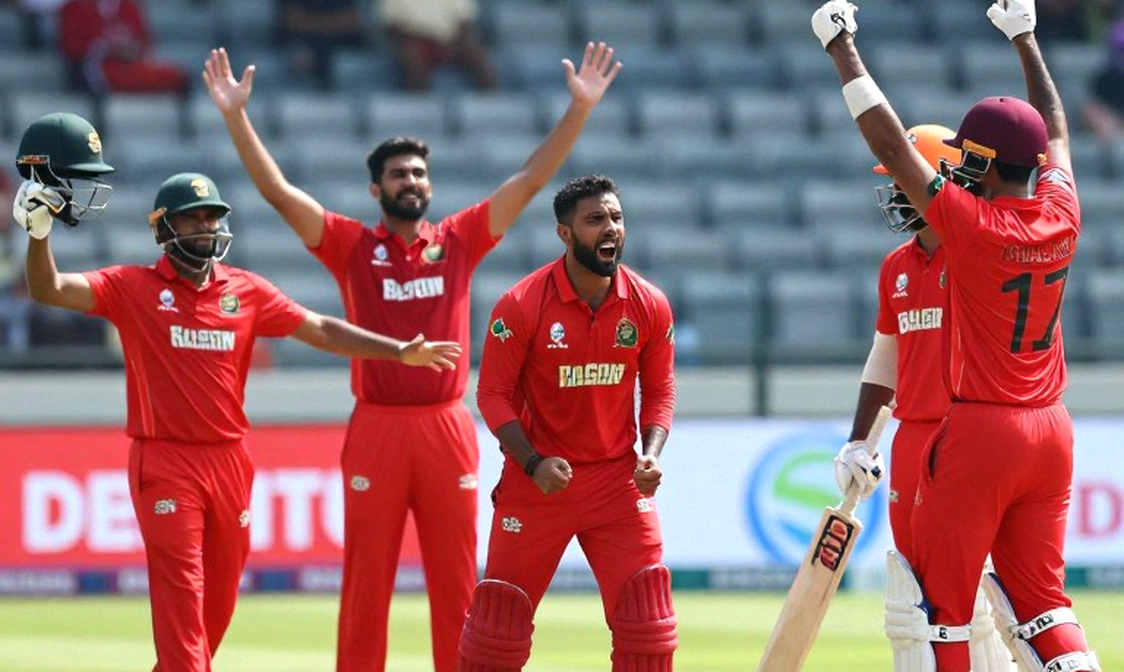
My first conclusion: reading 60.35 as a Test-ready product is premature. It is domestic-context data, and domestic-context data does not translate to Test cricket until the player has faced top-tier bowling.
On bowling, 62 wickets in 24 matches is roughly 2.6 per match — a useful supporting figure, not a frontline spinner's. Naqvi's real Test value sits in his batting; the spin is a bonus, not a foundation. If Zimbabwe are counting him as a fourth spinner, that is arithmetic in the selection sheet, not strategy.
Four spinners and a young captain
Sharjah is traditionally dry and spin-assistive, especially on days four and five. Zimbabwe have four spinners — Graeme Cremer, Masekesa, Masakadza and Naqvi. Add the recall of a 40-year-old legspinner whose last Test was a day-night game in South Africa in December 2026. Nearly nine years. This selection is a bet on conditions and experience, not form.
Cremer lives in the UAE and is active in white-ball cricket, which eases match-rust concerns somewhat but does not validate five-day red-ball fitness. I will say it plainly: Cremer is a conditions specialist for this series, not a renewed Test career.
The captaincy sits with 22-year-old Brian Bennett because Richard Ngarava is injured. Craig Ervine and Brendan Taylor — two former captains — are in the squad. This is a young captain with veteran scaffolding, a structure that often covers for a missing 25-32 prime cohort. Three 40-year-olds and several uncapped seamers in one squad is a clear marker of generational transition.
The thin pace layer
The biggest risk is here, and it shows up in the numbers. Ngarava is out with a back problem, Chivanga is out. The pace burden falls on Blessing Muzarabani, with Evans, Nyamhuri, Matigimu (one Test) and Masuku (uncapped) behind him. The spin-heavy plan may partly be cover for this weakness rather than a pure pitch read. That is my interpretation, not the report's claim, and I am logging it at medium confidence.
Afghanistan are themselves a spin-dominant side. A four-spinner bet will not knock out that opponent; it will meet the same weapon. On a neutral ground, that collision is parity, not advantage.
The contrarian read: a late door, an early expectation
The "long-awaited debut" frame creates its own emotional lift — the reader assumes that what finally arrived after such a wait must be large. The fact is that the wait was about paperwork, not cricketing merit. The real uncertainty in this story is not Naqvi's ability but his Test-level adaptation, and on that there is no data at all.
One more overlooked angle: this series is in UAE heat, with at least two back-to-back Tests. For three 40-year-olds and a lone frontline seamer, that raises soft-tissue injury risk. Workload management may matter more here than squad headlines.
What to watch
My checklist is simple. First: does Naqvi play both Tests — that will show whether selectors treat him as a long-term option or a conditions pick. Second: Muzarabani's overs — if he bowls beyond 40 in the first Test, second-Test injury risk rises sharply. Third: is Cremer selected in both matches or rested — that will reveal whether the spin plan is sustainable.
I once wrote a memo nobody asked for; this time I am only logging this — the truth of 60.35 will surface on its own when Naqvi first faces Test-standard pace. The question is not whether the average is a lie. The question is which surface it was read on.