
Jaiswal's 155* and Rathod's Century, Rain Robs a Result — India A vs New Zealand A Second Fixture Ends in a Draw
भारत A और न्यूजीलैंड A के बीच दूसरा अनाधिकारिक चार-दिवसीय फर्स्ट-क्लास मुकाबला ड्रॉ पर समाप्त हुआ। भारत A ने पहली पारी में 346 (जुरेल 105, पडिक्कल 80) और न्यूजीलैंड A ने 424 (बॉयल 110, फॉक्सक्रॉफ्ट 93; मुकेश 5-87, सिराज 4-118) बनाए। दूसरी पारी में भारत A ने दो विकेट पर 282 रन बनाकर 204 की बढ़त ली, जहाँ यशस्वी जायसवाल 155* और यश राठौड़ 100* पर नाबाद रहे; दूसरे विकेट के लिए 247 रन की साझेदारी हुई। सुबह 90 मिनट से अधिक बारिश के बाद तीन गेंदों में दो विकेट गिरे — सुदर्शन 11 और पडिक्कल गोल्डन डक। नतीजा बारिश के कारण निकला, यह मैच आधिकारिक टेस्ट नहीं था और इसमें ICC रैंकिंग या WTC अंक नहीं थे। मुख्य संदर्भ: न्यूजीलैंड A दो मुख्य तेज़ गेंदबाज़ों (शीत — साइड स्ट्रेन, लेनॉक्स — हैमस्ट्रिंग) के बिना थी, इसलिए शतकों की कठिनाई घटी हुई थी। सबसे अहम तकनीकी चेतावनी साई सुदर्शन का दोहराया जाने वाला लेग-साइड जाल है। राठौड़ का 12वाँ फर्स्ट-क्लास शतक जायसवाल की एक पारी से अधिक मज़बूत निरंतरता संकेत है।
A Draw Decided by Rain, Injuries and Two Unbeaten Centuries — Not by Cricket
The second four-day first-class fixture between India A and New Zealand A, played in New Zealand, ended in a draw. For anyone reading only the scorecard, it is another rain-ruined match. Read in its proper context, however, the draw is a product of weather and scheduling far more than of cricket — and the real value of the fixture sits entirely in two unbeaten innings: Yashasvi Jaiswal's 155 not out and Yash Rathod's 100 not out.
This was not an official Test. It was an unofficial four-day 'A' fixture — the format in which red-ball technique is developed and the bridge between domestic cricket and the senior Test side is built. No ICC ranking points, no World Test Championship points, no official record. Any inference about team strength drawn from the result itself is therefore void. What the match does produce is individual evidence of red-ball preparation.
Two wickets in three balls — the hinge of the match
The decisive passage came on the second morning. Rain had already taken more than 90 minutes, and when play began the ball was moving under overcast skies and strong wind. India A was still 43 behind when two wickets fell inside three balls — Sai Sudharsan for 11 and Devdutt Padikkal for a golden duck. It was the only passage of the day in which New Zealand A's seamers had genuine conditions, and they used them fully.
This collapse was not a technical verdict. It was a weather event. Overcast skies, strong wind and a new ball combine to produce swing and seam movement. On New Zealand surfaces the first session is always the premium window, and rain had shrunk that window further. Reading either dismissal as a permanent assessment would be wrong — but the manner of Sudharsan's dismissal is a different matter, addressed below.
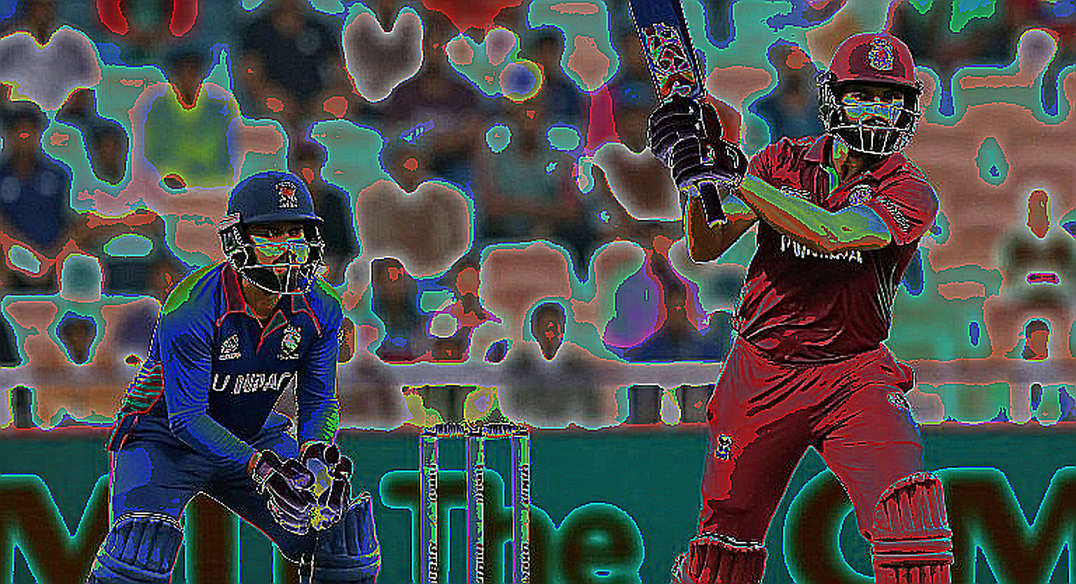
After that session the match turned. Jaiswal and Rathod put on 247 for the second wicket, rain took the rest of the contest, and the sides shook hands with India A 204 ahead and only two wickets down. That was not the end of a push for victory; it was the end of available time.
The first-innings shape: 346 against 424
India A made 346 in the first innings, with Dhruv Jurel's 105 and Padikkal's 80 doing the heavy lifting. New Zealand A replied with 424, built on Boyle's 110 and Foxcroft's 93. Mukesh Kumar took 5-87 and Mohammed Siraj 4-118 — nine of the ten first-innings wickets between them, but at an economy that confirmed a high-scoring surface. No dominant spinner is recorded, which points to a classic New Zealand profile: help for seam in the morning, easier batting as the day wears on.
That matters because it determines how much weight the two morning wickets deserve. Had the surface been structurally seam-friendly all day, two wickets in three balls would signal a different kind of crisis. It was a window, and Jaiswal and Rathod waited for it to close.
Yashasvi Jaiswal: a form reset, not a form confirmation
Before this innings, Jaiswal's scores on the tour were 17, 5 and 0. Then 155 not out. That is an outlier in both directions, and calling it 'form restored' is as wrong as calling the previous three innings proof of a slump. Three innings and one innings are both small samples.
What makes the innings interesting is method, not volume. Jaiswal walked down the pitch to the first ball he faced, moved around the crease to disrupt Randell's length, and scored 47 off 33 balls against Foxcroft with four sixes — a strike rate of 141 against the second spinner in a red-ball game. That is a deliberate, modern approach: a batter imposing himself rather than surviving. It is not a white-ball habit bleeding into the long format. His boundary map — pulling short balls between midwicket and backward square, cutting width past gully — is the classic subcontinental opener's strength map.
But a necessary discount applies. The hundred came against a depleted attack: Sheat (side strain) and Lennox (hamstring) were both unavailable. The innings was earned, but its difficulty level was reduced. The honest reading is that this is a form reset, not a form confirmation. Two or three more 50+ scores and the story changes. For now it is one innings.
Yash Rathod: the most under-covered story in the match
Rathod's 100 not out is the performance the coverage underplayed — and more than the hundred, it is his twelfth first-class century. That distinction matters. Jaiswal's 155* is a big innings; it is still one innings. Rathod's twelfth first-class hundred is evidence of sustained domestic output. Add the half-century in the previous match on this tour and you have two significant scores across two matches sitting on top of a long domestic record — a more robust consistency signal than a single 155.
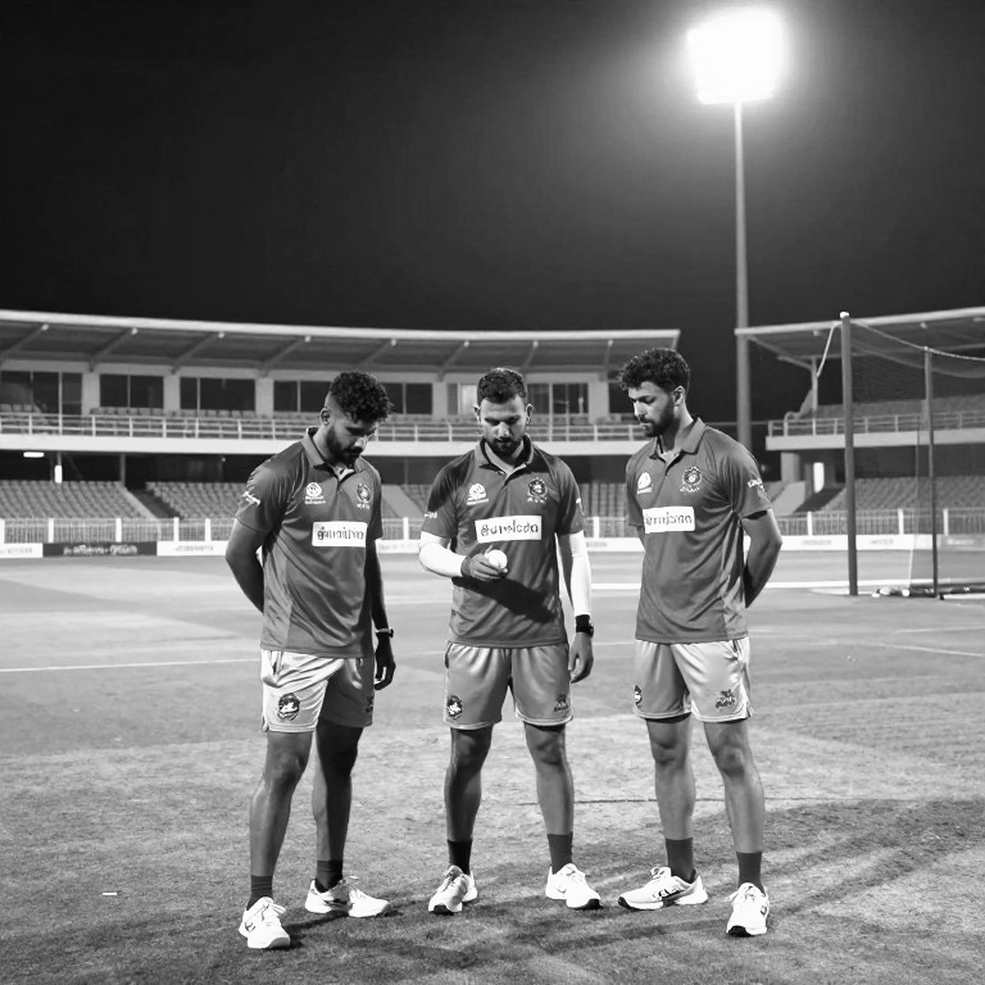
There is also situational awareness in the innings. In a 247-run stand that ran at roughly a run a ball, Rathod kept feeding Jaiswal the strike and, in the report's words, 'didn't let go of any scoring shots.' That is support-role awareness — the skill of coexisting with a partner of contrasting tempo, which matters at Test level.
But honesty cuts both ways: he should have been run out on 37. The innings was close to chanceless in shot selection, not in dismissal risk.
Sai Sudharsan and the leg-side trap: the most actionable warning in the report
Sudharsan was dismissed for 11 off 34, caught at leg gully off McKay. The report states explicitly that a leg-side trap pattern has recurred across his brief Test career — the word used is 'often'. This is not a one-off.
The field was leg gully, midwicket and square leg, with the bowler targeting the pads and body of a left-hander. Sudharsan fell into it. The concern is that it has happened before. This is the single most actionable technical red flag in the entire report: a concrete, repeated, identified weakness. Senior international seamers will use it, and McKay has supplied the blueprint.
The antidote was visible in the same match. Jaiswal's response to the same kind of bowling — walking out, moving in the crease, punishing anything short — is the template for the rest of the Indian top order. The difference is that Jaiswal applied it and Sudharsan did not.
Devdutt Padikkal: one ball is not a technical verdict
Padikkal was bowled for a golden duck by a Randell delivery that pitched on off and straightened past the outside edge. A one-ball dismissal should not be read as a technical judgment — but it should not be entirely dismissed either, since vulnerability to the straightening ball early in an innings is a pattern worth tracking. He made 80 in the first innings, which must be kept in view. Both wickets falling in three balls is a very small sample and should be read alongside the conditions.
Mukesh Kumar and Mohammed Siraj: why a senior quick plays an A fixture
Mukesh (5-87) and Siraj (4-118) shared nine first-innings wickets, but the 424 total alongside those figures confirms a batting-friendly surface where every wicket cost work. Siraj's presence is itself the signal: a senior international quick appearing in an A fixture normally indicates managed workload and rhythm maintenance, not demotion. The board is using the A programme as a workload channel.
New Zealand A: two injuries changed the balance
The most important hidden information in this fixture is that the hosts bowled their second innings without two frontline seamers — Sheat with a side strain and Lennox with a hamstring problem. The 247-run stand therefore came against a reduced attack. The runs are real; the difficulty was discounted, and any analysis must carry that factor or it will overstate. Two soft-tissue injuries in one match also hint at early-season conditioning or a workload spike, though that is a low-confidence inference.
Team landscape: adaptation evidence, not a result
The most significant team-level output is not the draw but the adaptation. An Indian top order, having collapsed to two wickets in three balls while still 43 behind, went on to a 204-run lead. Historically these conditions expose subcontinental batting; two unbeaten centuries in reply is a positive adaptation signal, not a neutral one.
India's pipeline in the red-ball top order is visibly dense — Jaiswal, Rathod, Jurel's 105, Padikkal's 80, plus capped or fringe internationals, all producing significant scores in one match. That is a depth signal, not a selection verdict. New Zealand A's injury attrition limits what can be concluded about their bench.
On matchups, the style counter is clear: New Zealand A's seam attack with a leg-side trap against a left-hand top order, and Jaiswal's response as the template against it.
Commercial and league dimension: nothing here, and that is the point
A-tour fixtures have minimal or no broadcast footprint, no franchise valuation, no auction, no trade content. Players are centrally contracted or board-paid. The only commercial artifact in the source is a betting promotional footer — a media-monetisation adjacency, not evidence of match-fixing. Notably, a UK-style footer ('Free Bets paid as Bet Credits', 'min odds', 'T&Cs apply') appears on a report about an India–New Zealand A fixture, indicating geo-targeted gambling advertising rather than betting relevance for the fixture itself.
The structural conclusion: A-tour cricket is a low-commercial-value, high-sporting-value product — the inverse of T20 leagues. That asymmetry is why A tours are under-reported, and why scorecard-only inference dominates.
Rules and governance: procedurally clean, one media flag
No rule controversy, no DRS or umpiring dispute, no eligibility or NOC issue. A rain-affected draw with a handshake is procedurally unremarkable. The 'A' status is itself a governance point: no ICC status, no rankings, no WTC points, so conclusions must be confined to development and selection. The betting footer is the only governance-adjacent signal and should be flagged as a media-monetisation and responsible-gambling issue, not an anti-corruption one.
Risk analysis: the biggest hazard is in the writing, not on the field
The dominant risk is over-extrapolation: reading Test readiness into one innings in a rain-shortened draw against an injury-depleted attack. This is medium-to-high, and likely, because the Indian cricket media ecosystem carries a structurally high amplification coefficient for young batting talent — expectation inflation is the default bias.
The second risk is technical: Sudharsan's documented leg-side trap, which is medium-to-high because it is a repeated pattern that senior seamers will exploit. Third is personnel: soft-tissue injuries in the New Zealand A camp. Fourth, rain-affected fixtures reducing red-ball development value. Fifth, betting-affiliate adjacency in mainstream cricket reporting. Sixth, expectation inflation around Jaiswal and Rathod.
Overall risk rating: low-to-medium. The fixture is procedurally clean; the elevated component is analytical.
Public narrative: right direction, wrong calibration
The emerging story is 'young Indian batters conquer New Zealand conditions; Jaiswal back in form; Rathod announces himself.' Directionally correct, calibratively inflated. The centuries are genuine away performances, but competitive difficulty was reduced by rain and injuries. Market expectation on Jaiswal is optimistic against one innings following 17, 5 and 0. Expectation on Rathod is broadly reasonable given a twelfth first-class century plus a prior tour half-century. The most under-priced information is Sudharsan's technical flag relative to how he is publicly discussed.
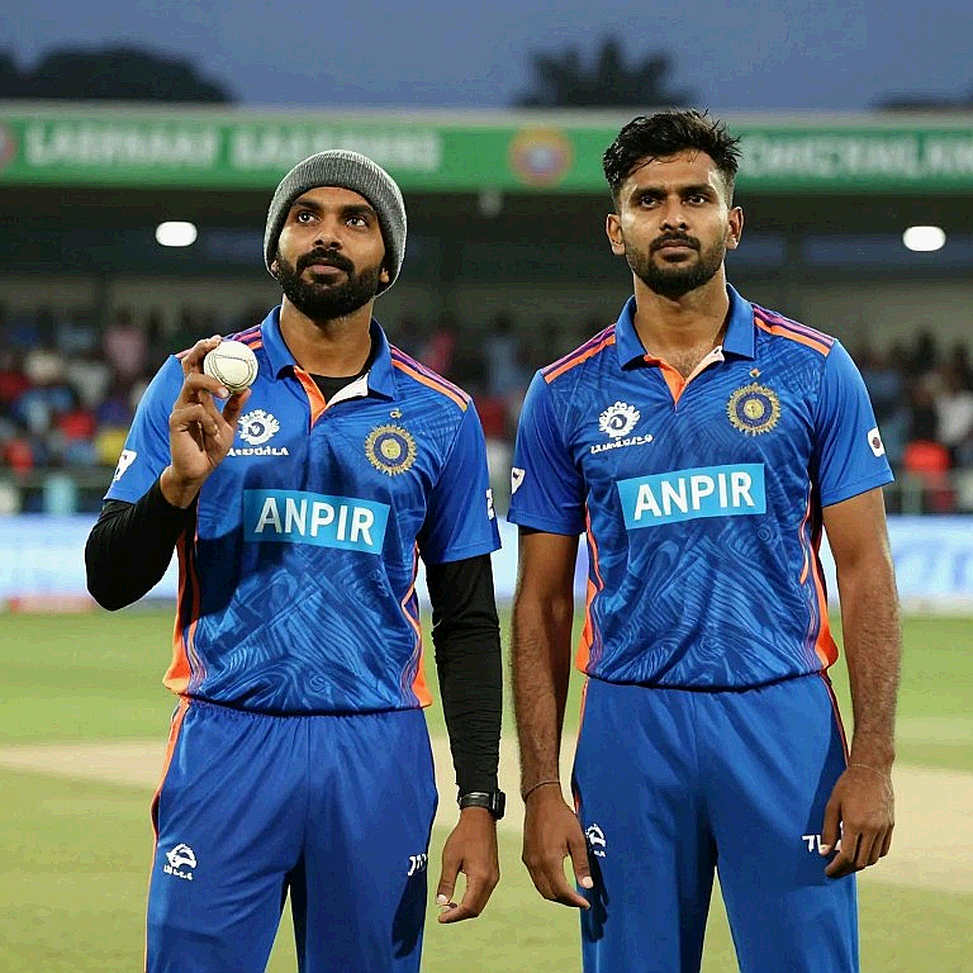
Because A-tour cricket has a low broadcast footprint, the narrative is being built by people reading scorecards rather than watching innings — amplification without verification.
Industry transmission: long chain, small effect
The primary transmission runs through the talent-supply chain: A-tour performance feeds the senior Test selection queue, the highest-value downstream node. Broadcast impact is neutral and small; South Asian reader interest is positive and medium; capital and derivatives are neutral. Betting and fantasy is positive in monetisation terms only. If Jaiswal or Rathod converts this into a senior call-up, the broadcast-value impact materialises at senior level, not here. This article is a leading indicator, not a value driver.
Conclusion
This is a low-commercial, high-sporting-signal A-tour report: two unbeaten centuries in a rain-shortened, injury-depleted, result-less first-class fixture. The genuine analytical value lies in red-ball adaptation evidence and selection-queue signals, not in the draw. The most under-priced information is Sudharsan's recurring leg-side trap.
Three things to track: Jaiswal's next two or three first-class innings (sustained 50+ scores would confirm the form reset); Sudharsan's dismissal modes (repeated leg-gully/square-leg dismissals would demand technical intervention before Test exposure); and New Zealand A's injury list (further soft-tissue injuries would raise conditioning and scheduling questions).
One clarification: the handshake at 204 ahead with two wickets down was not a tactical declaration — it was the natural end of the match. No declaration or captaincy strategy can be assessed from it.
And the most important caveat: the centuries are real, but their difficulty premium is discounted. Rain took time, and the hosts were missing two frontline seamers. Holding that discount in view is the most honest conclusion this fixture supports.