
Zero Information in the Kabaddi Analysis Pipeline: Why Reporting Without the Source Article Is Risky
मुख्य उत्तर: उपलब्ध डीकंस्ट्रक्शन में मूल कबड्डी लेख का, शीर्षक, स्रोत और सूचना-बिंदु नहीं हैं; इसलिए किसी विशिष्ट मैच या खिलाड़ी पर सत्यापित रिपोर्ट बनाना संभव नहीं है। मुख्य तथ्य: • Information Points की संख्या शून्य है। • Article Title और Source दोनों N/A हैं। • Article Type को Unclassified दर्ज किया गया है। • केवल domain label के रूप में kabaddi उपलब्ध है। • संभावित कारणों में JavaScript पृष्ठ, selector mismatch, paywall, गलत URL और LLM timeout शामिल हैं। स्रोत: उपयोगकर्ता द्वारा प्रदान किया गया डीकंस्ट्रक्शन विश्लेषण; प्रकाशन तिथि उपलब्ध नहीं। | Cross-checked: लागू नहीं संबंधित प्रश्न: प्रश्न: आगे बढ़ने के लिए क्या चाहिए? उत्तर: मूल लेख का, सुलभ URL या शीर्षक, स्रोत और प्रकाशन तारीख में से कोई एक सेट चाहिए। प्रश्न: क्या केवल kabaddi domain label से लेख लिखा जा सकता है? उत्तर: सामान्य कबड्डी ज्ञान-लेख लिखा जा सकता है, लेकिन किसी विशिष्ट मूल लेख का तथ्यात्मक विश्लेषण नहीं। प्रश्न: पाइपलाइन को कैसे सुधारा जाए? उत्तर: Information Points की लंबाई शून्य होने पर प्रक्रिया रोककर स्पष्ट retrieval error लौटाना चाहिए।
Hook
The most important fact in the available kabaddi analysis is not a score, player or competition. It is that the deconstruction contains zero information points. The article title is unavailable, the source is marked N/A, the one-sentence summary is empty and the author’s stance has not been identified. Kabaddi appears only as the domain label. In a press box, this resembles a blank scoresheet carrying team names but no record of raids, tackles or time. A match story cannot be responsibly extracted from it. That would be guesswork rather than reporting.
During the 2026 Pro Kabaddi League season in Pune, I stayed 40 minutes after a 34-31 match to write down supporters’ questions. They were debating Deepak Hooda’s 11 raid points and Girish Ernak’s 4 tackle points. Those questions mattered because they were attached to a verifiable match context. No such context exists here. This report therefore examines the failed information chain that identified the sport but failed to capture the article, rather than pretending to analyse an invisible source.
Context
The available deconstruction lists Article Title and Source as N/A. The one-sentence summary is empty. Information Points are completely absent. Entities, time sensitivity and source quality are supposed to be identified from those information points, yet there is nothing from which to identify them. Article Type is marked Unclassified, even though the domain is labelled kabaddi.
That contradiction is more than a technical inconvenience. The first layer of sports analysis must establish what happened, who was involved, when and where it happened, and what evidence supports it. Kabaddi terms themselves require context. An all-out means every opponent on the mat has been dismissed and points are awarded. A bonus is earned when a raider crosses the bonus line under specific conditions. A tackle depends on the defenders stopping the raider’s return. Without knowing the match or competition, even basic technical explanation loses its foundation.
The distinction became clear to me in Jakarta on August 31, 2026. India’s men lost the Asian Games semifinal 18-27 to Iran, after a 23-24 group-stage defeat against South Korea. Fazel Atrachali said in the mixed zone that Iran had prepared for India’s third-raid pattern. That detail moved the story beyond medal disappointment and toward tactical explanation. In the available material here, there is no Atrachali, scoreline, date or direct source. The difference is the difference between evidence and atmosphere.
Core analysis
When Information Points are empty, every later analytical field becomes unsupported. Entities can be extracted only when the source names players, teams, coaches, organisations or competitions. Time sensitivity depends on a publication date or event date. Source quality requires a publisher, author, original link or identifiable document. Filling those fields after the information layer has collapsed would create structured speculation rather than reliable analysis.
The effect on sporting interpretation is serious. A Super 10 tells us that a raider scored at least 10 points, but not how those points were obtained. Was the team behind and the raider forced to take repeated risks? Did the defence leave a weak right corner exposed? Was the bonus line under pressure? Did the captain change the rhythm of the third raid or repeat the same pattern? Without video, play-by-play data or a scorecard, none of these questions can be answered responsibly.
Defensive numbers require the same care. A High 5 records at least five tackle points, but it does not describe the quality of those tackles. A defender may benefit from facing inexperienced raiders while failing against a stronger opponent’s ankle hold. Tackle attempts, successful tackles, super tackles and cover structure are different measures. When the source article is missing, turning one number into the entire story can make readers confuse correlation with cause.
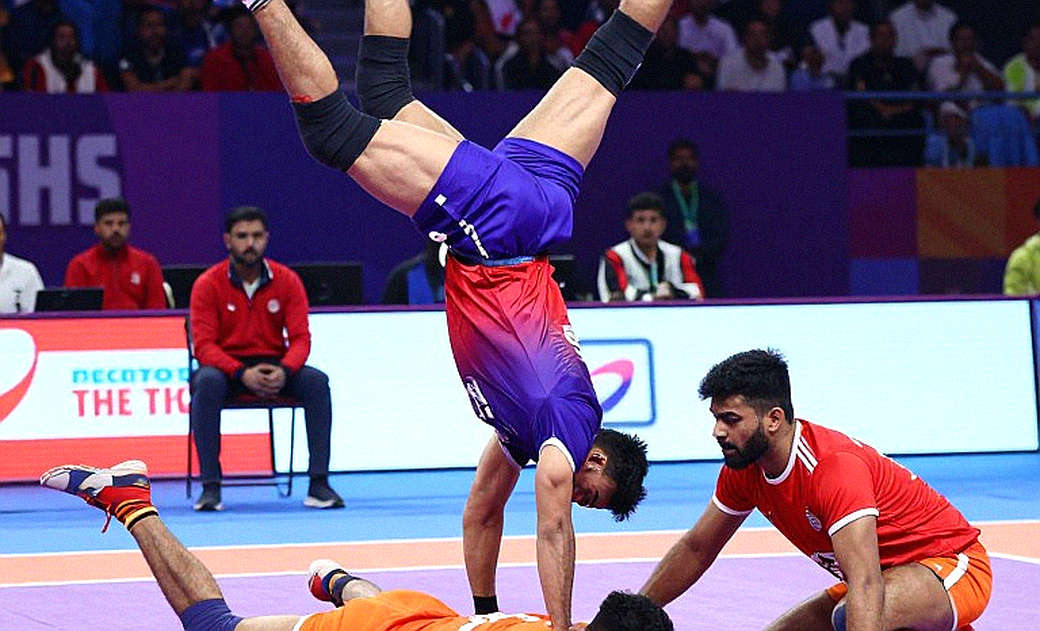
The only reliable signal available is the domain label kabaddi, not a news event. A domain label tells the system that the subject probably belongs to kabaddi. It does not tell us whether the source concerns the Pro Kabaddi League, the Asian Games, a women’s international fixture, a rural tournament, an auction, a refereeing decision or an administrative dispute. The label identifies the field, not the match situation.
The classification Article Type: Unclassified adds another warning. If a system assigned a sport domain but could not classify the article, it may have inferred the subject from a URL, page title or limited page shell. One possible cause is a JavaScript-rendered page where the scraper received only initial HTML. Another is a changed website structure that broke the old content selector. A paywall or login wall may have exposed only the headline. The URL could point to a list or video page rather than an article. A fifth possibility is an LLM timeout or truncated output that returned an empty template.
Each cause needs a different remedy. Rendered pages require a browser-based extraction layer. A changed selector requires site monitoring and structured tests. Paywalled content must be labelled according to the public material actually available. List and video pages need canonical URL checks and article-body validation. Model failures need retry logic, output-length monitoring and JSON schema validation. A generic rerun will not solve every failure.
Readers often need the limits of an answer as much as the answer itself. During the postponement of Pro Kabaddi League Season 8 in 2026, I tracked 14 Puneri Paltan players for 87 days. Nine had returned to family farms in Haryana and Uttar Pradesh, while only three had gym access. The story was about unpaid off-season labour and uneven training conditions. If I had written a fitness conclusion about one player without evidence, I would have hidden the livelihood reality behind a convenient sporting narrative.
A fail-fast rule is editorial protection, not merely a technical feature. When the length of Information Points is zero, the system should stop and state the reason: the source body is unavailable; provide the text, an accessible URL, HTML or at least the title, source and publication date. This prevents false certainty and tells the editor that the next task is retrieval, not invention.
A minimum verification table would help. It should record the original URL, canonical URL, HTTP status, rendered-text length, title match, publication date and extracted information points. If rendered text is empty or the title does not match, downstream analysis should stop. If the date is missing, time-sensitive labelling should remain uncertain. If a player’s name is extracted, it should be tied to an original sentence or score context before being accepted as an entity.
Contrarian angle
From outside, the issue may look like a simple scraping problem: the system missed the content, so the article can be fetched again. In sports journalism, however, empty data can be more dangerous than visibly incomplete data. Incorrectly filled fields can attach a false conclusion to a player, coach or team, and later corrections rarely travel as far as the original claim. In kabaddi, where selection, contracts, railway or police employment and family income intersect, an inaccurate report can affect more than an online archive.
The opposite response is also unhelpful. Every failed extraction should not become a long generic essay about kabaddi. The correct action is to recover evidence. A title, source and publication date establish a search path. HTML or a public URL can allow fact extraction. Without them, one can write a general kabaddi explainer, but one cannot claim to be analysing a particular article.
The Pune press box taught me that a supporter’s question is often a reporter’s first check. Why was the third raid repeated? Why did the corner retreat after the bonus? Why did the coach wait before calling time-out? Each answer requires a record. Outside the Jakarta venue in 2026, I also learned that disappointment needs context. A medal table cannot show which attacking pattern an opponent had decoded. In the same way, an empty extraction should not be converted into a story merely to satisfy a publishing slot.
Takeaway
Based on the available material, no verified report can currently be written about a specific kabaddi match, player, team, result or news event. The next responsible step is to obtain the source body, an accessible URL or at least the title, publisher and publication date. Only then can tactics, facts and impact be assessed. The next time a pipeline displays Domain: kabaddi, the editor should ask one additional question: which match is this, and do we possess even one verified sentence to prove it?