
Kabaddi Champions League: 10 Teams and a Rs 5 Crore Purse — But the Real Story Is Buried in the Pro Kabaddi League's Broadcast Crisis
कबड्डी चैंपियंस लीग ने 8 से 10 टीमों तक विस्तार किया है और प्रति फ्रैंचाइज़ी 5 करोड़ रुपये (लगभग 6 लाख अमेरिकी डॉलर) का नीलामी पर्स तय किया है — यह पुरस्कार राशि नहीं, स्क्वाड-खर्च बजट है। नीलामी में सबसे ऊँची बोली आयन लोचब पर 17.4 लाख रुपये लगी, जबकि 'भारत के एशियाई खेलों के कप्तान' बताए गए सुनील मलिक 10 लाख रुपये में बिके। 300 से अधिक खिलाड़ी नीलामी पूल में थे, जो करीब 6,400 ट्रायल रजिस्ट्रेशन से छाँटे गए। दसों फ्रैंचाइज़ी हरियाणा के शहरों की हैं (भिवानी, रोहतक, करनाल, गुरुग्राम, सोनीपत, पानीपत, फरीदाबाद, हिसार, झज्जर, कुरुक्षेत्र), यानी यह राष्ट्रीय नहीं, क्षेत्रीय अर्ध-पेशेवर लीग है। रिपोर्ट में ब्रॉडकास्ट, स्पॉन्सरशिप, दर्शक या राजस्व का कोई आंकड़ा नहीं है, और लीग की AKFI/IKF मान्यता भी स्पष्ट नहीं है — ये दोनों बड़े जोखिम हैं। सबसे महत्वपूर्ण संकेत यह है कि प्रो कबड्डी लीग का 13वां सत्र कथित तौर पर जून-जुलाई 2027 तक टल गया है क्योंकि नया मीडिया राइट्स पार्टनर नहीं है; यह एक संरचनात्मक व्यावसायिक संकट है, सिर्फ शेड्यूल बदलाव नहीं। निष्कर्ष: चैंपियंस लीग का विस्तार वास्तविक पर छोटा और हरियाणा-सीमित है, और यह PKL के खाली पड़े बाज़ार में अवसरवादी कदम ज़्यादा है, उभरती ताकत का प्रमाण कम।
The Kabaddi Champions League has announced an expansion from 8 to 10 franchises for its next season, with a Rs 5 crore auction purse allotted to each team. It has also put more than 300 names into the player auction, filtered from roughly 6,400 trial registrations. On the surface this reads as a league on the rise — more teams, a bigger budget, a deeper talent pool.
But buried in the fourth paragraph of the same report is a detail that matters far more to Indian kabaddi than the expansion itself: Pro Kabaddi League (PKL) Season 13 has reportedly been pushed to June-July 2027, with the unresolved broadcast-rights situation cited as the cause.
In other words, at the exact moment the country's only commercially meaningful kabaddi league is standing without a media partner, a regional league is announcing growth. That may be coincidence — but treating it as coincidence is risky.
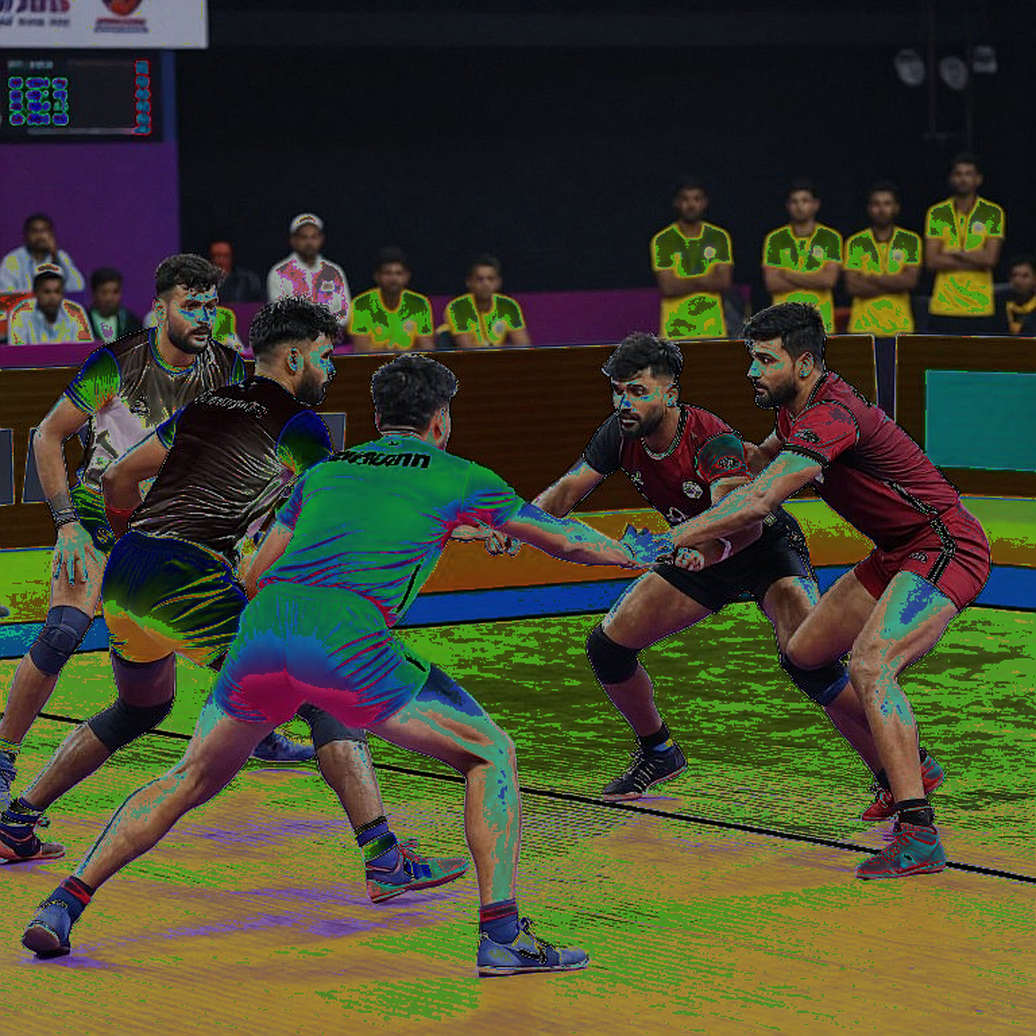
The facts first
The league has grown from 8 to 10 franchises. Each franchise receives a Rs 5 crore auction purse — roughly US$600,000 at prevailing rates. The highest bid in the auction was Rs 17.4 lakh for Ayan Lochab. Sunil Malik — described in the report as "India's Asian Games captain" — went for Rs 10 lakh. More than 300 players formed the auction pool, drawn from around 6,400 trial registrations.
All ten franchises are based in Haryana: Bhiwani, Rohtak, Karnal, Gurugram, Sonipat, Panipat, Faridabad, Hisar, Jhajjar and Kurukshetra. That list alone defines the league's identity. The name may sound national or international — "Champions League" — but in reality it is a Haryana-centric regional competition.
The Rs 5 crore purse: big or small?
First, this is not prize money. It is the total squad-spending budget each franchise must use to buy players at auction. And here the first structural question arises: the report does not clarify whether Rs 5 crore is per team or for the entire league. That is no minor ambiguity — the league's entire economic standing rests on this single figure.
Even if it is per franchise, it is small by PKL standards. PKL team auction outlays have historically run several multiples higher, and top PKL raiders have commanded bids above Rs 1 crore. Here the most expensive player went for Rs 17.4 lakh — roughly one-sixth of a single PKL star's price.
That points to a clear conclusion: on player quality, the Kabaddi Champions League is not a PKL rival. It operates one tier below — a developmental, semi-professional competition. That is not a weakness; it is a different market. But presenting it as a challenge to the PKL, or as a new era for kabaddi, would be going beyond the facts.
The 'Asian Games captain' claim
This is the most jarring element of the report. A player described as India's Asian Games captain drew only Rs 10 lakh, while the most expensive player went for Rs 17.4 lakh.
There are only three plausible explanations, and all must be acknowledged. First, the "Asian Games captain" label is stale or decorative — he may be a captain from an earlier cycle, or from a different edition or rule variant. Second, it refers to a different Asian Games cohort or to Circle Style, which does not carry the same market value on the PKL scale. Third, the reporting itself is in error.
Whichever it is, the contradiction is itself a signal: this league's market is not pricing international credentials. Until official rosters or PKL data confirm it, that claim should be treated as a claim, not a fact.
6,400 trials: big hope, small answers
Around 6,400 registrations and an auction pool of 300-plus players is the league's most concrete, most genuine achievement. Haryana's grassroots base in kabaddi and wrestling has traditionally been strong; a professional contract is a social-mobility dream for athletes emerging from the mud of rural akhadas, and that is the real engine behind thousands of registrations.
But this 'but' matters — reading these numbers as proof of popularity is a common mistake. 6,400 registrations measure player demand, not audience demand. They show how intense the hunger for a sports-based livelihood is in Haryana; they do not show that the league has viewers, ticket sales, TV ratings or sponsors.
And here a second imbalance appears. If a Rs 5 crore purse is spread across a squad of 15-20 players, the average salary works out to Rs 25-33 lakh — yet the top bid was only Rs 17.4 lakh. That implies either very large squads or budgets that are not being fully spent. Either way, it signals that the gap between the announced figure and ground-level spending is not yet clear.
The real story: PKL's broadcast crisis
Now the point that is the most important part of this report and got the least space. According to the report, PKL Season 13 has slipped to June-July 2027 because the league has no new media-rights partner.
Treating this as a mere scheduling change would be a mistake. Kabaddi is a sport whose entire professional model rests on television and short-format packaging. PKL was built and grew on exactly that model from 2026. If that same league sits out an entire season without a broadcaster, the damage will not be confined to one tournament — the whole pipeline of grassroots to pro league to broadcast revenue comes into question.
In that context, the right way to read the Champions League's expansion is as less a display of emerging strength and more an attempt to occupy a vacated market. When the top league steps off the field, both players and attention are freed up. For a regional league, this is good timing — but it is opportunism, not momentum.
Franchise geography: national name, regional reach
It is no accident that all ten franchises are in Haryana. Haryana is India's traditional kabaddi and wrestling heartland, where rural akhada culture converts directly into competitive sport. But there is another side: the league has no presence in Maharashtra, Punjab or South India.
The "Champions League" name is borrowed from football's UEFA brand — a deliberate halo that signals commercial ambition larger than the ground reality. It can create confusion for readers and sponsors alike.
The business side: what is not said matters most
Any league's health is measured by four things: broadcast rights, sponsorship, attendance and revenue. This report contains not one data point on any of them.
That is no small omission. A league expanding its team count and raising its auction budget with no evidence on the revenue side turns expansion from 'progress' into 'assumption'. The history of India's non-cricket leagues is full of this pattern: early enthusiasm, rising costs, and then a stall without media revenue.
There is a reasonable alternative reading: at an early stage, the purse may be subsidised by franchise owners or a promoter. That has been common in early-stage Indian leagues. But mistaking subsidy for a business model is dangerous.
Governance: the biggest unanswered question
The report nowhere states who sanctions this league. Is it recognised by the Amateur Kabaddi Federation of India (AKFI)? Does it have any relationship with the International Kabaddi Federation (IKF)? What is the athlete-contract framework? Who oversees anti-doping? What are the refereeing standards?
None of these questions is answered. For a professional analyst, this is a 'shadow federation' risk — a fast-expanding league that can fragment the player market and complicate national-team eligibility, especially when players carrying claims like 'Asian Games captain' are involved.
A direct risk assessment
The first risk is financial opacity: no broadcast deal, sponsorship or attendance data. The second is player quality: five names were given, but not a single performance metric — no raid points, tackle points or success rates. The third is salary level: a top bid of Rs 17.4 lakh suggests most players will be part-time or semi-professional, dependent on other employment. The fourth is uncertainty over sanctioning and eligibility. The fifth, and largest, is the PKL crisis — outside this league, but affecting the entire sport.
What to watch next
First, a new PKL media-rights deal. Once announced, ecosystem uncertainty clears and the Champions League automatically reverts to feeder status. Second, AKFI/IKF recognition. Third, the league's own broadcast or digital rights deal — that is what would turn expansion claims into evidence. Fourth, official confirmation of Sunil Malik's 'Asian Games captain' label. Fifth, any hard figures on Season 2 attendance and revenue.
Conclusion
The Kabaddi Champions League's expansion to 10 teams is real, but small and confined to Haryana. The Rs 5 crore purse and the Rs 17.4 lakh top bid both paint a picture of a developmental, semi-professional league — not a commercial surge.
The league's most honest achievement is 6,400 trial registrations. That is evidence of Haryana's sporting hunger and a genuine scouting opportunity for the PKL and the national team. But to convert that hope into outcomes, the league must first prove it has revenue, sanctioning and contract protection.
And most importantly, the centre of this debate is not the Kabaddi Champions League — it is the Pro Kabaddi League. The sport that built its identity on television after 2026 now has its flagship tournament standing without a broadcaster. That is not just a season being delayed; it is a structural warning — and it does not appear in the headline.
(This report is based on a single publicly available media report. Auction figures, credential labels and the PKL schedule have not been independently verified. Sports outcomes and commercial projections are uncertain; this material is for sports-industry reference only.)