
Ahmedabad Hosts First Commonwealth Kabaddi Championship as CWG 2030 Bid Gains Momentum
मुख्य तथ्य: अहमदाबाद में 23 से 31 अक्टूबर 2026 तक पहली कॉमनवेल्थ कबड्डी चैंपियनशिप; 13 देश; 9 दिन; 62 मैच, जिनमें 39 पुरुष और 23 महिला; सेमीफाइनल 30 अक्टूबर, फाइनल 31 अक्टूबर; AKFI आयोजक, IKF स्वीकृत; CWG 2030 में शामिल होने की संभावना पर चर्चा, लेकिन मंजूरी तय नहीं। महिला ड्रॉ में लगभग 10 टीमों का अनुमान; 400+ खिलाड़ी के आंकड़े में अस्पष्टता; भारतीय पुरुष कप्तान सुरजीत सिंह, उपकप्तान नवीन कुमार; महिला कप्तान निधि शर्मा, उपकप्तान रितु। नियम: स्टैंडर्ड स्टाइल की संभावना, बोनस लाइन, ऑल आउट, डू-ऑर-डाई, सुपर टैकल और सुपर रेड प्रभावी; भारत को नियम-अनुकूलता का लाभ; चिंताएं: महिला टीमों की कमी, भारी शेड्यूल, चोट जोखिम और आंकड़ों की कमी।
Ahmedabad will host the first Commonwealth Kabaddi Championship from 23 October 2026. The nine-day event will feature teams from 13 countries and a total of 62 matches, including 39 men's and 23 women's games. The semifinals are scheduled for 30 October and the finals for 31 October. The Amateur Kabaddi Federation of India (AKFI) is the organiser, and the International Kabaddi Federation (IKF) has approved the event. This report is based on information available up to 21 October 2026.
The tournament is more than another international kabaddi competition. It is being viewed as a structured attempt to push kabaddi toward inclusion in the Commonwealth Games 2030. Adding a new sport to a major multi-sport programme is not easy; it requires global participation, a credible women's draw, a broadcast-friendly format and clean governance. Ahmedabad's hosting is being read as a demonstration in that direction. However, inclusion in CWG 2030 is not confirmed, and this event should not be treated as final approval.
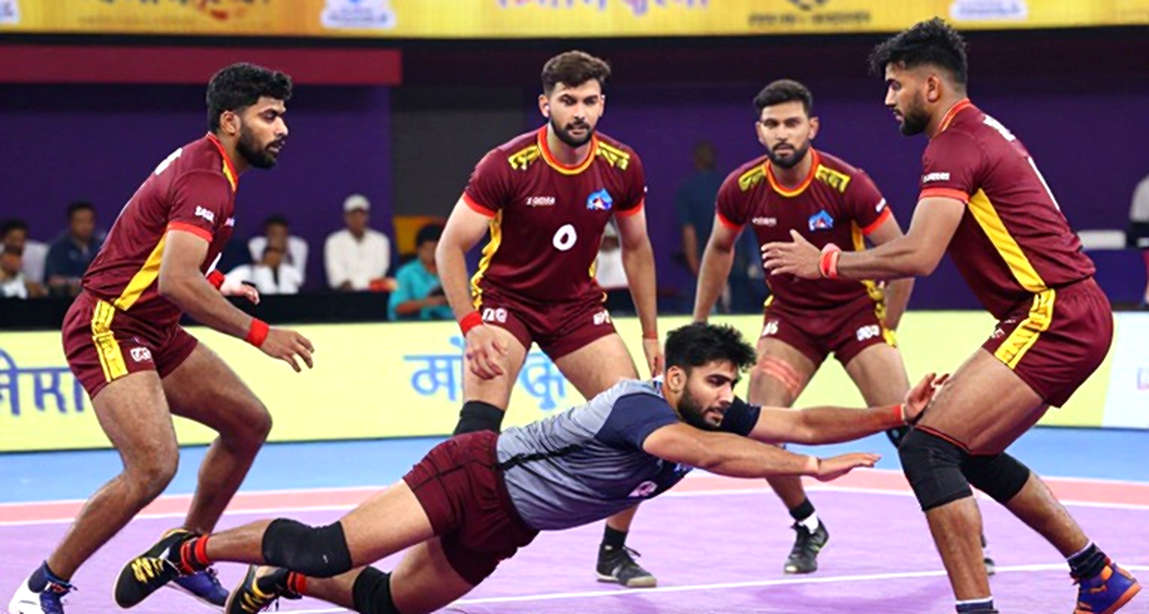
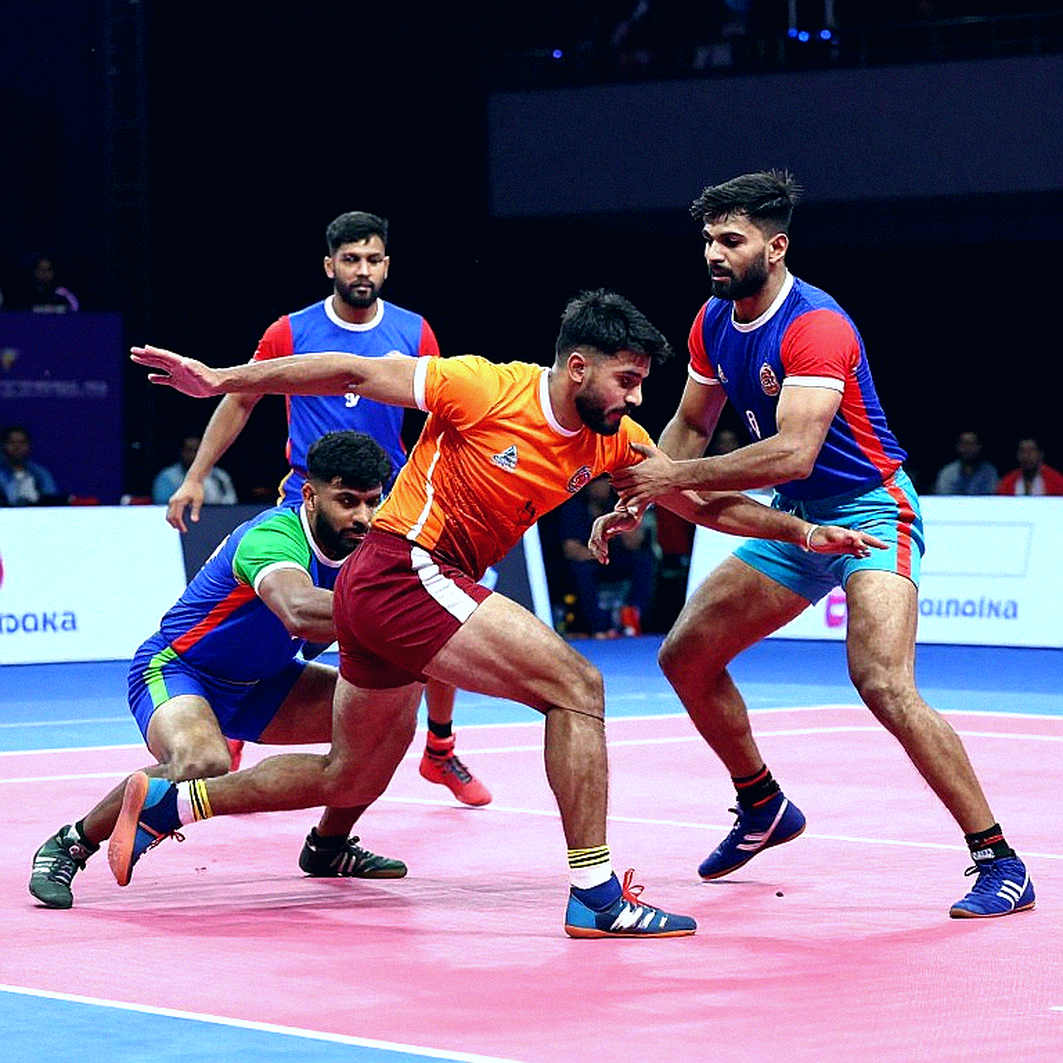
Kabaddi is a seven-a-side contact sport played on a 13m by 10m court. One player at a time, the raider, crosses into the opponent's half, must touch one or more defenders and return safely within 30 seconds. The raider must continuously chant kabaddi-kabaddi, known as the cant, to prove he is not inhaling; if the chant breaks, he is out. The defending side scores by tackling the raider inside its own half. A successful tackle is worth one point. If all players of one side are out, the opponent gets two bonus points and the entire team revives; this is the All Out, and it drives kabaddi's rapid scoring swings.
The Bonus Line is a line deep in the opponent's half. Crossing it earns one point, but only when the defending side has six or more players on court. The Do-or-Die Raid rule says that after two consecutive empty raids, the third raid becomes compulsory; if it also scores nothing, the raider is out. The rule was popularised by the Pro Kabaddi League and later adopted internationally. It forces conservative teams to take risks. A Super Tackle, made with three or fewer defenders on court, is worth two points. A single raid scoring three or more points is a Super Raid.
The source does not clearly name the rule variant, but IKF approval and the international context make Standard Style, played on a rectangular court, the most likely format. Circle Style, popular in rural Punjab, would be institutionally inconsistent with IKF sanction. The tournament should therefore be read under Standard Style rules, although official confirmation is awaited. This matters for India because the national squad is familiar with this rule environment.
The rules will directly shape the competition. India's raiders can exploit the Bonus Line against deep and passive defences. Low-risk one-point accumulation is exactly how strong raiding sides break down weak tackling units, and it inflates margins. The Do-or-Die rule limits weaker teams' ability to stall by burning empty raids. That is competitively fair, but it reduces the chance of upsets at a showcase event.
There is also an interesting arithmetic signal in the format. If both categories use two groups, round-robin play, two semifinals and a final, then 39 men's matches reconcile with 13 teams split 7 and 6: 21 group games, 15 group games and three knockouts make 39. This is an inference because group compositions have not been disclosed.
The women's arithmetic tells a different story. Twenty-three women's matches reconcile with 10 teams split 5 and 5: 10 group games, 10 group games and three knockouts make 23. This implies that roughly three of the 13 nations are not entering women's teams. That is a concrete measure of the women's field gap. The arithmetic fits cleanly, but official confirmation is needed.
Participation figures are also inconsistent. Reports mention more than 400 players. Across 13 countries, that implies about 31 players per nation, which only works if all 13 enter both genders. But the 23-match women's count points to about 10 women's teams. The 400-plus figure may be approximate or include support staff. Organisers should publish verified player numbers, team lists and group structures.
Competitive depth appears mixed. Matches involving India, Iran and a few other kabaddi-strong nations could be close, but for many developing teams the event is primarily an experience-building opportunity. A 13-nation field sends a global signal for the Commonwealth Games, but the shortage of women's teams and uneven strength weaken that signal. The event's success will also depend on how many group matches are close and how many teams genuinely challenge in the knockouts.
Rule standardisation is a clear advantage for India. The IKF-approved Standard rules belong to the same family used in the Pro Kabaddi League and the Asian Games, so Indian players face little adaptation friction. Diaspora and development teams may need time to adjust. That gap could widen the competitive distance. For weaker teams, the biggest challenge will be coping with the pace of raiding and tackling, because one All Out can quickly change the direction of a match.
Match density is another concern. Sixty-two matches in nine days means about seven matches per day on average. That is manageable only with multi-court operations. Many teams will be amateur and will not have full sports-science support, raising the risk of soft-tissue and joint injuries. Organisers must focus on recovery, physiotherapy, warm-ups and workload management, or the quality of competition will suffer.
The men's team will be captained by Surjeet Singh, with Naveen Kumar as vice-captain. The available information does not specify Surjeet Singh's role, so it is unclear whether he is a raider, defender or all-rounder. The name Surjeet Singh is common in Indian kabaddi and has been associated with multiple players, so tactical conclusions should wait for identity verification. The captaincy choice signals leadership and team balance, but no more than that.
If Naveen Kumar is the well-known Dabang Delhi raider known as Naveen Express, his presence would suggest that India is fielding a genuinely credible, Pro Kabaddi-calibre squad rather than a purely developmental side. That would be a meaningful signal about the federation's seriousness. However, a name match is not confirmation. The rest of the squad structure and the raiding and defensive roles are not public.
The women's team will be captained by Nidhi Sharma, with Ritu as vice-captain. Ritu is likely a shortened form of a longer registered name; abbreviated naming is common in Indian sports reporting and creates attribution ambiguity. It may refer to a player such as recent Indian women's captain Ritu Negi, but that cannot be confirmed. The women's team's strength also cannot be fully assessed without data.
The biggest limitation is the absence of performance data. Raid points, tackle points, successful raid percentage, Super Raid and Super Tackle counts, and player-wise stats are not available. Any claim about squad strength in the source coverage should therefore be treated as promotional rather than analytical. The reveal of jerseys, captains, anthem, logo and mascot points to the marketing side of the event. Real technical analysis will be possible only after matches begin.
The simultaneous reveal of captains, anthem, logo and mascot suggests that the event's centre of gravity is brand-building. That is not wrong; a new global tournament needs an identity. But if competition quality and transparency lag behind, a grand launch alone will not secure CWG 2030 support. Organisers must present a sport-centred case to audiences, broadcasters and the international federation.
A credible women's discipline is a hard criterion for Commonwealth Games inclusion. Holding both men's and women's draws is a positive signal. But the estimate of about 10 women's teams also shows that not all 13 countries are entering women's sides. That gap could be raised before the international federation. More development programmes and broader participation are needed to deepen women's kabaddi.
The universality argument is mixed. Thirteen countries is reasonable for the Commonwealth, but kabaddi's real strength lies in Asia. The Commonwealth framework is different, so organisers must show that the sport is spreading across continents. A broadcast-friendly 40-minute format, fast scoring and dramatic All Out moments help. One-sided matches and a thin women's field could hurt acceptability.
Governance and transparency are the next test. IKF approval is a good sign, but the rule variant, video review scope, substitution count and data availability are not clear. A sport seeking a major multi-sport berth needs clear policy on these points. Organisers should publish match reports, player data and medical protocols to build both analysis and trust.
The risk list is not short: inconsistent participation figures, a thin women's field, no stated rule variant, a heavy schedule and injury exposure. Many teams also lack international experience, which may make the competition uneven. Organisers should acknowledge these risks and explain mitigation. Announcements and branding alone will not create long-term institutional support.
There are clear indicators to watch: the actual number of women's teams and official group structures; the number of close group matches; India's workload management and rotation before the semifinals; injury numbers and medical support; attendance, broadcast quality and data transparency. These will show whether the event is only a showcase or a real foundation for CWG 2030.
The conclusion is cautious but positive. The first Commonwealth Kabaddi Championship in Ahmedabad is an important platform for kabaddi's global expansion. Both genders, IKF approval and a nine-day broadcast-friendly schedule make it a serious project. But the road to CWG 2030 will be decided not by hosting alone, but by women's participation, competitive depth, transparent data and player welfare. The real test will be on the mat, and it can be assessed only after the matches begin.
संबंधित खिलाड़ी