
Kabaddi Champions League: Expansion to 10 Teams and a Rs 5-Crore Purse, But the Real Question Is the PKL Broadcast Crisis
संक्षेप में: कबड्डी चैंपियंस लीग अपने दूसरे सत्र में टीमों की संख्या 8 से 10 कर रही है और प्रत्येक फ्रैंचाइज़ी के लिए नीलामी थैली 5 करोड़ रुपये तय की गई है। ट्रायल्स में करीब 6,400 रजिस्ट्रेशन हुए और 300 से अधिक खिलाड़ी नीलामी पूल में पहुंचे। सबसे महंगे खिलाड़ी आयन लोचब (17.4 लाख रुपये) रहे, जबकि भारत के एशियाई खेल कप्तान बताए गए सुनील मलिक 10 लाख रुपये में चले गए। लीग की सभी दस फ्रैंचाइज़ियां हरियाणा के शहरों की हैं। सबसे महत्वपूर्ण संदर्भ यह है कि प्रो कबड्डी लीग का 13वां सत्र प्रसारण साझेदार न मिलने के कारण संभवतः जून-जुलाई 2027 तक टल गया है। इस रिपोर्ट में किसी भी आंकड़े के साथ नामित स्रोत नहीं है, इसलिए सभी दावे असत्यापित माने जाने चाहिए। प्रश्न: लीग में कितनी टीमें होंगी? उत्तर: 10, जो पहले 8 थीं; सभी हरियाणा के शहरों से। प्रश्न: नीलामी थैली कितनी है? उत्तर: 5 करोड़ रुपये प्रति फ्रैंचाइज़ी बताई गई है, लेकिन रिपोर्ट में यह स्पष्ट नहीं कि यह प्रति टीम है या कुल; यह पुरस्कार राशि नहीं, स्क्वाड बजट है। प्रश्न: सबसे महंगा खिलाड़ी कौन? उत्तर: आयन लोचब, 17.4 लाख रुपये। प्रश्न: क्या यह राष्ट्रीय स्तर की लीग है? उत्तर: नहीं। दस में से दस फ्रैंचाइज़ी हरियाणा में हैं, इसलिए यह क्षेत्रीय अर्ध-पेशेवर लीग है। प्रश्न: असली बड़ी खबर क्या है? उत्तर: पीकेएल का प्रसारण अधिकार संकट और सत्र का 2027 तक स्थगन, जो पूरे कबड्डी तंत्र के लिए संरचनात्मक जोखिम है। प्रश्न: क्या लीग को महासंघ की स्वीकृति है? उत्तर: रिपोर्ट में इसका कोई उल्लेख नहीं; यह एक बड़ा अनुत्तरित प्रशासनिक सवाल है।
The Kabaddi Champions League (KCL) is claiming a significant expansion in its second season: the number of franchises rises from 8 to 10, and each team is allotted an auction purse of Rs 5 crore. The league says roughly 6,400 players registered for its trials, with more than 300 making the auction pool. On the surface this reads as straightforwardly good news for Indian kabaddi — more teams, more opportunities, more money.
But buried in the fourth paragraph of the same report is a fact that changes the character of the entire story: the Pro Kabaddi League (PKL), the country's flagship professional competition, has reportedly pushed its 13th season to June-July 2027 because it has no new broadcast partner. In other words, the national commercial anchor of the sport is stalled at precisely the moment a regional league announces expansion. That can be read as confidence, or as opportunism.
A caveat must be stated first. The underlying report carries no named sources — only two references to a media statement and the article author. Every figure here, from the purse to the top bid to the PKL scheduling claim, is unverified. Confidence in the factual claims is therefore capped at medium, and inferences are labelled as inferences.
What the Rs 5 crore purse actually means
The headline term 'auction purse' is not prize money. It is the total squad-building budget available to each franchise for bidding at the player auction. At roughly US$600,000, it is a fraction of what PKL franchises have historically spent at auction. More seriously, the report never clarifies whether Rs 5 crore applies per team or across the whole league — a material ambiguity, since the two readings imply entirely different businesses. Even the per-team reading places this league at the floor of professional kabaddi spending, which makes it a developmental or semi-professional tier rather than a PKL competitor on player quality.
The arithmetic of the auction
If a team has Rs 5 crore and must build a squad of 15 to 20 players, the implied average salary is Rs 25-33 lakh. Yet the highest bid reported was only Rs 17.4 lakh. Either squads are unusually large, or the budget is not fully spent, or the figure means something other than per-franchise spending. This is arithmetic speculation, but it raises a legitimate question. In many early-stage Indian non-cricket leagues, announced purses function as marketing devices while actual payments come from owners' pockets.
The player market: a Rs 17.4 lakh top bid and a Rs 10 lakh captain
Ayan Lochab was the most expensive buy at Rs 17.4 lakh. Sunil Malik, described as India's Asian Games captain, went for Rs 10 lakh. Two things stand out. First, Rs 17.4 lakh is roughly one-sixth of what top PKL raiders have commanded. Second, a claimed national-team captain at Rs 10 lakh is an internal inconsistency: either the designation is stale or ceremonial, or it refers to a different variant or an older cohort, or the reporting is inaccurate. All three require verification.
Most importantly, the report contains no performance data for any player — no raid points, tackle points, success rates or match counts. Player quality cannot be assessed; only relative market prices are observable. No tactical, roster-balance or strength judgement is possible. A reasonable inference is that most players are part-time or semi-professional, supported by other employment or government jobs, consistent with Haryana's rural sports economy.
Grassroots: 6,400 trialists, aspiration versus reality
The most solid data point is the trial turnout: about 6,400 registrations, with 300-plus reaching the auction pool. This demonstrates genuine rural depth in Haryana and is the league's most valuable asset. But turnout is routinely misread. It measures supply-side participation, not popularity or commercial health. It reflects rural youth chasing scarce sporting opportunity: even 640 places would have produced a crowd. The right question is not how many came, but how many found sustainable livelihoods — and the report does not answer it.
Geography: a national name over a regional footprint
All ten franchises — Bhiwani, Rohtak, Karnal, Gurugram, Sonipat, Panipat, Faridabad, Hisar, Jhajjar and Kurukshetra — are in Haryana. The 'Champions League' branding borrows prestige from football's UEFA brand while the geography stays inside one state. Haryana is India's sports nursery, a wrestling and kabaddi heartland where rural akhada culture converts into professional sport; that pipeline is exactly what produces 6,400 trialists. But the same geography caps the league's claim. There is no meaningful presence in Maharashtra, Punjab or South India, so describing it as a national feeder would overstate the facts.
The PKL crisis: the big story not in the headline
The most consequential information in the report is that PKL Season 13 may slip to June-July 2027 due to a broadcast-rights gap. This should not be read as a scheduling note. Kabaddi is a broadcast-dependent sport: its commercial model rests on television ratings, short-format packaging and sponsor visibility. A lost season hits player incomes, sponsor investment and, most importantly, audience connection — which is slow and expensive to rebuild after a two-year break. The Champions League expansion should therefore be read against this backdrop, not as organic momentum.
Competitive landscape
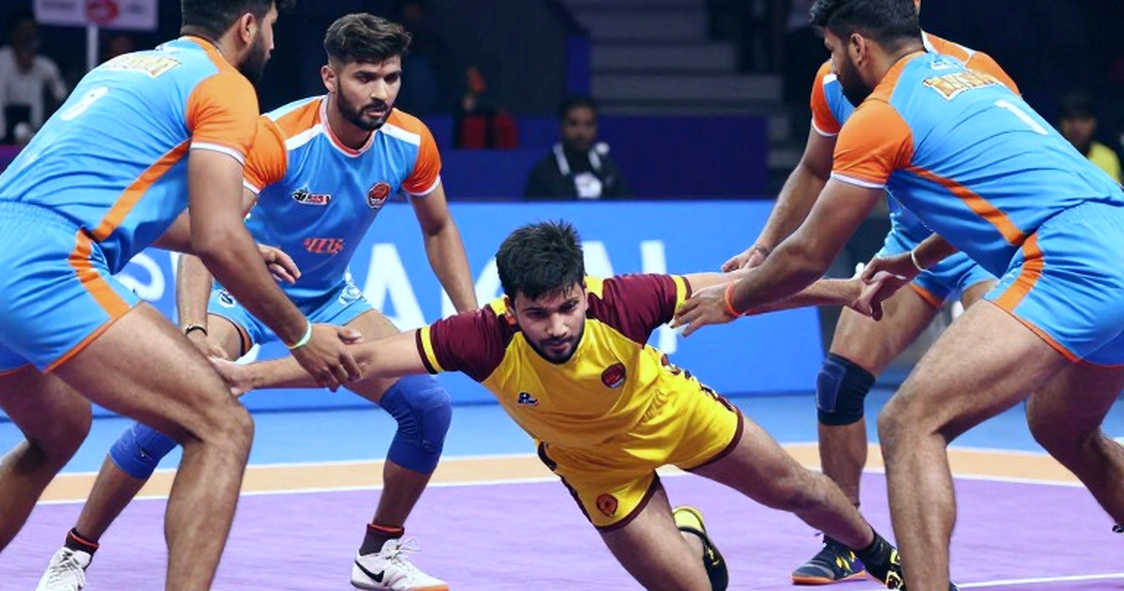
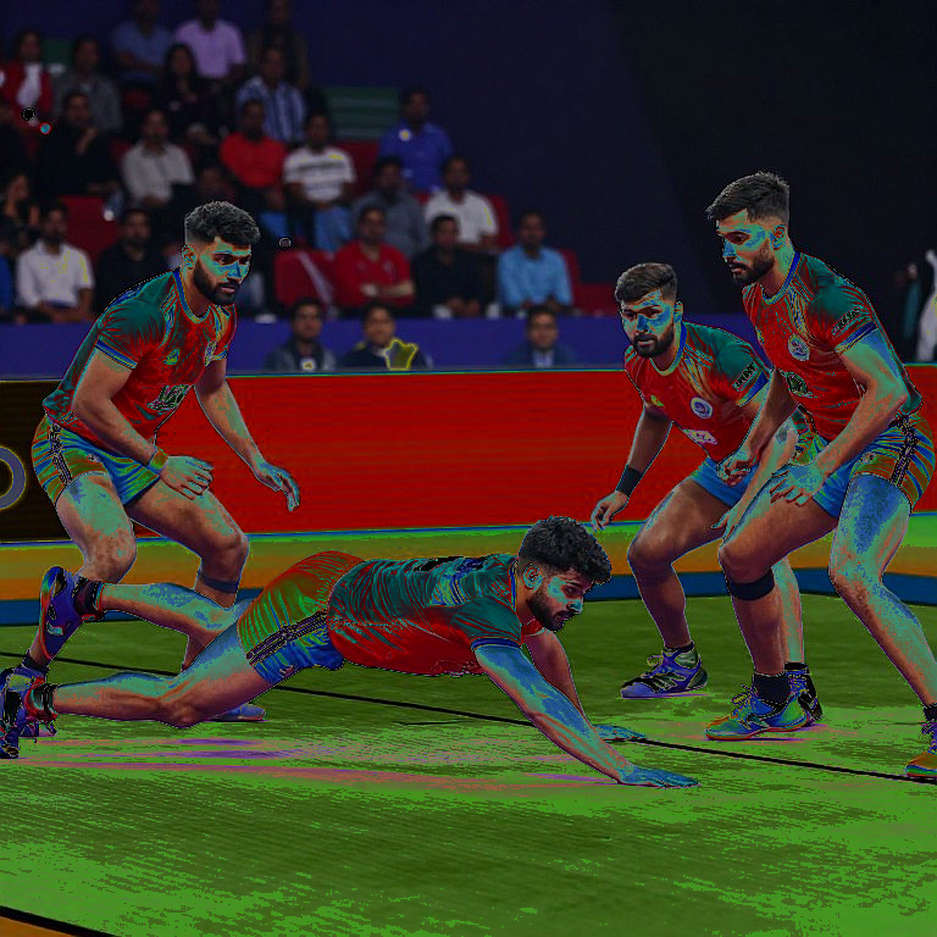
Indian kabaddi has three tiers: the national professional tier (PKL, currently in crisis), the regional semi-professional tier (this league), and the grassroots akhada tier (the 6,400 trialists). The Champions League occupies a sensible niche — a stopgap outlet for players idle during the PKL gap — but its ceiling is set by its regional footprint. There is no evidence of any international dimension; the World Cup and women's league references belong to a separate article. Nor does the report specify any overseas-player quota or confirm whether Standard or Circle Style rules apply, so no assessment of the on-field product is possible.
Governance: the sanctioning question
The report says nothing about who owns or sanctions the league, whether it has federation approval, what player contracts look like, how anti-doping is handled, or what officiating standards apply. That silence matters. If the league is unsanctioned, players could face eligibility complications for national-team selection — particularly relevant for anyone with international credentials. Rapid expansion by a loosely sanctioned competition is a classic shadow-federation risk: it can fragment the player market and complicate the national pipeline. Expansion language without institutional clarity is an inversion of the normal order.
Commercial fundamentals: all unanswered
Strikingly, the report contains no mention of broadcast at all — the single biggest omission, since media rights are the clearest measure of a league's commercial health. There is also nothing on sponsorship, ticketing, attendance, digital reach or revenue. The expansion claim therefore rests on no revenue-side evidence. A reasonable inference is that the purse is subsidised by owners or a promoter, and that the league currently has little or no media-rights value. The one genuinely alarming commercial datum in the report belongs to PKL, not to this league.
Risk assessment
Overall risk is high — not because the Champions League is large, but because the ecosystem around it is in trouble. The top risks are: PKL's unresolved media-rights crisis; undefined sanctioning and eligibility; no broadcast, sponsorship or revenue disclosure; and salary levels too low to retain top talent if PKL returns, which would push this league back to feeder status. A lower-order risk is that the 'Champions League' name may lead readers to overestimate its standing.
What to track
Five signals matter: a new PKL media-rights deal or confirmed Season 13 date; any federation sanctioning of this league; any broadcast or digital rights deal for the league; verification of the 'Asian Games captain' designation against official rosters; and any second-season attendance or revenue disclosure.
Conclusion
The headline says the league is growing — two more teams, a bigger purse. The reality is a small, Haryana-centred development league expanding precisely while the sport's national commercial anchor is stalled by a broadcast crisis. That is better read as opportunism than as proof of momentum. A Rs 5 crore purse and a Rs 17.4 lakh top bid are too modest, and too thinly sourced, to signal genuine commercial strength. The most valuable part of this story is not in the headline: India's flagship kabaddi league has no broadcaster. That is the signal the wider ecosystem should be watching.
This report is based on a single, sparsely sourced media account. Auction figures, player designations and PKL scheduling claims are unverified and should be read accordingly. It is provided for sports-industry information only and does not constitute betting or financial advice.