
Asian CricketWellington T20I: Small Sample and Team Balance Dominate the Vaibhav Sooryavanshi vs Sanju Samson Opening Debate
Wellington T20I: Small Sample and Team Balance Dominate the Vaibhav Sooryavanshi vs Sanju Samson Opening Debate
संक्षेप में: वैभव सूर्यवंशी को संजू सैमसन की जगह ओपनिंग देने की बहस तार्किक रूप से आंशिक रूप से सही है, लेकिन इसका आधार छोटा और परिस्थिति-असंगत नमूना है। सैमसन का चरण-न्यूट्रल प्रोफाइल भूमिका-लचीलापन का समर्थन करता है, जबकि सूर्यवंशी का 228.26 पावरप्ले स्ट्राइक रेट सत्यापन-योग्य नहीं है। वेलिंगटन की हवा, नई गेंद की स्विंग, बारिश/डीएलएस और मिचेल सैंटनर की बाएं हाथ की स्पिन इस बहस के निर्णायक कारक हैं। भारत 2-0 से आगे है, इसलिए तीसरा टी20ई एक कम-जोखिम प्रयोग हो सकता है, लेकिन उसे चयन का अंतिम फैसला नहीं मानना चाहिए।
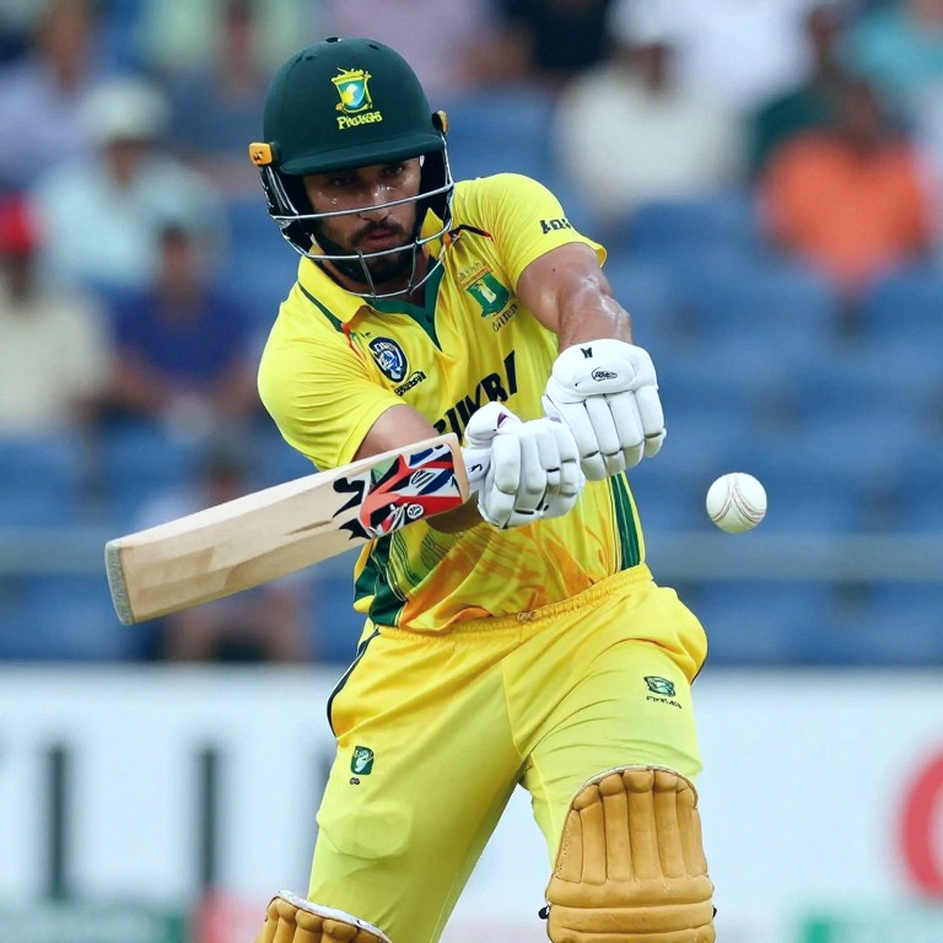
India lead the five-match T20I series against New Zealand 2-0, but the build-up to the third match in Wellington has produced a selection debate that goes beyond the scoreline. An opinion article has argued that Vaibhav Sooryavanshi should open in place of Sanju Samson, citing the young batter’s powerplay strike rate and Samson’s ability to handle spin at No. 3. The proposal is interesting, but it needs to be separated from hype and judged on sample size, conditions, matchups and team balance.
The article reports that Sooryavanshi has a powerplay strike rate of 228.26 since IPL 2026, while Samson’s is 157.14. It also reports post-powerplay strike rates of 210 and 158.17 respectively. No independent source is cited for these figures, and the IPL 2026 window and the Wellington date-venue reference cannot be independently verified here. They should therefore be treated as reported claims, not confirmed facts.
Even if the numbers are accepted as reported, the sample-size problem remains central. The article itself concedes that Sooryavanshi has played far fewer innings and that his rate may settle lower over time. A powerplay strike rate of 228 is roughly 35 to 45 per cent above the elite T20 band. That is extraordinary, but extraordinary short-run numbers often contain a large amount of noise. Selecting an opener on that basis risks selecting on variance rather than on a stable skill set. The base case should be regression toward a more normal range.
The strongest part of the argument is actually about Samson, not Sooryavanshi. Samson’s near-identical powerplay and post-powerplay strike rates—157.14 and 158.17—suggest that his scoring does not depend heavily on fielding restrictions. That makes him a genuinely flexible batter. But the same flat profile also means he is not a powerplay specialist. Moving him to No. 3 may cost very little, but it does not prove that opening is the best use of his ability.
The article’s second reason—that Samson can handle Mitchell Santner with ease at No. 3—is asserted without any spin-specific data. That is a major weakness, because spin handling is the decisive issue in this series. In the second T20I, India lost five wickets by the 11th over, and Santner took 4/21, dismissing Shreyas Iyer, Abhishek Sharma and Axar Patel. The failure was in the middle overs against left-arm spin, not primarily in the powerplay. A batting-order change may partially address that by putting experience at No. 3, but the article presents a powerplay fix for what was largely a middle-overs problem.
There is also an unaddressed structural risk. If Abhishek Sharma and Sooryavanshi form a left-hand/left-hand opening pair, Santner can settle on one line turning away from both batters without changing his angle. That makes it easier for New Zealand to bowl spin inside the powerplay. The article mentions this risk but treats it as a minor caveat rather than a central cost.
Wellington conditions are another omitted variable. Sky Stadium is exposed to wind, late-October weather carries rain and DLS risk, and the new ball can seam or swing. An aggressive, low-sample opener facing a moving ball in windy conditions is a different proposition from the flat-deck IPL environment in which the reported 228.26 strike rate was compiled. The article does not discuss venue, weather or DLS at all.
The selection context matters too. Ishan Kishan’s absence has forced a reshuffle. This is not necessarily a settled plan. India’s bench depth allows a low-cost experiment while 2-0 up, but a single match should not be treated as a verdict on a long-term role. There is also a player-welfare issue: if Sooryavanshi is as young as widely reported, placing him at the most exposed position in away conditions carries developmental risk. Two poor innings could trigger a disproportionate media narrative. A board-level workload and welfare protocol should sit alongside any tactical decision.
From an industry perspective, the debate shows how IPL-derived metrics have become a selection currency for Indian cricket. Powerplay strike rate is legible, broadcast-friendly and commercially useful, but applying it directly to a T20I in Wellington is a category error if conditions and opposition quality are ignored. The listicle format—three reasons plus an engagement call—is optimised for attention, not for evidence.
There is no major governance or integrity issue here. No ICC rule governs who opens. The real governance-adjacent question is player workload and welfare. The compliance risk is low; the evaluation risk and welfare risk are higher.
Overall, the recommendation is directionally defensible but under-reasoned. Samson’s phase-neutral profile supports flexibility, and India can afford an experiment at 2-0. But the case for Sooryavanshi opening rests on a small, environment-mismatched sample and ignores the two variables most likely to decide the third T20I: left-arm spin inside the powerplay and Wellington’s new-ball conditions. Match 3 should be treated as an experiment, not a verdict. The durable lesson is that India need a role architecture—aggressor, anchor and spin-handler—rather than a simple name swap.
This is sports-information analysis only and does not constitute betting advice. Cricket outcomes are highly uncertain, and all conclusions should be treated probabilistically.
संबंधित खिलाड़ी