
Gurnoor Brar's New Zealand Breakthrough: India Find Another Fast-Bowling Option for the 2027 ODI World Cup
core_answer: गुरनूर बराड़ ने न्यूजीलैंड के खिलाफ शुरुआती दो वनडे में 7 विकेट लेकर 2027 विश्व कप के लिए भारत की तेज गेंदबाजी दावेदारी मजबूत की। उनकी मध्य ओवरों में हार्ड लेंथ, उछाल और योजनाबद्ध गेंदबाजी प्रमुख ताकत हैं।
key_facts: 4 नवंबर 2026, ऑकलैंड: 9.2 ओवर, 44 रन, 3 विकेट।; 7 नवंबर 2026, वेलिंगटन: 10 ओवर, 30 रन, 4 विकेट और 2 मेडन।; दो वनडे में कुल 19.2 ओवर, 74 रन और 7 विकेट।; भारत ने वेलिंगटन वनडे DLS पद्धति से 4 रन से जीता।; बराड़ को वेलिंगटन मुकाबले में प्लेयर ऑफ द मैच चुना गया।
source_attribution: source: International Cricket Council (ICC), New Zealand vs India, 2nd ODI Match Scorecard, publication_date: November 7, 2026, url: https://www.icc-cricket.com/matches/271652/new-zealand-vs-india; source: International Cricket Council (ICC), Brar credits team support for match-winning spell against NZ, publication_date: November 2026, url: https://www.icc-cricket.com/news/brar-credits-team-support-for-match-winning-spell-against-nz; source: Cricbuzz, New Zealand vs India, 1st ODI Player Performance, publication_date: November 4, 2026, url: https://www.cricbuzz.com/player-match-performance/match/161245/player/22141/bowling
related_qa: question: गुरनूर बराड़ ने न्यूजीलैंड के खिलाफ कितने विकेट लिए?, answer: शुरुआती दो वनडे में गुरनूर बराड़ ने कुल 7 विकेट लिए।; question: वेलिंगटन वनडे में गुरनूर बराड़ के गेंदबाजी आंकड़े क्या थे?, answer: उन्होंने 10 ओवर में 30 रन देकर 4 विकेट लिए और 2 मेडन ओवर डाले।; question: 2027 वनडे विश्व कप के लिए बराड़ की सबसे बड़ी ताकत क्या है?, answer: उनकी लंबाई, अतिरिक्त उछाल, हार्ड लेंथ और मध्य ओवरों में योजनाबद्ध विकेट लेने की क्षमता उनकी प्रमुख ताकत हैं।
Seven wickets in New Zealand, but the bigger story lies elsewhere
Gurnoor Brar bowled 19.2 overs across India's first two ODIs against New Zealand, conceded 74 runs and claimed seven wickets. His figures were 3/44 from 9.2 overs in Auckland and 4/30 from 10 overs in Wellington. The second performance also included two maiden overs. On the surface, these are impressive numbers for an emerging international fast bowler. But a more important question sits beneath the figures: has India found a quick who can take wickets in the middle overs while restricting the opposition's freedom to score?
Wellington provided the strongest early answer. New Zealand were bowled out for 134, and India secured a four-run victory under the Duckworth-Lewis-Stern method. Brar was named Player of the Match. However, rain brought the contest to an early conclusion, and the result was determined against a revised target. It would therefore be inaccurate to attribute the entire victory to one bowler. Brar's contribution was nevertheless central to putting India in a position to win.
Years of watching cricket have taught me a straightforward lesson: a fast bowler's real examination is not simply whether he takes wickets, but whether he understands how to reproduce the process that creates them. That is the encouraging signal in Brar's first two performances.
His most valuable quality so far is not raw pace, but the ability to bowl to a clear plan and maintain the right length.
That distinction matters. Swing and seam movement can increase a bowler's effectiveness in New Zealand. Yet Brar's use of the hard length, additional bounce and selective short deliveries in the middle overs suggests that he was doing more than benefiting from the conditions. He was attempting to restrict the shots available to the batter. That is a skill India may need while preparing for the 2027 ODI World Cup.
The New Zealand tour as a World Cup selection laboratory
India's tour of New Zealand cannot be understood solely through the results of the bilateral series. The 2027 ODI World Cup will be held in South Africa, where bounce, carry and the ability to hit a hard length may influence selection decisions. Giving young fast bowlers opportunities in New Zealand is therefore a useful selection experiment.
India already have an established leader in Jasprit Bumrah. Mohammed Siraj and Prasidh Krishna offer international experience and proven utility. Anshul Kamboj, Auqib Nabi, Arshdeep Singh and Gurnoor Brar add further depth to the pace group.
The selection challenge is therefore not a shortage of players. It is the need to identify the right combination for particular conditions. Having five or six good fast bowlers is useful, but a World Cup playing XI has limited places. Each bowler must demonstrate a distinctive role.
Brar is reported to be 26. For a fast bowler, this is a stage at which physical ability, technical understanding and international experience can develop together. His height and ability to generate bounce give him a distinctive profile within India's pace group.
In Auckland, he conceded 44 runs in 9.2 overs while taking three wickets, maintaining an economy rate of approximately 4.7. Wellington was even more impressive: 30 runs, four wickets and two maidens in 10 overs. An economy rate of three runs per over is notable in ODI cricket, particularly when a bowler completes his full allocation.
Across the two matches, his bowling average was approximately 10.57 and his strike rate approximately 16.57. These combined figures are calculated from the available match data. However, two matches are insufficient to establish a bowler's long-term level.
There is another important consideration. By giving opportunities to young fast bowlers on this tour, India were testing their bench strength. The selectors need to understand more than who can take wickets. They must assess who understands different match situations, adapts plans under pressure and works effectively alongside experienced bowlers.
That is Brar's real examination.
Middle-over control: Brar's most valuable quality
The bowling strategy in ODI cricket changes after the first ten overs. The movement available with the new ball gradually decreases. Batters attempt to consolidate their innings and increase the scoring rate while protecting wickets. At this stage, aggression alone is insufficient. Bowlers must find lengths that prevent batters from playing comfortably off the front or back foot.
Brar's Wellington performance is important in this context. His 20th over was a double-wicket maiden. That single over changed the structure of New Zealand's innings. When a bowler takes two wickets without conceding a run, he does more than improve his individual figures. He places the next section of the opposition batting order under pressure.
New Zealand's slide to 53/5 reflected that pressure. India continued to deny the batters freedom after the early wickets. It was a collective bowling effort, but Brar gave that control a decisive edge.
His use of the hard length deserves particular attention. When a tall bowler hits the pitch in the right area, the batter may encounter more bounce than anticipated. The batter must reach away from the body or react while moving onto the back foot. An imperfectly timed shot can then become a catching opportunity.
Against Mitchell Santner, Brar established a bouncer plan before using a hard length to create the edge. His approach against Nathan Smith also involved using short deliveries to keep the batter back before returning to the hard length.
Bowling quality should not be measured only by the number of wickets. The important question is how the bowler influenced the batter's response. Repeated short balls may appear an aggressive option, but they also give the batter opportunities to play the pull or hook. Brar's value was in using the short ball selectively rather than making it his entire strategy.
He also acknowledged that overusing the short ball would be wrong. That observation suggests an encouraging degree of technical awareness. Young fast bowlers can become attached to a successful tactic and repeat it too frequently. Experienced bowlers understand that repetition gives the batter an opportunity to find a solution.
The most encouraging feature of Brar's bowling is that he was not simply delivering the ball; he was trying to force the batter into a particular area of the field.
I consider that distinction more valuable than a four-wicket haul in one match. Over many years, I have watched bowlers take wickets in helpful conditions only to lose control on flatter pitches. Others consistently inconvenience batters because of the quality of their plans. There is not yet enough evidence to place Brar permanently in the second category, but his early performances point in that direction.
Conditions and the South African question
Pitch and weather conditions must remain part of any assessment of Brar's success. The available analysis identifies assistance for bowlers in both matches, including movement influenced by rain and favourable conditions. Brar appeared comfortable in that environment.
His seven wickets should therefore not be treated as a performance that can automatically be reproduced on a neutral surface. An economy rate of three in Wellington is impressive, but assuming that it represents his normal ODI level would be premature.
A bowler's real ability becomes clearer when the pitch offers little assistance with the new ball. He must then rely on line, length, changes of pace and field settings to restrict the batter. Brar must demonstrate that he can remain effective in South African conditions.
South African pitches can reward extra bounce and carry. Brar's height and hit-the-deck method appear suited to such surfaces. His profile differs from that of conventional swing bowlers. Compared with players such as Anshul Kamboj and Auqib Nabi, his identity is more closely associated with hard lengths and bounce.
The selectors, however, must distinguish between a bowling style that appears suitable for World Cup conditions and a bowler who has actually succeeded in those conditions. The former is a technical projection. The latter requires evidence on the field.
Brar's performance in South Africa remains an open question. He needs opportunities to bowl on those surfaces, deliver longer spells and maintain his plan against aggressive batting.
It would therefore be premature to declare him a bowler for all formats and all conditions. The available evidence in this assessment is limited to two ODIs. His success is encouraging, but conclusions about his Test or T20 suitability would go beyond the available evidence.
The competition for a place in India's pace attack
The standard of competition in India's fast-bowling group is Brar's biggest challenge. Bumrah occupies a category of his own. Siraj and Prasidh Krishna bring experience. Arshdeep Singh offers a left-arm option. Kamboj and Nabi can also be useful depending on the conditions.
Brar's case should not rest on seven wickets alone. He must demonstrate that he can perform a role that is both distinct from the others and necessary for the team.
If India need a bowler capable of taking middle-over wickets through additional bounce in South Africa, Brar's profile is attractive. If the conditions demand early swing and conventional seam bowling, other options may receive priority. Selection will depend on the surface and the match situation the team is preparing for.
That is the real meaning of India's pace depth. Bench strength is determined not by the number of players available, but by the different functions they can perform. Having four bowlers who offer the same role does not create genuine depth. Having four bowlers who can succeed in different conditions is far more valuable.
Brar must establish such an identity. He can attack in the middle overs, push batters back with a hard length and use the bouncer selectively to increase pressure. If he performs that role consistently, his importance to India will grow.
Jasprit Bumrah offers a relevant example. His value is not limited to pace or an unusual action. He adjusts his bowling according to the batter's weaknesses, the match situation and the available field. Brar must develop that level of tactical maturity. At present, the physical attributes and initial control are visible. The next stage is improving the quality of his decisions.
Aggression is useful, but it needs boundaries
Another aspect of Brar's bowling is his aggressive on-field behaviour. His verbal exchange with Daryl Mitchell and the confrontational body language he displayed can be interpreted as competitive tactics. Mitchell's dismissal in the following over added to the discussion.
Mental pressure has a role in fast bowling. It is insufficient to challenge a batter only technically. A bowler must also make the batter feel that he is constantly involved in the contest. Bouncers, close fielders, aggressive appeals and controlled verbal exchanges can affect concentration.
However, a wicket in the over after a verbal exchange does not establish a cause-and-effect relationship. Mitchell's dismissal does not prove that Brar's psychological strategy has a repeatable impact. That conclusion would require similar patterns across several matches.
International cricket also has clear boundaries for aggression. Under the ICC Code of Conduct, insulting behaviour, excessive aggression and inappropriate verbal conduct can result in disciplinary action. An emerging bowler has little to gain from unnecessary fines or demerit points.
Brar should retain his competitive energy without allowing it to dominate his bowling plan. Provoking a batter is useful only when the next delivery converts that psychological pressure into a genuine cricketing challenge.
That is the balance experienced bowlers such as Bumrah understand. The purpose of aggression is to induce an error from the batter, not to lose control oneself.
The real challenge: reproducing success
An encouraging personal quality in Brar's early performances is his emphasis on reducing mistakes and learning from each match. This mindset matters for a young fast bowler, whose role demands both physical effort and technical discipline.
Workload is another issue the selectors must monitor. A tall bowler who repeatedly delivers hard lengths and uses the bouncer can place additional stress on his body. The available analysis does not identify a specific injury history for Brar, so it would be inappropriate to present an injury concern as an established fact. Monitoring his workload should nevertheless form part of India's long-term planning.
There is still a considerable period before the World Cup. During that time, the selectors must examine how Brar responds in different conditions. He needs to bowl on flatter Indian pitches, deliver long spells overseas and remain effective when batters have already made an aggressive start.
His assessment should also extend beyond economy rates and wickets. The percentage of dot balls, middle-over wicket-taking ability, consistency of hard lengths, quality of the delivery following a bouncer and ability to change plans according to the batter are more useful indicators.
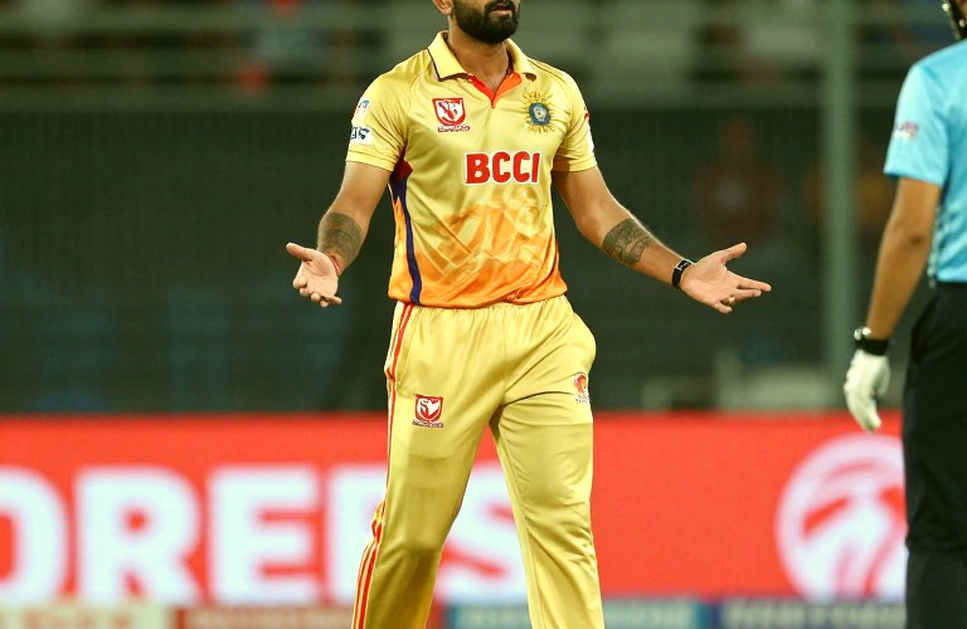
I have always built my analysis around one principle: a scorecard tells us the result, but understanding a bowler's plan requires ball-by-ball observation. The same method applies to Brar. Two outstanding matches are a strong initial signal. They cannot become the sole basis for a final selection decision.
The next stage of his World Cup claim
Gurnoor Brar has opened an important door for himself in New Zealand. Three wickets in Auckland and four in Wellington have placed him in the discussion surrounding India's ODI fast-bowling options. His height, additional bounce, middle-over control and planned use of the short ball give him a distinctive profile.
However, several examinations remain before he can secure a place in India's World Cup combination. Maintaining control on flatter surfaces after succeeding on helpful pitches, bowling with the right field under pressure and remaining consistently available will strengthen his case.
Brar's strongest argument for the 2027 World Cup is not his seven wickets, but the bowling model that made those wickets possible. If he can reproduce that model in different conditions, India may have a valuable fast-bowling option for the middle overs.
India's next challenge is not simply deciding how many matches Brar should play. The more important question is the role in which he should be tested. Will he be a middle-over wicket-taker, or an option who can sustain the attack after the new-ball phase through additional bounce? Those roles require different preparation and different performance benchmarks.
New Zealand has revealed the possibility. Validation in conditions such as South Africa remains necessary. Every new sample of Brar's bowling in the next selection cycle should be assessed against that standard. A place in a World Cup squad is earned through months of repeatable decisions, not one successful week.