
A Double Century at 41: Craig Ervine Redefines Longevity and Patience in Test Cricket
क्रेग एर्विन ने 9 नवंबर 2026 को शारजाह में अफगानिस्तान के खिलाफ पहले टेस्ट की दूसरी पारी में 279 गेंदों पर नाबाद 206 रन बनाए। 41 वर्ष और 82 दिन की उम्र में वह टेस्ट क्रिकेट इतिहास के तीसरे सबसे अधिक उम्र वाले दोहरा शतक बनाने वाले बल्लेबाज बने। **मुख्य तथ्य:** - एर्विन का स्कोर: 206 नाबाद, 279 गेंद, 23 चौके और 2 छक्के। - जिम्बाब्वे की दूसरी पारी: 523/5; मुकाबला ड्रॉ रहा। - छठे विकेट के लिए एर्विन और वेस्ली मधेवेरे की नाबाद 208 रन की साझेदारी। - सबसे उम्रदराज टेस्ट दोहरा शतक: एरिक रोवन, 236 रन, 42 वर्ष और छह दिन, 1951। - दूसरे स्थान पर जैक हॉब्स: 211 रन, 41 वर्ष और 195 दिन, 1924। **स्रोत:** ESPNcricinfo ऐतिहासिक स्कोरकार्ड, इंग्लैंड बनाम दक्षिण अफ्रीका, Headingley Test, 26–31 जुलाई 1951; Hindustan Times, 9 नवंबर 2026; Craig Ervine की शारजाह उपलब्धि पर प्रकाशित रिपोर्ट, 10 नवंबर 2026। **संबंधित प्रश्न एवं उत्तर:** प्रश्न: टेस्ट क्रिकेट में सबसे अधिक उम्र में दोहरा शतक किसने बनाया? उत्तर: दक्षिण अफ्रीका के एरिक रोवन ने 42 वर्ष और छह दिन की उम्र में 1951 में इंग्लैंड के खिलाफ 236 रन बनाए। प्रश्न: क्रेग एर्विन से पहले जिम्बाब्वे के लिए आखिरी टेस्ट दोहरा शतक किसने बनाया था? उत्तर: एंडी फ्लावर ने नवंबर 2000 में भारत के खिलाफ नागपुर में नाबाद 232 रन बनाए थे। प्रश्न: क्या 35 वर्ष के बाद दोहरा शतक बनाना बेहतर करियर प्रदर्शन का प्रमाण है? उत्तर: नहीं, यह एक दुर्लभ व्यक्तिगत उपलब्धि है; उम्र के अनुसार प्रदर्शन का आकलन करने के लिए व्यापक बल्लेबाजी आंकड़े और तुलनात्मक डेटा आवश्यक हैं।
A Double Century at 41: When Experience Challenged Time
The fifth day was progressing at Sharjah. The result of the Test was becoming increasingly clear, yet one batter at the crease continued to concentrate on the task in front of him. Bowlers changed, field placements shifted and the available time gradually disappeared. Craig Ervine remained composed. At 41, he was approaching an achievement that demands exceptional concentration, technical discipline and an understanding of the match situation.
On November 9, 2026, Ervine scored an unbeaten 206 against Afghanistan in the first Test at Sharjah. He faced 279 deliveries and struck 23 fours and two sixes. Zimbabwe finished their second innings at 523/5, and the match ended in a draw. The innings placed Ervine third on the list of the oldest players to score a Test double-century. Only South Africa's Eric Rowan and England's Jack Hobbs had achieved the milestone at older ages.
The importance of this innings extends beyond an individual record. Zimbabwe needed to bat for long enough to eliminate Afghanistan's realistic opportunity to win. Ervine's personal achievement developed alongside the team's immediate requirement. That relationship between individual endurance and collective responsibility gives the innings its real significance.
Age, Concentration and the Demands of Test Cricket
Test cricket places different demands on a batter from limited-overs formats. A five-day match requires a player to adapt to the new ball, older ball, spin, changing field placements and prolonged periods of concentration. The ability to maintain technical discipline over several sessions becomes especially important.
Scoring a double-century after turning 35 is therefore a notable achievement. However, age alone cannot establish whether a batter's performance is declining. Fitness, injury history, workload, playing style and preparation vary significantly between individuals. A handful of exceptional performances cannot establish a general rule about age and batting effectiveness.
England's Jack Hobbs remains one of the most significant historical examples. He scored 211 against South Africa at Lord's in 2026, aged 41 years and 195 days. His achievement remained an important benchmark for generations of Test batters.
South Africa's Eric Rowan raised that benchmark in 2026. He scored 236 against England at Headingley, Leeds, aged 42 years and six days. According to the historical ESPNcricinfo scorecard, Rowan spent 550 minutes at the crease and struck 28 boundaries. South Africa scored 538 in the first innings, while England replied with 505. The match ended in a draw.
Rowan's innings illustrates the concentration required to remain at the crease for such an extended period. His record also provides the historical context for understanding Ervine's achievement more than seven decades later.
Ervine's Innings: Individual Achievement and Team Responsibility
Zimbabwe scored 504 in their first innings at Sharjah. Afghanistan responded with 514, securing a narrow 10-run lead. Zimbabwe therefore needed a substantial second innings to protect their position and remove Afghanistan's opportunity to force a result.
Ervine took responsibility in the middle order. Brendan Taylor had contributed 131 in the first innings, while Brian Bennett scored 128. Bennett added another 58 in the second innings. These contributions provided Zimbabwe with a strong foundation.
Ervine's most important partnership came with Wessly Madhevere. The pair added an unbeaten 208 for the sixth wicket, establishing a Zimbabwe Test record for that wicket. Madhevere scored 100 not out, completing his maiden Test century. Their partnership ensured that Zimbabwe could continue batting without taking unnecessary risks on the final day.
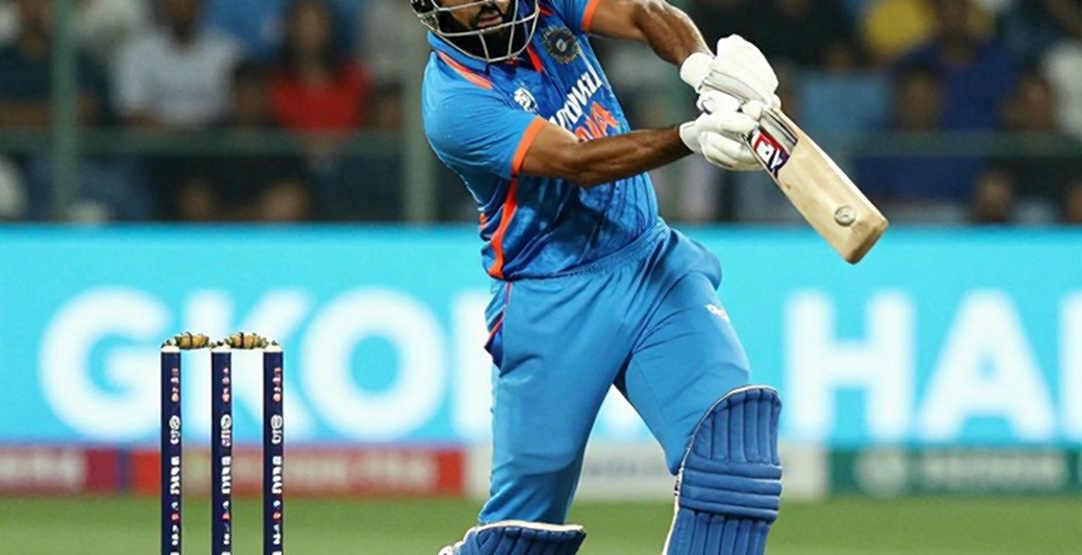
Ervine's 206 came from 279 balls. The significance lies in how he balanced the demands of his individual innings with the requirements of the match. A batter does not need to dominate every delivery to make an important contribution. Sometimes the most effective decision is to defend, preserve the wicket and allow time to work in the team's favour.
The defining feature of Ervine's innings was the relationship between batting duration and match awareness. He continued pursuing his personal milestone without compromising Zimbabwe's primary objective.
In my years of watching cricket, experienced batters have often demonstrated their greatest value through their ability to distinguish between deliveries worth attacking and those better left alone. Ervine's innings deserves to be examined through that lens. The available figures, however, do not provide detailed shot-selection data, scoring-rate splits or individual bowler matchups. Technical conclusions must therefore remain measured.
Third on the Historical List
Ervine was 41 years and 82 days old when he completed his double-century. This placed him third among the oldest Test double-centurions.
Eric Rowan remains first with his 236 at 42 years and six days. Jack Hobbs is second with 211 at 41 years and 195 days. Ervine follows them with his unbeaten 206.
There is a small but important distinction in the age figures. Ervine was 41 years and 78 days old when the match began, but he was 41 years and 82 days old when he completed the milestone. Historical comparisons should use the player's age on the date the achievement was reached.
The innings also ended a remarkable drought for Zimbabwean Test cricket. Andy Flower's unbeaten 232 against India at Nagpur in November 2026 had been the country's previous Test double-century. Ervine's innings ended an interval of approximately 26 years without another Zimbabwean double-century.
The achievement also reflected a broader team contribution. Taylor, Bennett, Ervine and Madhevere all played significant roles in the match. Zimbabwe's batting success was built through several contributions rather than one individual performance alone.
The 49-Batter Quiz and the Limits of Historical Statistics
A digital cricket quiz challenges readers to identify players who scored Test double-centuries after turning 35. It gives participants 10 minutes to name 49 players. Ervine's innings adds renewed interest to this historical exercise.
The reported total of 49 should nevertheless be treated carefully. The supplied quiz information does not provide the complete list or the supporting scorecards. The total can therefore be described as the quiz's published claim, rather than an independently verified historical count.
The distinction matters because a list of successful players does not reveal how frequently batters over 35 succeeded in Test cricket. Establishing that would require the complete population of eligible players, their innings, career averages, injury records and the number of opportunities available to them.
The existence of an exceptional achievement does not establish that the achievement becomes more likely with age. Historical examples demonstrate what is possible, but they cannot independently establish a general performance trend.
This is why Rowan, Hobbs and Ervine deserve recognition without turning their achievements into a simplistic argument about the superiority of older batters.
Experience and the Future of Test Cricket
Modern cricket has changed the way players manage their careers. Sports science, fitness programmes and workload management have created new opportunities for experienced players, while international scheduling, travel and injury recovery continue to present substantial challenges.
Ervine's performance should not be interpreted as a competition between generations. Younger batters can bring energy and attacking intent, while experienced players may offer greater situational awareness. Successful teams need both qualities.
For Zimbabwe, the achievement could provide an important example for emerging players. The challenge is to convert an individual milestone into a broader foundation for batting development. Domestic first-class cricket must provide young players with opportunities to develop the concentration and technical discipline required for long Test innings.
Ervine's performance demonstrates that a major Test achievement remains possible beyond 40. It does not, by itself, predict future performance or establish an age-related trend. The record matters because of the circumstances in which it was achieved.
Eric Rowan's 236 in 2026 remains the historical benchmark. Jack Hobbs' 211 and Ervine's 206 occupy important places in the same tradition. Their innings are separated by decades, but all three demonstrate the value of prolonged concentration.
Zimbabwe's next challenge is to build on this moment. Can the next generation develop the ability to carry a Test innings deep into the final day, combining patience with an understanding of the match situation? The answer will emerge through the team's performances in the years ahead, rather than from one record-breaking afternoon.