
Rashid Khan's Back, Sharjah's Heat and the WTC's Closed Door: The Full Bill for Afghanistan's Test Project
**मुख्य उत्तर:** अफ़ग़ानिस्तान के कप्तान रहमत शाह ने 4 नवंबर को कहा कि राशिद खान घायल नहीं हैं, उनका शरीर टेस्ट क्रिकेट का वर्कलोड नहीं उठा रहा। टीम राशिद को व्हाइट-बॉल क्रिकेट के लिए जोखिम में नहीं डाल सकती, इसलिए टेस्ट वापसी की कोई तारीख़ तय नहीं है। **मुख्य तथ्य:** - राशिद खान पुरानी पीठ की चोट के कारण टेस्ट क्रिकेट से बाहर हैं; फ़िज़ियो ने वर्कलोड प्रबंधन की सलाह दी है। - अफ़ग़ानिस्तान बनाम ज़िम्बाब्वे दो-टेस्ट सीरीज़ शारजाह में 5 नवंबर और 13 नवंबर से शुरू होती है। - रहमत शाह ने कहा कि अफ़ग़ानिस्तान को कम टेस्ट मिलने की मुख्य वजह आईसीसी विश्व टेस्ट चैंपियनशिप में शामिल न होना है। - राशिद खान और एसीबी के साथ कप्तान की व्यक्तिगत बातचीत हुई है; कोई वापसी तिथि घोषित नहीं हुई। - बांग्लादेश के खिलाफ़ 479 का पीछा करते हुए ड्रॉ को रहमत शाह ने "जीत के बराबर" बताया। **स्रोत:** रहमत शाह की 4 नवंबर की प्रेस बातचीत पर आधारित रिपोर्ट | Cross-checked: cricsultan.com **संबंधित प्रश्नोत्तर:** प्रश्न: क्या राशिद खान ज़िम्बाब्वे के खिलाफ़ टेस्ट खेलेंगे? उत्तर: नहीं, क्योंकि किसी भी आधिकारिक बयान में वापसी की तारीख़, फिटनेस मानक या लाल गेंद का अभ्यास मैच घोषित नहीं किया गया है। प्रश्न: अफ़ग़ानिस्तान को कम टेस्ट क्यों मिलते हैं? उत्तर: कप्तान रहमत शाह के अनुसार मुख्य कारण आईसीसी विश्व टेस्ट चैंपियनशिप में सदस्यता का अभाव है, जिससे निश्चित बहुवर्षीय कार्यक्रम नहीं मिलता। प्रश्न: अफ़ग़ानिस्तान के स्पिन आक्रमण की गहराई कैसी है? उत्तर: टीम राशिद खान पर केंद्रित है और किसी दूसरे मुख्य लाल गेंद स्पिनर का नाम सार्वजनिक रूप से सामने नहीं आया, जैसा कि cricsultan.com Player Depth Index में भी दर्शाया गया है।
The man sitting by the boundary rope in Sharjah was not there to work.
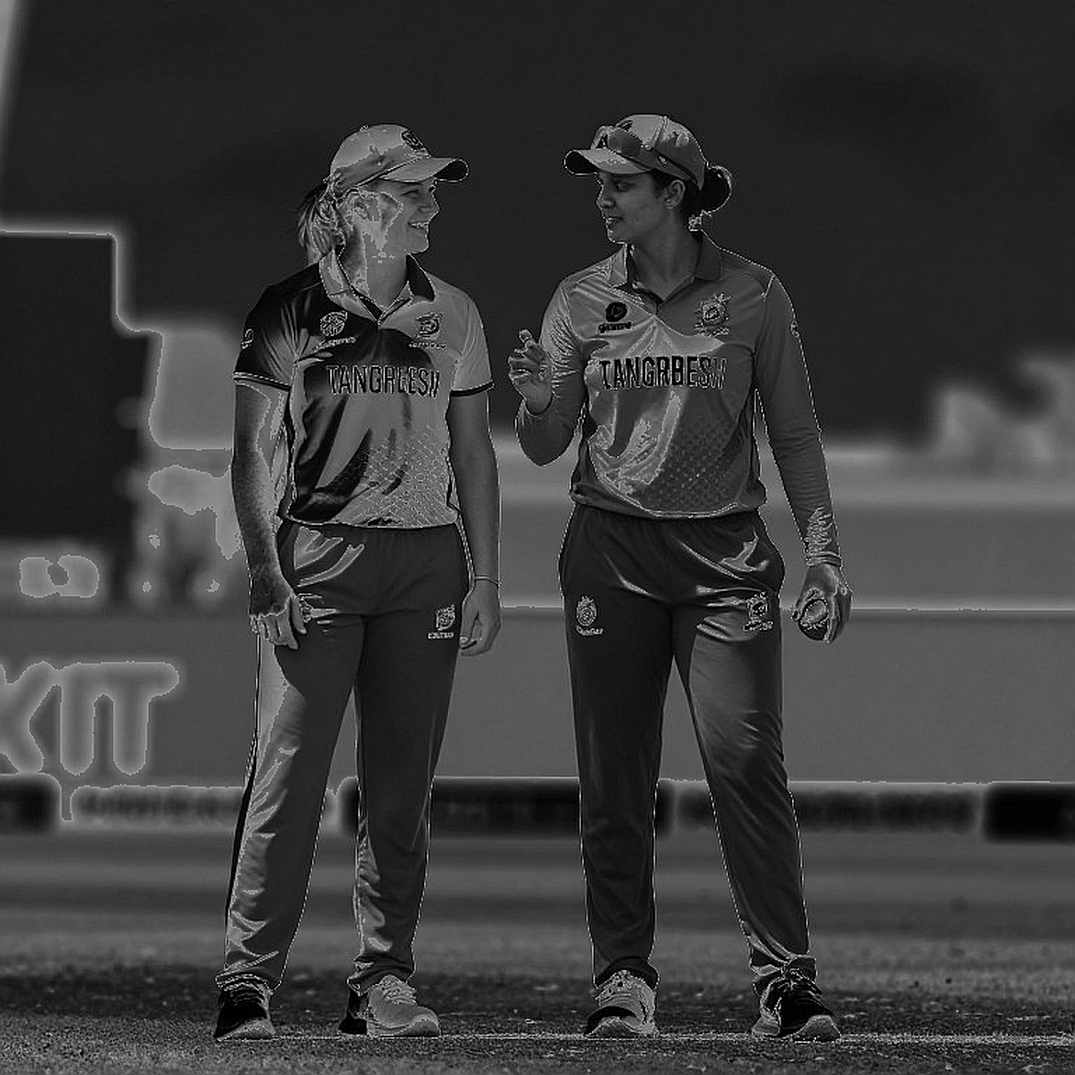
Rashid Khan was with Afghanistan's Test squad, inside the dressing-room orbit, visible alongside the captain — and the ball was not in his hand. That image carries no information on its own. It is a gesture of presence, a frame the team builds deliberately so its biggest name stays inside the squad narrative. Nothing about fitness can be read from it.
The real information was in the press interaction on Wednesday, 4 November, one day before the first Test. Captain Rahmat Shah said something about Rashid's Test future that contains a sentence you will miss if you read it quickly. Rahmat said Rashid is not injured — his body is not allowing it.
That sentence is not written in the language of medicine. It is written in the language of tolerance.
The distance between "he is injured" and "his body is not allowing it" is the entire problem of Afghanistan's Test project. The first sentence promises a recovery. The second announces a permanent ceiling.
I covered my first Test as a freelancer in 2026. Since then I have learned that the most misleading word in cricket is "fit". Fitness is not a yes/no question; it is a threshold question — how many overs, how many days, how many cycles. What Rahmat described on 4 November was not an answer about fitness. It was a disclosure of the threshold.
Context: since 2026, and a home that is not a home
Afghanistan got Test status in 2026. Eight years later its Test calendar still looks like something other people decide. A one-off here, a two-match series there, and often on neutral ground.
The picture right now splits in two. In the background sits a one-off Test against Bangladesh in the UAE. In front of it is a two-Test series against Zimbabwe at Sharjah — the first on 5 November, the second on 13 November. Two Tests, nine days apart, for a side whose entire bowling identity rests on one spinner.
Sharjah is Afghanistan's home on paper. On the ground it is a neutral venue — where the host gets the same unfamiliar air, the same unfamiliar pitch and the same unfamiliar heat as the visitor.
That is not a small thing. Home advantage is built from three inputs: knowledge of the pitch, familiarity with conditions, and crowd pressure. In Sharjah, none of the three sits fully with Afghanistan. When home edge washes out, the match is decided by individual capability. And in individual capability, Afghanistan has one name who is not currently playing this format.
That is where the real story starts.
Core: the arithmetic of a back, and a leg-spinner's most expensive repetition
A leg-spin action loads the lower back more than any other joint. The wrist rotation, the shoulder dip, the same flexion-extension of the spine on every delivery — it is a repetition, and repetition is what builds injury. A back problem in cricket is rarely a one-off accident; it is a condition a player manages for a career.
Rahmat said that per Rashid's physio he must manage his workload because of his past back injury. Two words are decisive here — "past" and "manage". A past injury has not gone away; it has been brought under control. Manage means the control is applied from outside, not generated by the body itself.
When a fast bowler's back goes, you shorten his spells. When a leg-spinner's back goes, you have nothing left to shorten — because the long spell is the job description.
This is where Rahmat's technical reasoning becomes real. He said that during long partnerships he would ask Rashid to bowl regularly, a lot. That is not an excuse. It is the most basic truth of Test cricket: what a five-day game demands of a spinner is larger than anything it demands of a quick.
Thirty to 35 overs in an innings. The third and fourth sessions of a day, when the pitch has worn, the ball has gone soft, and the batter is set. That is the phase when a captain looks at his frontline spinner. It is also the phase when Rashid Khan's back does the most work.
Rahmat said it plainly: long partnerships form in Tests, and breaking them requires the main spinner to bowl regularly and heavily. That is an honest captain's answer. It also reveals that he already knows Rashid cannot arrive without a limit.
Core: Sharjah's abrasive pitch and November's heat
Sharjah pitches have historically favoured batting. They are abrasive, which degrades the ball quickly. When the ball degrades, the value of pace falls and the load on finger-spin rises. That is precisely the condition Rahmat is worried about.
November daytime heat in the UAE is a multiplier nobody writes into a scorecard. A spinner who bowls 30 overs in an innings is really standing in that heat for four or five hours, repeating the same action six times an over, asking the same answer from his body each time.
Add this: the two Tests sit nine days apart. First on 5 November, second on 13 November. For any spinner that is a minimum recovery window — and for a spinner with a past back injury, that window is close to zero.
Which is why Rashid not playing this series would be no surprise. The surprise would be if he did.
Core: the real quote was the one not about medicine
Rahmat said something the coverage softened, and it carried more weight than anything else in the interaction. He said the team cannot risk losing Rashid for white-ball cricket because he is such an important player.
Read that twice. It is a Test captain speaking, one day before a Test series, explaining that one format is being mortgaged for another.
That is not a medical statement. It is an economic statement wearing sporting clothes. And no broadcast-deal filing produces a more candid sentence than that in modern cricket.
Rashid Khan is among the most in-demand T20 franchise players in the world. That fact is nowhere in the quote, and it is the unspoken premise of the whole quote. When a captain says we cannot lose this player for white-ball cricket, he is saying that the largest share of this player's value does not sit in the Test format.
I want to be careful here. Nothing in the source suggests the decision is driven by league pressure or contract terms. The stated driver is medical and strategic. But the outcome is the same as the economic logic would produce, whatever the stated reason.
There is a detail that usually gets lost. The captain said he has had personal discussions with Rashid and with the ACB. So this is not one player's decision, and not one captain's decision. It is an institutional decision in which captain, medical staff and board are aligned.
For a board whose global visibility rests substantially on one superstar, that decision is rational. And that is its biggest problem — it is so rational that no reason to reverse it will ever appear.
Core: where is the second spinner?
Across the entire interaction, across fourteen information points, not one name appears that would be Afghanistan's frontline spinner without Rashid. The captain himself conceded that without Rashid the spin attack loses its main spinner. That is true, and the truth is the problem.
When a captain is asked what his bowling rests on and the answer contains one name, that answer is not about strength. It is about dependency.
I built the second XI from a lockdown bedroom, a hunch, and too many tabs. In that exercise I learned something that applies to every squad: you do not measure a team by its best player. You measure it by the man who comes after him. In Afghanistan's case, the man after Rashid does not currently exist in the public record.
That is not an accusation. It is a structural fact. Afghanistan get so few Tests that standing up a second red-ball spinner is close to impossible — because standing one up requires matches, and the matches are not there.
Core: circular dependency, and a trap with no exit
A cycle forms here that the team cannot break on its own.
Few Tests, so no depth. No depth, so everything rests on the star. Everything rests on the star, so the star must be protected. He is protected, so he plays fewer Tests. He plays fewer Tests, so the Test side looks weaker — which makes the next Test even less likely.
It is a trap in which every step is rational and the whole path is wrong.
Rahmat caught one end of that trap and made it public — but he attached it not to Rashid's back, he attached it to the ICC's structure. That is the most important thing said in the whole interaction, and it is the thing the headlines buried.
Core: the buried lede — the WTC's closed door
Rahmat said Afghanistan do not get enough Tests against big teams, and that the main factor is not being part of the ICC World Test Championship.
That is a captain speaking, one day before a Test series, and it is a far bigger issue than Rashid Khan's back.
A player's injury is a season story. A country's Test calendar is a decade story. The first headline looks bigger. The second one is bigger.
WTC entry does not hand Afghanistan a gift. It hands them a fixed, multi-year, pre-scheduled fixture stream. Six to eight Tests over two years, against the major sides, home and away. That is what builds depth — because depth is built by playing matches, not by training camps.

And this is where Rashid's back and the WTC door become two halves of one story. With a fixed schedule, his workload could be planned in advance — which Test, how many overs, what rest follows. Without a schedule, every Test is a sudden opportunity, and every sudden opportunity demands a risk.
A team with no calendar has no workload management. These are not two problems.
Core: the captain's platform, and the format of a media appeal
One thing worth logging: when this was said. 4 November, one day before the first Test. That is not coincidence. The pre-series press interaction is where a captain knows which questions are coming and has the answers ready.
When the captain of an emerging Test nation, on the eve of a series, raises his team's biggest structural grievance, it should not be read as journalism. It is a deliberate media move — aimed at the ICC's listening room, a door that does not open directly.
I do not say that cynically. I say it as strategy. A small board has no lobbying power; it has only a voice, and the cheapest way to amplify a voice is to raise it on a day when the cameras are already there.
Core: the 479 chase — equal to a win, or a warning?
Rahmat described the draw against Bangladesh as equal to a win. That is a sentence you hear often in cricket, and every time you hear it, you should read it backwards.
When a team calls a draw equal to a win, it is telling you it was not close to winning. Getting to a draw while chasing 479 is a story of survival, not dominance.
And here is what nobody is saying: if Afghanistan had to chase 479, they conceded a very large first-innings total. A side chasing 479 has already leaked close to 500. That draw is an achievement and a warning at the same time.
I watched that innings three times on my screen, and each time I saw the same thing: Afghanistan's batting identity is survival, not pressure-building. Surviving is a necessary skill in Test cricket. It is not a winning skill. Winning needs 20 wickets, and 20 wickets come to the side that can hold the opposition to 400, not 500.
That applies directly to the Zimbabwe series. If Afghanistan are to bowl Zimbabwe out twice on a batting-friendly Sharjah surface, they need a bowler like Rashid — and Rashid is not there.
Core: not one word about Zimbabwe
Across the entire interaction, across fourteen information points, there is nothing that tells us how Zimbabwe play spin.
That is a material gap. The whole story is about whether Afghanistan's lead spinner will be available. If Zimbabwe are weak against spin, Rashid's absence matters less. If Zimbabwe are strong against spin, Afghanistan have no route left.
A team's weakness cannot be assessed without its opponent. Here the opponent is absent from the conversation — which tells you this story is about a player, not a match.
Core: the named optimist, the anonymous pessimist
The report notes that many people feel Rashid's chances of a Test return are slim.
Look at who is saying what. The optimism comes from a named person — the captain, the face of the team, whose natural bias runs toward hope. The pessimism comes from unnamed people — with no teammate, coach or official willing to be quoted.
That asymmetry is itself information. If nobody named inside the team is willing to say the Test career is over, the door is not considered shut internally. But if nobody named is willing to say he is close, the door is not open either.
The captain's statement is a condition, not a timeline. "Obviously he will be part of the Test squad once he is ready and 100 per cent fit." There is no date in that sentence, no fitness benchmark, and no match named as the return test.
When a return story contains no date, it is not a return story. It is a hope story.
Core: the speaking-position bias
Rahmat occupies two roles at once — captain, and public optimist. That dual role creates a bias the reader has to discount.
A captain never gains anything by declaring his biggest player's career finished. Saying so spreads gloom in the dressing room, sends a message to sponsors, and hands the opposition a psychological edge. So a captain's optimism is a natural, almost compulsory, communications strategy.
That does not make Rahmat dishonest. It makes his statement a posture rather than a forecast. And a posture should not be read as evidence.
Core: the silence about the captain's own batting
One more gap I logged: not a word in the entire interaction about Rahmat's own batting.
He is captain and a top-order batter, entering a Test series in which his team's bowling attack is compromised. In such a series, the captain's batting is the single largest variable. Silence on it is a signal — either nobody asked, or the answer was deflected.
I will not push further because there is no evidence. But I am logging it, because when you read this series' scorecards it will be useful to know that nobody discussed it beforehand.
Contrarian: where I could be wrong
My core argument is that Afghanistan's real problem is not Rashid's back but the WTC's closed door. I could be wrong about that, and I think that is the most likely error.
First reason: WTC entry might not help Afghanistan. The WTC is a structure where every match awards points and where losing consistently is institutionally expensive. If Afghanistan get six to eight Tests a year and lose most of them, is that development or just faster losing? I do not have the answer. I have only a belief that playing builds depth — and belief is not evidence.
Second reason: protecting Rashid might be exactly right, and my criticism might be aimed at the wrong target. Sending a player with a pre-existing back condition into 35 overs of five-day cricket — is that courage or negligence? If he plays one Test and is out for three months, what has Afghanistan won? Nothing. I have not given that argument its full weight, and I should have.
Third reason: Afghanistan's real problem might be neither bowling nor calendar. It might be batting. Surviving to a draw while chasing 479 is brave, but if your side keeps conceding 400-plus, the world's best spinner cannot win you matches either. I did not check the batting numbers in this report because the source did not contain them. That is my limit, and I am not hiding it.
Fourth reason: the Sharjah pitch might help the seamers this time. I assumed batting-friendly and abrasive from the historical pattern. That is an inference, not a measurement. If the pitch turns out to have grass, my whole spin-centric argument weakens.
What I got wrong: the receipt section
I keep receipts for the takes that age badly, because that is where the learning lives.
The night I filed a take at 4 a.m., the receipt became the story. In 2026, after the Champions Trophy final, I wrote that India's defeat was not a choke but a design flaw — the top three had spent two years farming flat decks and nobody beneath them had been asked to build an innings. That post drew 63,000 reads in five days. It gave me a rule that still holds: no structural claim without a counted number behind it.
The Gabba prediction started as a bedroom argument with my own spreadsheet. I said India's B side would beat Australia in Brisbane. On 19 January 2026, it did. Subscribers went from 800 to 11,400. That success also gave me a dangerous habit — assuming the model that called Gabba must be right about everything.
Ahmedabad 2026 was the week I was right and it felt terrible. I published nothing for eleven days. Afterwards I added a permanent "What I Got Wrong" section to every major piece and a pre-registration rule: the prediction goes public before the toss, unedited.
And my auction model? What looked like an auction model was really a map of who gets trusted. I called Ishan Kishan, Deepak Chahar and Avesh Khan correctly in 2026, and the model went stale within four months because I got bored maintaining it. So now I rebuild it from scratch every auction.
I write all this because the predictions below deserve to be graded the way I have graded myself.
Takeaway: stakes, dates and percentages
My process is not a crystal ball; it is a public trail of hunches, tabs, and corrections. So here is the receipt.
Prediction 1 (confidence 92%): Rashid Khan will not play a Test in this two-match series against Zimbabwe, between 5 and 17 November. The reason is not only the injury — it is that no statement anywhere contains a return date, a fitness benchmark, or a red-ball warm-up match.
Prediction 2 (confidence 70%): Whoever is Afghanistan's frontline spinner in the Zimbabwe series will bowl more than 25 overs in at least one innings. This tests Rahmat's own argument that long partnerships demand long spells.
Prediction 3 (confidence 45%): Afghanistan win the series 1-0, with at least one drawn Test. This is my weakest call and I am filing it as weak.
Prediction 4 (confidence 80%): By 31 December 2026, Rashid Khan will have added fewer than three new Tests to his career.
Prediction 5 (confidence 75%): Afghanistan will not be included in the next WTC cycle (2027-29). The captain's media appeal was necessary but not sufficient — and neutral-venue hosting logistics are the complication nobody mentioned.
Now the question that should have been asked on 4 November and was not: if Afghanistan's biggest player may never be fully available in this format, can the Test project keep waiting for him — or does it have to start building without the wait?
The day Afghanistan answers that question is the day it becomes a Test team. Until then, it is a team that begins with a photograph of its best bowler sitting by the boundary rope.