
Asian CricketA 34-Year-Old 'Rising Star': Bangladesh's Selection Under Fire and Why the Selector's 'No Age Bar' Defence Is Only Half the Argument
A 34-Year-Old 'Rising Star': Bangladesh's Selection Under Fire and Why the Selector's 'No Age Bar' Defence Is Only Half the Argument
मुख्य सार: बांग्लादेश ने राइजिंग स्टार्स एशिया कप (50 ओवर विकासशील टूर्नामेंट) के लिए 34 वर्षीय सब्बीर रहमान को चुना, जिस पर आलोचना हुई। मुख्य चयनकर्ता का बचाव: नियमों में आयु सीमा नहीं है और टीम दोहरे उद्देश्य—भविष्य की तैयारी तथा दक्षिण अफ्रीका एकदिवसीय सीरीज की तैयारी—के लिए बनी है। बांग्लादेश का ग्रुप अफगानिस्तान, श्रीलंका और हांगकांग चीन के साथ है, जो स्पिन-भारी और कठिन है। क्या नियम टूटा? नहीं—विवाद नियम के अक्षर पर नहीं, टूर्नामेंट की भावना पर है। क्या आंकड़े उपलब्ध हैं? नहीं—किसी भी प्रदर्शन-आंकड़े के बिना खेल-निष्कर्ष संभव नहीं। सबसे महत्वपूर्ण संकेत: दक्षिण अफ्रीका एकदिवसीय टीम की घोषणा—अगर सब्बीर वहां चुने जाते हैं तो तर्क सिद्ध, अन्यथा आलोचना मजबूत। समग्र जोखिम: मध्यम-निम्न; मुख्य जोखिम प्रतिष्ठा, अवसर-लागत और संचार का है, वित्तीय या सत्यनिष्ठा का नहीं। यह विश्लेषण केवल खेल-सूचना हेतु है, सट्टेबाजी सलाह नहीं।
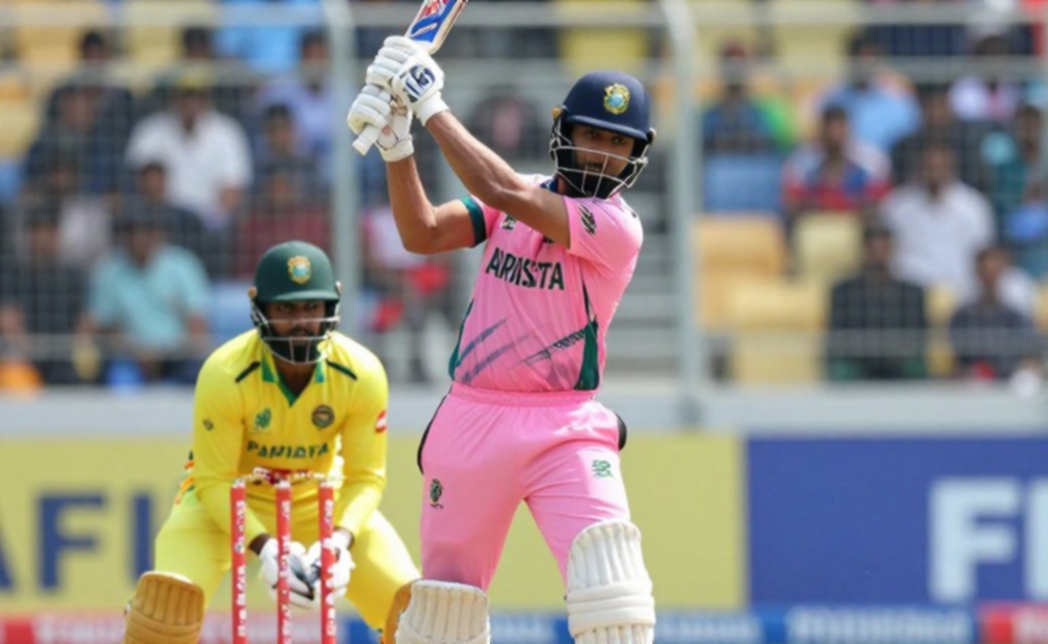
Bangladesh cricket is once again at the centre of a selection debate. The inclusion of 34-year-old batter Sabbir Rahman in the squad for the Rising Stars Asia Cup has drawn sharp criticism from sections of the domestic media and fans. The core question is simple: why does an experienced player in the late phase of his career feature in a tournament whose very name means emerging stars? The chief selector's defence is equally clear: there is no age restriction in the rules, and the squad has been built for a dual purpose — preparing for the future while also meeting an immediate need, specifically the upcoming ODI series against South Africa.
It is important to establish what this story is not. It is not a match report. There is no scorecard, no performance data, no phase-by-phase breakdown, and no venue or pitch information. Everything available revolves around selection rationale and squad structure. Consequently, any judgment about Sabbir's sporting merit is unverifiable from this material alone. The debate must therefore be read through the lens of selection process and communication, not output.
The tournament context matters. The Rising Stars Asia Cup is a development or emerging-squad competition, not a fully capped international event; it sits in roughly the same tier as 'A' team cricket. It is played in the 50-over format. That detail is critical, because the selector has explicitly framed it as preparation for an ODI series. Had it been a T20 event, the preparation logic would have been materially weaker.
The selector's argument has two parts. The defensive part states that no age rule exists, so picking a 34-year-old is technically not a violation. The constructive part states that the squad is deliberately mixed: some players are being considered for the future, others for the immediate term. The selector's own words — that they are considering a few players for the future, even for the immediate term — effectively split the squad into two cohorts. Sabbir logically belongs to the second. This is the strongest part of the rationale, because it makes the pick look planned rather than arbitrary.
But the first crack appears precisely here. The 'no age restriction' defence is literally true yet tactically evasive. It answers eligibility, not the spirit of an emerging-players tournament. If an experienced player is selected for such an event, the justification should rest on competitive merit — what role he plays, why he is needed — not on permission. The selector supplied the first and left the second incomplete. That gap is what fuels the controversy.
The South Africa ODI series reference gives the pick a different meaning. If Sabbir is genuinely part of that plan, the selection is rational squad management. If he is merely filling a slot in a development squad with no senior pathway, it is resource misallocation at the expense of a younger player. The source does not resolve this, and it is the single most important unknown in the story.
On the player himself, the record is a blank canvas. Sabbir is a middle-order batter, historically a stroke-making accumulator. Yet the available material contains no batting average, no strike rate, no recent twelve-month trend, no home-away or pace-spin splits. Bangladeshi middle-order ODI batters typically average around 28 to 35 with an acceptable strike rate of roughly 80 to 90, but no comparison is possible without his numbers. It cannot even be said whether he is rising, stable or declining.
The one hard fact is age: 34. The conventional batting peak runs roughly from 27 to 33, so 34 is post-peak. That is not a fault in itself — many batters perform well at that age on experience and maturity. But in a tournament explicitly branded around emerging talent, it raises an obvious question. The selection can therefore be defended on only one of two grounds: either he is a mentor and experienced anchor around younger players, or he is being re-evaluated for the senior ODI side ahead of the South Africa series. Neither has been stated clearly in public, and that is the communication failure.
Venue and conditions are entirely absent. Asia Cup level events in Sri Lanka or the UAE differ sharply in spin versus pace bias, and without the venue no conditions-based inference is safe. This is a genuine information gap and should be flagged rather than hidden.
Bangladesh's group offers the key to understanding the pick. They are grouped with Afghanistan, Sri Lanka and Hong Kong China. Afghanistan and Sri Lanka are elite spin-bowling sides; Hong Kong China is the weakest of the three. This is a genuinely tough group, and the selector concedes as much. Facing Afghan and Sri Lankan spin with a young top order is a high-risk learning environment, which strengthens the case for an experienced middle-order hand. That argument should have been made publicly, and it was not. It is worth noting the distinction: the group composition is a fact, but the spin-tactical rationale is inference and should be presented as such.
The squad is explicitly dual-purpose. That model is legitimate but communicatively risky, because it invites exactly the criticism the article reports. Had the board clarified at announcement who was a mentor, who was being auditioned for the senior series and how many players were purely developmental, much of the debate would not have started. This is the central weakness of the episode.
On batting depth, bowling combination, bench strength and age structure, the source is thin. No other player is named, and no pace-spin balance is given, so overall squad strength cannot be assessed. What can be said is that the age structure is deliberately mixed, because the selector himself described two cohorts.
On rules and governance, there is no actual violation. 'No age restriction' is a factual eligibility statement. The controversy concerns the spirit, not the letter, of the tournament. That distinction matters: without a rule breach there will be no action, yet a trust problem can still arise. The selector's defence is technically airtight but strategically thin — it explains permission, not preference over a younger candidate.
There is also a transparency problem. The criticism is described as widespread, but no critic is named and no organisation is cited. On the other side there is only the selector's monologue. The case of any displaced young player is entirely absent from the record. A fair governance read requires both sides.
It is plausible that the event falls under Asian Cricket Council jurisdiction with its own eligibility rules, and that the absence of an age bar is a deliberate design choice allowing boards to field mixed squads. If so, the defence is stronger — but this is inference, not established fact.
The criticism itself runs on optics rather than data. Nobody has argued that Sabbir's recent form is poor; the objection is that his age does not fit the tournament's name. Bangla-language domestic media tend to run selection controversies hard, and the 'widespread criticism' framing may be partly manufactured by headline incentives. It should be treated as a weak signal, not verified sentiment.
Expectation gaps are visible. Fans expect a development pick; the selector defends a dual-purpose logic. That is a clash of purpose-frames, not of facts. On team results the expectation of doing well in a tough group is realistic. On the player's individual output no expectation can be calibrated at all, because there is no baseline data. That uncertainty lands on the selector: if Sabbir delivers, the narrative reverses quickly; if not, the '34-year-old stop-gap' frame hardens.
Overall risk is medium-low. There is no rule breach, no integrity issue and no financial exposure. The main risks are reputational and philosophical: the age-curve and optics risk of a 34-year-old in an emerging event; the opportunity cost to an unnamed younger player; and the communication risk of defending eligibility rather than merit. There is also a personal risk — the selector appears publicly invested in the pick, so failure would attach to him rather than only to the player. A quieter risk is the pipeline signal: needing a veteran in a pathway event is a mild indicator that domestic-to-'A'-team conversion is not producing ready young batters. But that is one data point, not a trend, and should not be extrapolated.
On prestige, India and Pakistan sending strong teams suggests real selection stakes at this tier, which would partly justify an experienced pick. However, 'strong teams' is unquantified and should be treated as a weak basis.
Commercially, there is nothing here. No broadcast value, no franchise valuation, no salaries, no auction, no transfers. This is a national-board selection matter. Any commercial inference would be pure speculation. The only market signal is public opinion, and that is anonymous and unverified.
Looking ahead, the most predictive signal is the South Africa ODI squad announcement. If Sabbir appears there, the immediate-term preparation rationale is vindicated and the controversy largely evaporates. If he does not, the critique gains structural weight. Other signals to track: the full squad's age composition, since multiple 30-plus picks would escalate this from one selection to a philosophy debate; the tournament venue and pitch type, since spin-friendly conditions would reinforce the experienced-pick logic; and the source of the criticism, since named critics or a board response would distinguish genuine tension from headline amplification.
Three scenarios exist. Worst case: the 'no age restriction' defence is read as rules-lawyering, trust in the process erodes, and the pick is seen as blocking a genuine emerging player. Base case: the pick is accepted as rational dual-purpose management and criticism fades after the tournament. Best case: Sabbir performs, transitions cleanly into the South Africa ODI squad, and the tournament demonstrably serves both purposes.
The bottom line is that this story is not about Sabbir Rahman's cricket — it is about the communication gap in Bangladesh's selection governance. The selector's logic is defensible, but the messaging answers the letter of the rule while failing to defend competitive merit. The single most predictive signal is the South Africa ODI squad announcement. No performance conclusion here is evidence-based, because the source contains no data; all conclusions rest on process, structure and communication, and should be read with the stated confidence levels.

संबंधित खिलाड़ी