
Asian CricketAsian Cricket's New Architecture: Balancing League Economy, Broadcast Rights and Boardroom Politics
Asian Cricket's New Architecture: Balancing League Economy, Broadcast Rights and Boardroom Politics
मुख्य सारांश: एशियाई क्रिकेट का आर्थिक केंद्र मैदान से बोर्डरूम और ब्रॉडकास्ट अधिकारों की ओर खिसक चुका है। आईपीएल सबसे मूल्यवान टी20 लीग है, और पीएसएल, बीपीएल, एलपीएल तथा आईएलटी20 उसी टेम्पलेट पर चलती हैं, लेकिन उनके पास तुलनीय घरेलू विज्ञापन बाज़ार नहीं है। प्रसारण अधिकार ही बोर्डों की मुख्य आय हैं, और दर्शक संख्या की असमानता के कारण यह आय भी असमान है। भारत-पाकिस्तान द्विपक्षीय श्रृंखलाएँ एक दशक से अधिक समय से स्थगित हैं, जिससे एशिया कप जैसे आयोजनों की मेज़बानी राजनयिक मुद्दा बन जाती है। एनओसी व्यवस्था पर खिलाड़ियों और बोर्डों के बीच टकराव कार्यभार और आय-स्वतंत्रता का मुद्दा है। महिला प्रीमियर लीग और महिला एशिया कप ने महिला क्रिकेट के लिए पहला स्थायी व्यावसायिक ढाँचा बनाया है। मुख्य प्रश्न: क्या भारतीय बाज़ार की सफलता पूरे क्षेत्र के विकास में बदलेगी या केवल एक केंद्रित ढाँचा बनेगा? यह निर्णय तकनीकी नहीं, राजनीतिक है और बोर्ड बैठकों में तय होगा।
Over the past decade, the biggest story in Asian cricket has not been a record on the field but the auction of media rights, the expansion of franchise leagues, and the power politics between boards. Cricket in this region is no longer simply a sport; it is a media product, and the price of that product is set at two centres: India's vast viewer market and the new corporate demand of the Gulf. Everything else — selection disputes, calendar congestion, player movement — is a by-product of that economy.
The Board of Control for Cricket in India's Indian Premier League is the most valuable T20 league in the world, and that status rests not merely on television ratings but on a complex mix of franchise valuations, sponsorship portfolios and stadium ticketing. The IPL model plays a dual role for the rest of Asia: it is both competitor and template. The Pakistan Super League, Bangladesh Premier League, Lanka Premier League and the UAE's International League T20 all imitate the template, but none has a domestic advertising market comparable to the IPL's. The consequence is that these leagues' financial sustainability rests mainly on overseas broadcast rights, diaspora South Asian audiences, and to some degree state patronage.
Broadcast rights are the spine of this entire architecture. IPL media rights have sold for record sums across successive cycles, and that money is what gives the board room to invest in domestic tournaments, stadium upgrades and player match fees. But this model has an inherent weakness: rights values rise in proportion to audience size, and audiences in Asia are profoundly unequal. On one side is an Indian market worth billions; on the other are boards like Sri Lanka, Bangladesh or Nepal with no comparable ability to monetise their domestic rights. The Asian Cricket Council operates within this inequality, and it surfaces repeatedly in decisions about tournament hosting, revenue sharing and venues.
Direct bilateral series between India and Pakistan have been suspended for more than a decade; the two teams meet only in ICC and ACC events. That fact is, in itself, the single largest structural constraint on the Asian cricket calendar, because it directly affects ticket revenue, broadcast value and sponsor interest. Whenever events like the Asia Cup arrive, the hosting question becomes diplomatic rather than technical — hybrid models, neutral venues and security reviews are all products of this tension. These arrangements are often described as pragmatic compromises, but in substance they convert a political standoff into an administrative procedure. The result is that the Asia Cup's format, venue and timing all remain uncertain, and broadcasters price that uncertainty into their bids.
The financial position of the smaller boards is the least discussed part of this picture. Sri Lanka Cricket has seen both administrative crisis and financial pressure in recent years; in Bangladesh, league ownership and sponsorship have changed repeatedly; in Pakistan, the limits of the domestic cricket broadcast market are a recurring subject of debate. These boards share one structural problem: their revenue sources are concentrated (ICC distributions and a few large domestic rights), while their expenditure is dispersed. Player contracts, event costs, security spending and international commitments all run simultaneously. So when a global event collides with a board's domestic calendar, the compromise usually falls on the weaker party.
Player movement between leagues is the most visible and most contested part of this economy. Players like Babar Azam are the commercial identity of the Pakistan Super League, Shakib Al Hasan's name is most closely associated with the Bangladesh Premier League, and spinners like Wanindu Hasaranga and Rashid Khan are simultaneously valuable in the Lanka Premier League and the Gulf leagues. This movement is a source of income for the player, a quality guarantee for the league, and a question of control for the board. The No Objection Certificate system is the instrument of that control. When a board decides which league is "appropriate" for its player, it is in effect setting its calendar priorities. The system draws criticism from both sides: players see it as a restraint on income and independence, boards see it as an indispensable tool for workload management and injury prevention.
The workload question is the centre of this debate. An Asian cricketer's calendar is now split into three layers — bilateral international series, ICC global events, and franchise leagues. All three make different demands and all three carry their own financial pressures. For a fast bowler, this structure is physically incoherent: a four-week league followed by a two-week international series, then another three-week tournament. Injuries rise, and the burden of injury ultimately returns to the board — because the contract belongs to the board while the risk belongs to the player. No board has a clean solution to this contradiction, because any solution would mean giving up a share of league revenue, and no board wants to do that.
The rise of the Gulf leagues adds a new variable to the equation. The ILT20, staged in the UAE, has not only opened a new market but created a platform for Asian players where board control is lighter and financial reward is explicit. This has two effects. First, players from smaller boards gain an option to raise their income. Second, the bargaining power of those boards, which previously used league permission as a form of leverage, diminishes. The process is slow, but the direction is clear: power is shifting from boards toward the market.
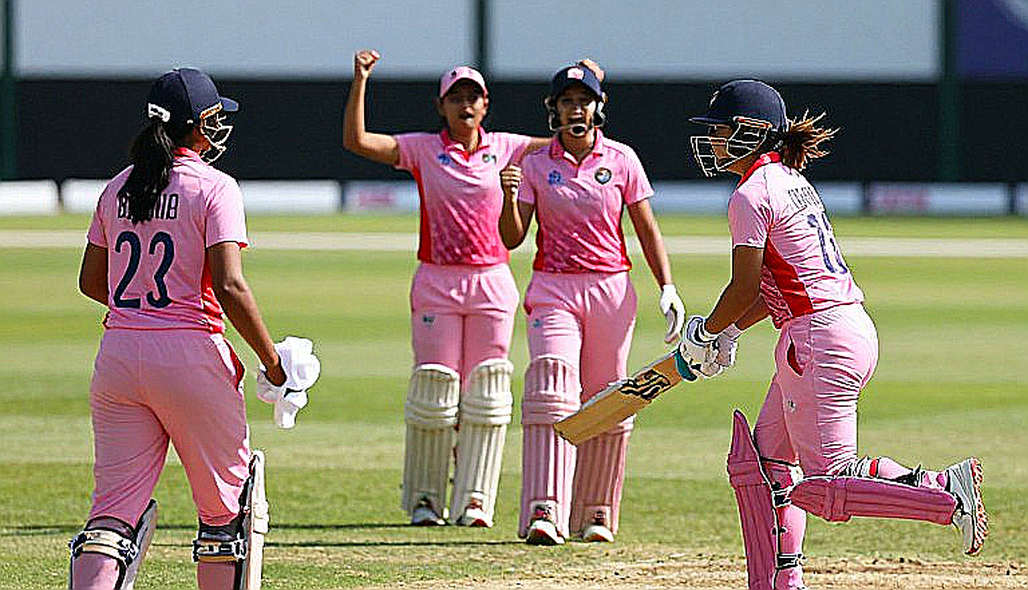
One positive development in this landscape deserves recognition: the institutional expansion of women's cricket. The launch of the Women's Premier League and the regular staging of the Women's Asia Cup have, for the first time, created a durable professional structure for Asian women cricketers. Names like Smriti Mandhana and Harmanpreet Kaur are no longer only symbols of the national team but bearers of brand value. Yet this expansion suffers from the same inequality — the bulk of investment flows into the Indian market, while the women's teams of Sri Lanka, Bangladesh and Pakistan still lack comparable domestic structures. Without improved international performance that gap will not narrow, and without domestic structures performance will not improve; it is a closed loop that requires concrete investment at ACC level to break.
The question of franchise ownership adds another dimension. When a single corporate group buys teams in several countries' leagues, its influence does not stay confined to its own team. It sits at the negotiating table on player contracts, broadcast deals and even tournament calendars. There is nothing unethical about this — it is the natural behaviour of capital — but it means that Asian cricket's governance architecture, which is fundamentally a federation of national boards, is gradually being surrounded by a marketplace in which there are investment rights but no voting rights. Ignoring that distinction is an invitation to future disputes.
Infrastructure and the spectator experience matter just as much, though they receive less attention. Asia has some world-class stadiums, but a large number of grounds fall below international standards in pitch quality, drainage, floodlights and spectator facilities. This is not merely a technical shortfall; it is a direct reflection of economic inequality. A board with large media-rights income can invest in stadiums; one without must sell hosting rights or play at neutral venues. Over the long term this affects competitive balance, because the advantage of playing in home conditions is distributed unevenly.
Amid all this, one question remains persistently unanswered: which direction should Asian cricket take? Two paths are visible. The first is IPL-centric, in which the Indian market remains the economic engine of the whole region and other boards function as satellites attached to that engine. This path is commercially efficient, but it weakens both the autonomy and the long-term competitive capacity of smaller boards. The second is a more balanced path of revenue sharing and stronger ACC leadership, with a stable, pre-scheduled series of regional events and a dedicated fund for smaller boards' infrastructure development. That path is slower and requires larger boards to forgo short-term gains.
In practice a third path will probably be taken — an unstable compromise between the first two, in which revenue from major events is shared but control remains concentrated. Such compromises tend not to last, because they do not resolve the underlying inequality; they merely manage it. Asian cricket's real test will be this: can it convert the success of its largest market into development across the whole region, or will it build a structure around that success in which everyone else is marginalised?
The answer to that question is not technical but political. And that is why, in the years ahead, Asian cricket's most important battles will not be fought on the field but in boardrooms — over the division of broadcast rights, over calendar priorities, and over the single question of whose game this is: the boards', the broadcasters', the franchises', or the spectator who buys a ticket and walks into the stadium.
संबंधित खिलाड़ी